Seven-Day Strike Ends in Victory for Shimla SEHB Workers After Written Agreement with MC
Shimla: After seven days of continuous protest and uncertainty, workers employed under the SEHB Society in the Municipal Corporation Shimla finally secured a major victory as the administration agreed to their demands through a written settlement. The strike, led by the SEHB Society Workers Union affiliated with Centre of Indian Trade Unions, was called off following successful talks with the Municipal Corporation authorities.
For the workers, the agitation was not merely about salaries or service conditions. It became a larger fight for dignity, job security and recognition for those who form the backbone of the city’s sanitation and essential civic services. The week-long movement highlighted the growing frustration among employees who said they no longer wanted to be treated as “temporary hands” despite years of service.
During the strike, the city witnessed disruptions in cleanliness and civic operations, while pressure from the administration also mounted. However, the unity and disciplined stand of the workers eventually compelled the Municipal Corporation to return to the negotiating table.
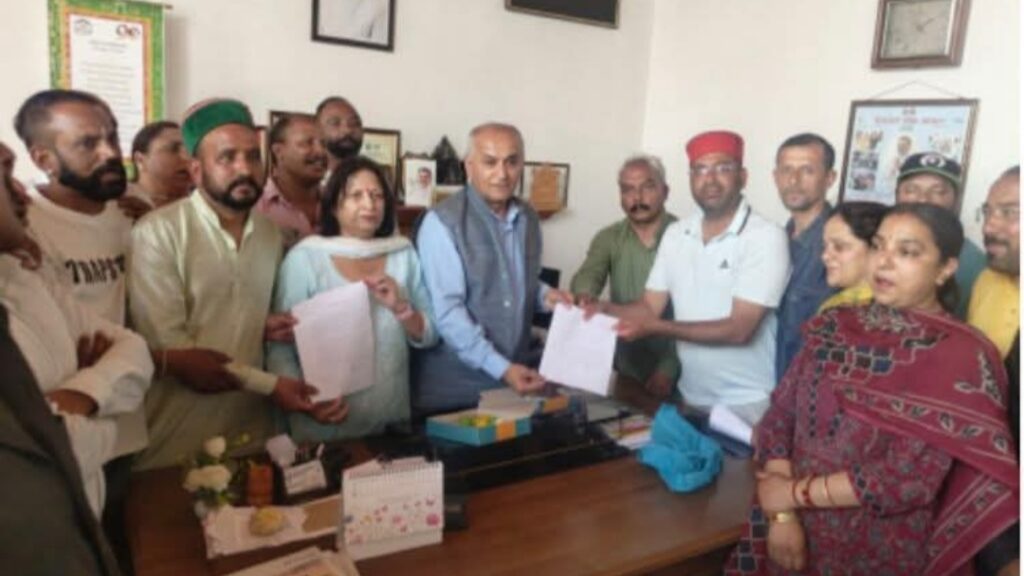
Following discussions with the Mayor and Deputy Mayor of the Municipal Corporation Shimla, several major demands were accepted in writing. These include restoration of the 10 percent salary cut and its equal implementation for all employees, extension of 4-9-14 pay benefits, restoration of the 15-day special retirement facility, and reinstatement of 41 terminated SEHB workers.
Left affliated CITU described the agreement as a significant victory for collective struggle and workers’ solidarity. They said the movement has sent a strong message to outsourced, society-based and contractual employees across the state that an organized and united voice can force the system to listen.
State leaders including Vijendra Mehra, Balak Ram, Vivek Kashyap, along with union representatives Jaswant Singh, Omprakash, Pala Ram, Amit Bhatia, Naresh Thakur and several other workers were present during the discussions. Representatives of the Municipal Corporation Regular Union and the Valmiki Sabha also extended support to the movement.
Labour organizations stated that the protest exposed a larger reality — cities function not only through policies and official decisions, but through the relentless efforts of invisible workers whose voices often go unheard. According to union leaders, the seven-day strike became the collective expression of those unheard voices, ultimately forcing the administration to bend before the workers’ unity and determination.