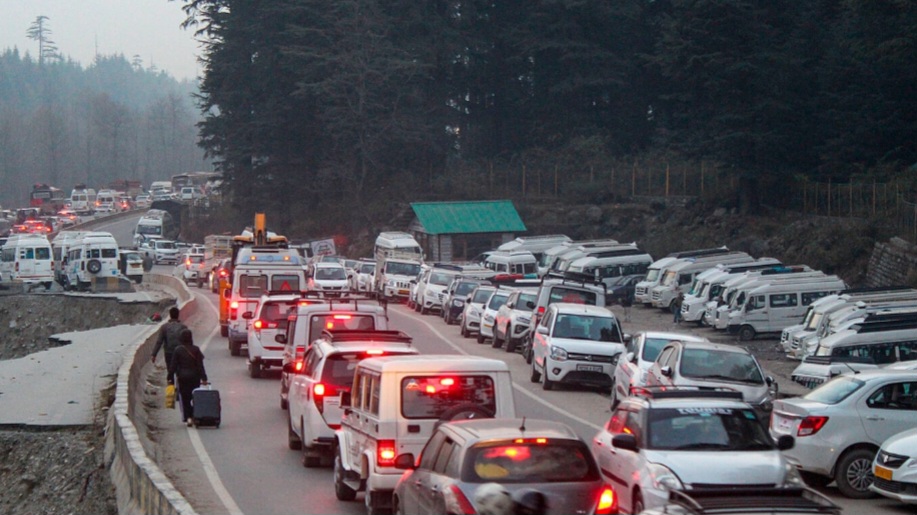
Atal Tunnel Under Pressure as Tourist Rush Pushes Traffic Beyond Capacity
The iconic Atal Tunnel, often hailed as a game-changer for connectivity in Himachal Pradesh, is now facing an unexpected challenge—too much traffic.
Built to provide year-round access between Kullu and the remote valleys of Lahaul-Spiti, the tunnel has become a massive draw for tourists. But this growing popularity is beginning to strain the very infrastructure that once symbolized engineering excellence.
During peak tourist seasons, the number of vehicles passing through the tunnel is crossing its designed capacity by more than double. Originally built to handle around 4,500 vehicles a day (including 3,000 light vehicles and 1,500 heavy ones), the tunnel now regularly sees far higher volumes—especially on weekends and holidays.
This surge isn’t just causing congestion outside the tunnel—it’s also raising serious concerns inside it.
Rising Smoke and Environmental Concerns
Officials have flagged increasing smoke levels within the tunnel, along with thick layers of carbon deposits forming on the walls. These visible signs of pollution are a clear indicator of rising vehicle emissions.
Experts warn that the issue goes beyond routine maintenance. Over time, such conditions could affect the tunnel’s structural health, safety systems, and even its ability to handle emergencies effectively.
The situation has prompted authorities to take a closer look at how traffic is being managed.
Authorities Consider Regulation
In response, district administrations in Kullu and Lahaul-Spiti, along with the Border Roads Organisation (BRO), are exploring ways to regulate the flow of vehicles. The aim is to strike a balance between tourism, safety, and environmental protection.
Officials say vehicle numbers continue to exceed the tunnel’s intended limits, making it harder to manage pollution, ensure road safety, and maintain disaster preparedness. They have indicated that all aspects are being reviewed before any concrete decisions are taken.
Tourism Boom Brings Mixed Impact
Since the tunnel opened, nearby destinations like Sissu, Keylong, Solang Valley, and areas around Manali have seen a sharp rise in tourist footfall. While this has boosted the local economy, it has also put significant pressure on the fragile Himalayan ecosystem.
Environmental experts have repeatedly warned that uncontrolled tourist traffic can lead to air pollution, noise, waste generation, and stress on already limited natural resources.
The growing number of vehicles has also led to frequent traffic jams on roads leading to the tunnel. Long queues have become common, especially during snowfall, long weekends, and holiday seasons.
Locals Feel the Strain
For residents, the traffic surge is more than an inconvenience—it’s a daily struggle.
Locals say heavy tourist movement often disrupts routine life, delays essential services, and creates problems for emergency vehicles. What was meant to ease connectivity has, at times, ended up slowing things down for those who live there.
A Delicate Balance Ahead
There’s no denying that the Atal Tunnel has transformed life in Lahaul Valley. Earlier, the closure of Rohtang Pass during winter would isolate the region for months. Today, people enjoy year-round connectivity, and travel time between Manali and Keylong has been drastically reduced.
However, with thousands of vehicles now passing through even during harsh winters, the need for sustainable management has become increasingly urgent.
Authorities are now working to find a middle ground—one that preserves the benefits of tourism and connectivity while protecting the region’s environment and ensuring the tunnel’s long-term sustainability.
For now, the Atal Tunnel stands as both a symbol of progress and a reminder of the challenges that come with it.