Mandi Emerging as a Frontrunner in Promoting Natural Farming
The ‘Sukhu government’s’ efforts to promote natural farming and encourage farmers to adopt chemical-free agriculture are bearing fruit. The increase in Minimum Support Price (MSP) has boosted farmers’ inclination towards this farming method. In Mandi district as well, farmers are joining this movement in large numbers.
Under the National Natural Farming Mission, a comprehensive action plan has been prepared for the district. The main objectives of the mission are to promote chemical-free farming, ensure the production of safe and nutritious food grains, improve soil fertility and organic quality, and develop a sustainable agricultural system by reducing farmers’ costs.
Expanding Scope of Natural Farming in Mandi
Currently, 48,380 farmers in the district are associated with natural farming, and 8,400 hectares of land have already been brought under natural farming. During 2025-26, 2,500 hectares of area, 50 clusters, and 8,214 farmers were connected to the scheme. Meanwhile, for 2026-27, a target has been set to bring an additional 1,000 hectares, 20 new clusters, and 2,500 new farmers under the scheme.
Over the past two years, the Agriculture Department has procured 1,040.81 quintals of maize, 644.24 quintals of wheat, and approximately 233 quintals of turmeric under the Minimum Support Price (MSP) mechanism, enabling farmers to secure better prices for their produce.
Increase in MSP Proving Beneficial for Farmers
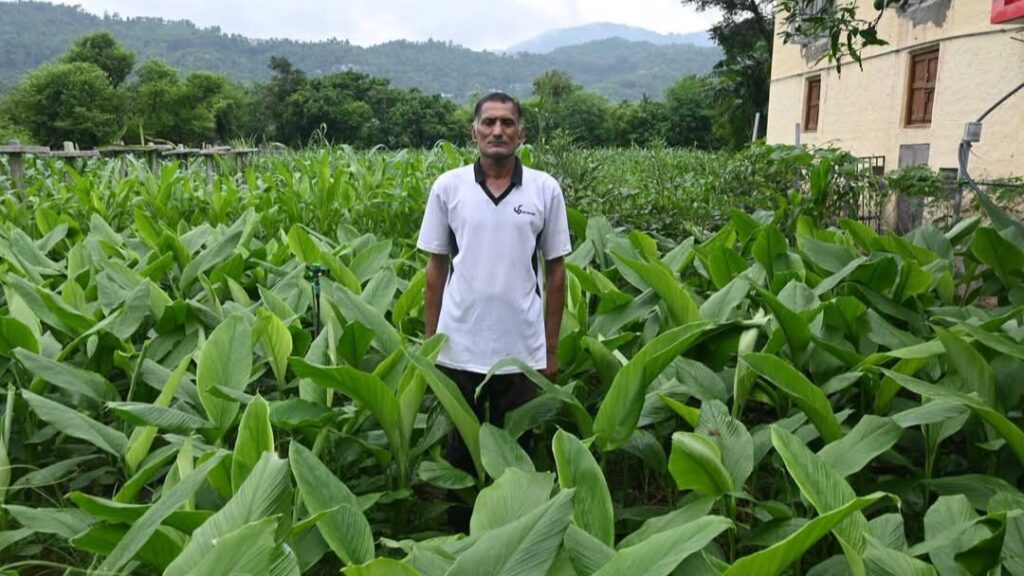
Pratap Singh, a farmer from the village Ghanghal, said that after receiving training under the ATMA project, he started natural farming. Initially, he practiced mixed cropping of wheat with peas and chickpeas, which yielded good results. Earlier, he used to get ₹60 per kilogram for wheat, but now he is receiving ₹80 per kilogram. Similarly, the price of maize has also increased from ₹40 to ₹60 per kilogram. He stated that the increase in MSP by the state government has proven to be extremely beneficial for farmers, for which he will always remain grateful to Chief Minister Sukhvinder Singh Sukhu.
Mastram, from Dhandol village in Sundernagar tehsil, started farming maize, soybean, ginger, and turmeric. This year, he has also planted dragon fruit saplings on one bigha of land. On five bighas of land under natural farming, he sold wheat worth approximately ₹65,000 and maize worth ₹25,000 to the government. He said that increasing the support price of turmeric from ₹90 to ₹150 per kilogram has been a huge boon for farmers, and he expressed his gratitude to the Chief Minister for the same.
Annual Action Plan of ₹4.93 Crore
An action plan of approximately ₹4.93 crore has been proposed for the year 2026-27. Under this plan, provisions include the appointment of new Community Resource Persons (CRPs), farmer training and awareness programs, incentive amounts, certification for natural farming, distribution of study materials and kits, establishment of 13 Bio Resource Centers (BRCs), and strengthening of mission management and monitoring systems.
13 Bio Resource Centers to be Established in the District
New CRPs have been selected for 20 new clusters across the district’s 14 development blocks. These CRPs will train farmers in natural farming techniques, conduct demonstrations in the fields, and assist in the effective implementation of the scheme. To ensure the local availability of essential organic resources such as Jeevamrit, Ghan Jeevamrit, and other biological inputs, 13 Bio Resource Centers (BRCs) will be established in the district, where farmers will be provided with necessary materials and technical guidance.
Financial Assistance Being Provided to Farmers
According to Hitendra Kumar, Sub-Project Director (ATMA) Mandi, farmers adopting natural farming are provided with financial assistance of ₹25,000 for purchasing indigenous breed cows. A subsidy of up to ₹8,000 is given for constructing pucca flooring in cow shelters for urine collection, and ₹2,250 is provided for three drums to prepare Jeevamrit and Ghan Jeevamrit. Farmers are also offered free training, kits, and technical guidance for natural farming.
Chief Minister Thakur Sukhvinder Singh Sukhu’s initiatives are proving to be decisive in giving new momentum to natural farming across the state. Following the increase in MSP for crops produced through natural farming, both the confidence and enthusiasm of farmers toward this farming method have grown significantly. With better prices, farmers are now viewing natural farming not just as a means of environmental conservation but also as a profitable agricultural enterprise.