Beyond the Cocoon: How Silk is Weaving a Brighter Future for Mandi’s Farming Families
In the misty hills of Himachal Pradesh’s Mandi district, a quiet but remarkable transformation is unfolding. It isn’t powered by heavy machinery or sprawling factories, but by the tiny, industrious silkworm—an unlikely hero that is spinning golden opportunities for thousands of rural households.
For the farmers here, the humble mulberry tree is no longer just a plant; it’s a lifeline. Thanks to a mix of government support and sheer rural grit, Mandi has carved out a shining reputation in the sericulture map of India. From nurturing lush mulberry gardens to producing high-quality seeds, and from post-cocoon processing to the delicate art of oak tasar rearing, the district has built a complete, end-to-end silk ecosystem. And it’s paying off—handsomely.
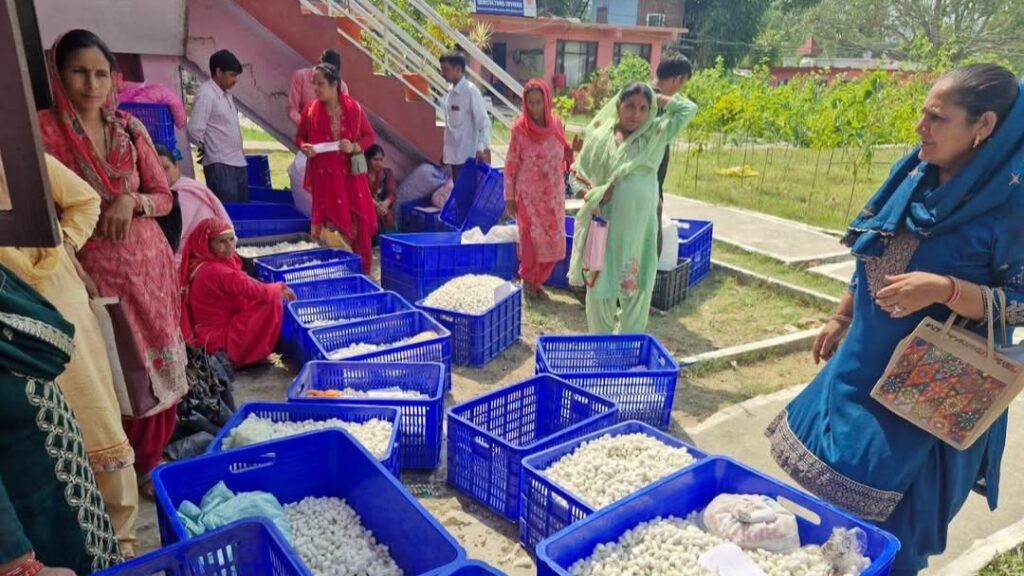
Take the numbers, for instance, but look beyond the digits. Over the last three years, more than 6,500 farmers have received high-yield silkworm seeds, leading to the production of a staggering 27,000 kilograms of glossy green cocoons. But what that really means is thousands of families being able to pay for their children’s school fees, invest in better farming tools, or simply put extra food on the table. Recently, the state government released over Rs. 1.63 crore to 105 local producers—money that is directly translating into new rearing houses, better equipment, and high-quality mulberry saplings that will bear fruit for generations.
Currently, over 1,900 farming families are actively engaged in sericulture across the district. Schemes like Silk Samagra-2 aren’t just bureaucratic jargon here; they are tangible lifelines. The financial aid isn’t handed out as charity—it’s a catalyst. It allows a farmer in a remote village to build a proper rearing shed, or a woman entrepreneur to buy a loom that turns raw silk into exquisite, market-ready fabric.
But the true magic lies in the human connection. In village after village, awareness camps are buzzing with energy. Veterans of the trade gather with newcomers, sharing age-old wisdom alongside modern scientific techniques—how to spot diseases early, the secrets of perfect hygiene, and the delicate art of coaxing the finest quality cocoons from the silkworms. Up in the higher, forested altitudes, families are discovering the untapped potential of oak tasar silkworms, an eco-friendly venture that gives them a sustainable livelihood while keeping them close to their ancestral lands.
And what about the infrastructure? It’s a well-oiled machine. The Silkworm Seed Production Center in Thunag has become the beating heart of the operation, churning out over 650 disease-free seed layings every year. Meanwhile, the innovation hub at Balichowki is where raw cocoons get their glamorous makeover—transformed into lustrous yarn, woven into fabric, and polished into products ready for the market. The rhythmic clatter of handlooms here isn’t noise; it’s the sound of economic empowerment for weavers and artisans who are now earning more than ever before.
So, what does it take to join this thriving community? Any local farmer with a bonafide Himachali residence, a patch of land suitable for mulberry, and a willingness to learn can step into this world—provided they register with the district’s Sericulture Division. From the bustling markets of Mandi Sadar to the remote corners of Karsog, government silk centers and field officers are always on standby, offering guidance on everything from planting to marketing.
In Mandi today, the silk industry is more than just an agricultural activity—it’s a movement. It’s stitching together the social and economic fabric of the countryside, turning modest farms into bustling micro-enterprises. Here, in the lap of the Himalayas, prosperity isn’t measured just in rupees and paise; it’s measured in the quiet pride of a farmer holding a basket of shimmering cocoons, knowing that he’s woven a better tomorrow for his family.
The story of Mandi’s silk isn’t just about thread—it’s about tenacity, hope, and the golden promise of rural India.