Manimahesh Yatra to Follow Stricter Green and Safety Norms This Year
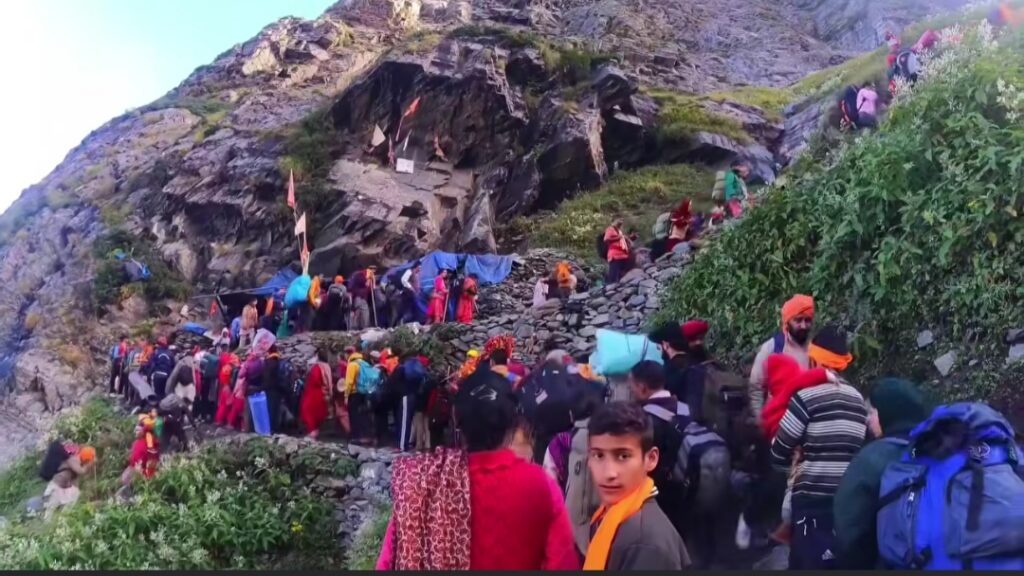
The revered Manimahesh Yatra, one of North India’s most significant Himalayan pilgrimages, will be conducted under tighter environmental and safety regulations this year, in line with National Green Tribunal (NGT) guidelines. The Bharmour administration in Himachal Pradesh’s Chamba district is preparing to enforce stricter safeguards to protect the fragile high-altitude ecosystem while ensuring a safer experience for pilgrims.
Held annually during August and September in the tribal Bharmour region, the yatra attracts lakhs of devotees from across the country. Pilgrims undertake a challenging trek to the sacred Manimahesh Dal, a glacial lake located at an altitude of about 13,500 feet beneath the majestic Manimahesh Kailash peak, believed to be the abode of Lord Shiva. This year, the pilgrimage will begin on September 4, coinciding with Janmashtmi, and conclude on September 19, on the occasion of Radhashtmi.
The traditional route of the yatra starts from Hadsar and passes through important halting points such as Dhancho, Sundrasi, and Gaurikund before reaching the holy lake.
Bharmour Additional District Magistrate Vikas Sharma said the administration is placing strong emphasis on environmental protection this year. He recently held discussions with key stakeholders, including priests and local shopkeepers, to ensure compliance with NGT directions. Concerns over waste accumulation, overcrowding, and ecological damage in past years have prompted authorities to tighten norms for the pilgrimage.
In a 2024 directive, the NGT had recommended mandatory online registration for pilgrims, assessment of the route’s carrying capacity, and regulation of daily pilgrim numbers to reduce pressure on the environmentally sensitive area. The tribunal also called for strict control over commercial activities along the pilgrimage route.
As per these directions, no shops or community kitchens (langars) will be allowed in the catchment area around the Manimahesh Dal. Sharma clarified that this measure is aimed at protecting water quality and preserving the sanctity of the sacred site. Temporary stalls along the route from Hadsar to the lake will be permitted only under strict NGT norms. All shopkeepers will need prior permission from the Forest Department and will be required to pay sanitation charges to ensure proper waste management during the yatra period.
Any instances of plastic littering, illegal encroachments, or unauthorised commercial activity will invite strict action from the authorities. The administration is also considering introducing an eco-fee and sanitation charge for pilgrims and commercial establishments to fund waste disposal, trail maintenance, and conservation efforts.
Alongside environmental measures, significant efforts are underway to improve infrastructure and safety along the route. The trekking path from Hadsar to Manimahesh Dal, badly damaged by last year’s heavy rains and landslides, is being restored. Repair work is already in progress, and departments concerned have been directed to fix vulnerable stretches of the Bharmour–Hadsar road affected by landslides.
To enhance pilgrim safety, new wooden bridges will be constructed at sensitive locations such as Dunali and Dhancho, where earlier bridges were either washed away or severely damaged during the monsoon.
With these measures, the administration hopes to strike a balance between facilitating a smooth pilgrimage and preserving the pristine Himalayan environment that makes the Manimahesh Yatra spiritually and ecologically significant.