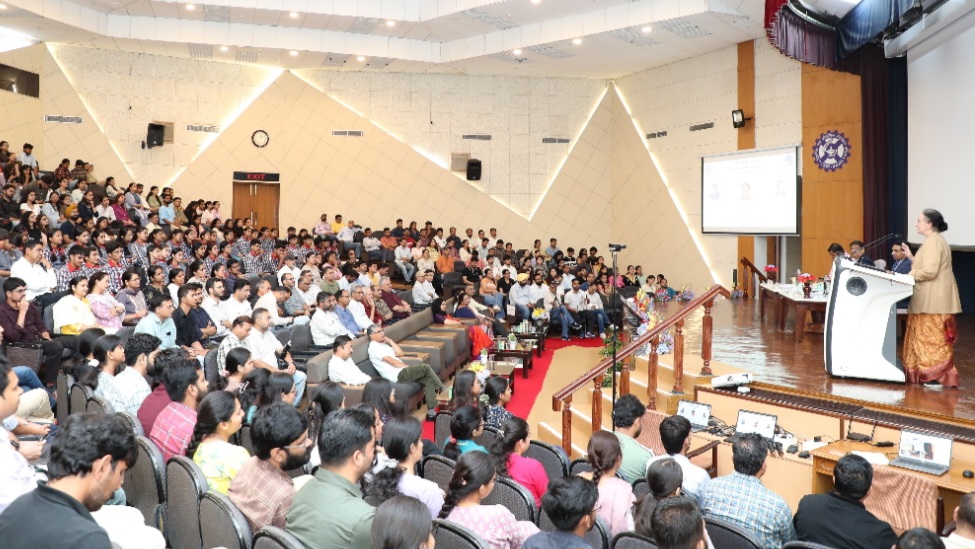
CSIR-IHBT Palampur Marks 44th Foundation Day, Showcases Innovations for Himalayan Bioeconomy
The CSIR–Institute of Himalayan Bioresource Technology (CSIR-IHBT), Palampur, celebrated its 44th Foundation Day on July 2 with enthusiasm, bringing together scientists, farmers, students, industrialists, and other stakeholders to reflect on the institute’s achievements and future vision.
Welcoming the guests, CSIR-IHBT Director Dr. Sudesh Kumar Yadav highlighted the institute’s ongoing research and its contribution to strengthening the bioeconomy, particularly in the Himalayan region. He spoke about several key CSIR missions, including floriculture, aroma cultivation, smart village initiatives, and bioresource conservation, which are helping enhance rural livelihoods while promoting environmental sustainability and industrial growth.
Dr. S. Venkat Mohan, Director of CSIR-National Environmental Engineering Research Institute (NEERI), attended the event as the Guest of Honour and delivered the keynote address. Congratulating the institute on its remarkable journey, he discussed pressing environmental challenges such as climate change, pollution, and natural disasters. He stressed the importance of adopting a circular economy and efficient waste management practices to ensure sustainable development and praised CSIR-IHBT’s work for its positive environmental impact.
Chief Guest Dr. Madhu Dixit, National Scientist Chair (ANRF) and former Director of CSIR-CDRI, commended the institute for its efforts in promoting a bio-based economy that directly benefits society. She emphasized the growing opportunities in herbal medicine and drug research and urged scientists to explore the rich Himalayan bioresources and traditional knowledge preserved by local communities.
A major highlight of the celebration was the release of the CSIR-IHBT Annual Report 2025–26. Scientists were also honoured with appreciation awards for outstanding scientific contributions made during the year.
The institute further strengthened its outreach and innovation efforts by signing six Technology Transfer Agreements and two Memorandums of Understanding (MoUs). On the occasion, a new Clary Sage variety named ‘Him Sage’ was released, and planting material of aromatic marigold was distributed to progressive farmers.
Students and teachers from PM Shri Kendriya Vidyalaya, Palampur, also participated in the programme under the JIGYASA initiative, adding an educational dimension to the celebrations.
The event reflected CSIR-IHBT’s continued commitment to scientific innovation, sustainable development, and improving livelihoods across the Himalayan region.