Cracking Down at the Root: A Stronger Fight Against Drug Trafficking in Shimla
By carrying out thorough and in-depth investigations in every case, the police have made significant strides in breaking down major drug trafficking networks. This focused approach marks a clear and positive shift in the fight to free society—especially the youth—from the grip of drug abuse.
A key factor behind this success has been the sharp rise in arrests made through backward linkages, where investigations move beyond street-level offenders to trace and apprehend the real source of narcotics. This strategy has made the anti-drug campaign far more effective and impactful.
In 2026 alone, within just three-and-a-half months, 27 accused persons have been arrested by following backward linkages. This is the highest figure recorded in the past five years and highlights the police’s determination to take drug investigations to their logical conclusion—right up to the kingpins.
The contrast with previous years is striking. During the same period in 2024, only four accused were arrested, while in 2025 the number stood at nine. In 2026, however, 27 drug traffickers, main suppliers, and kingpins—mostly from outside states—have been arrested. This figure is three times higher than in 2025 and nearly seven times higher than in 2024.
As a result, several interstate drug trafficking networks operating from outside Himachal Pradesh have been successfully dismantled. In 2026 alone, 19 such networks supplying narcotics to the state have been busted. These networks had both interstate and international links, including connections to Nepal and states such as Punjab, Haryana, Chandigarh, Kerala, and Uttar Pradesh.
To put this into perspective, only four networks were dismantled in 2025, and just one in 2024. The scale and intensity of action taken in 2026 clearly surpass previous years.
This progress shows a decisive shift in enforcement strategy. The focus is no longer on small-time peddlers or users alone, but on dismantling entire supply chains and bringing drug mafias and kingpins to justice. Through backward linkages, police are identifying and acting against main suppliers, network operators, financial handlers, and other key associates involved in the drug trade.
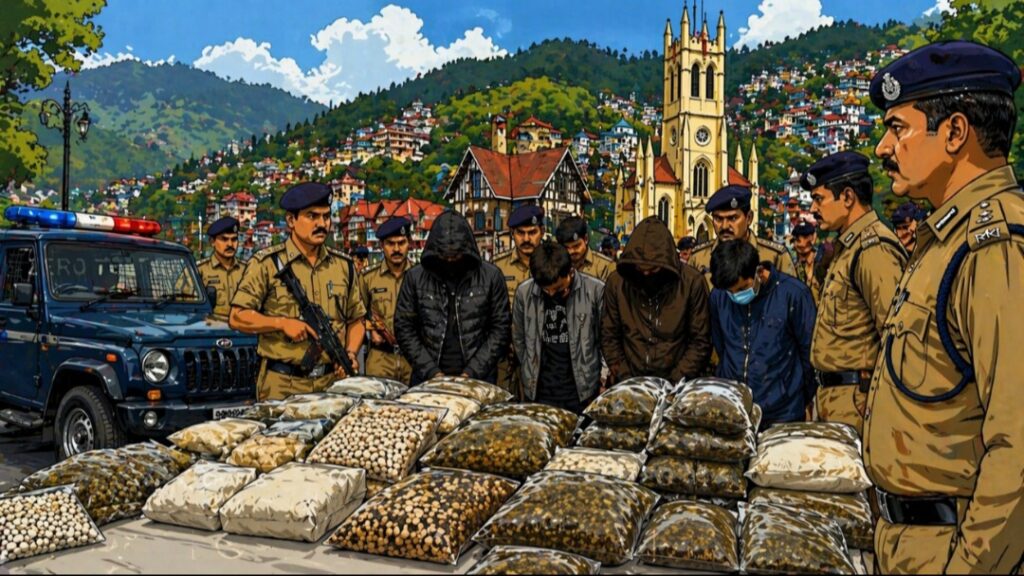
Several major cases underline this success. These include the seizure of commercial quantities of LSD worth ₹1 crore and the arrest of seven accused, including four police personnel; the busting of a Chitta trafficking network from Ambala with 288 grams seized, meant for local youth; the recovery of around 11.5 kg of opium from Nepal with four accused arrested and ₹12 lakh in cash seized; the arrest of the main supplier of the Shahi Mahatma gang who had been absconding for one-and-a-half years; arrests along the Indo-Nepal border; the capture of wanted accused Lucas and David from Punjab and Haryana; and the arrest of eight accused in a case involving 83 grams of Chitta.
These investigations have gone a long way in breaking drug supply chains and weakening trafficking networks. Most importantly, they have restricted the flow of drugs to thousands of young people, helping protect them from the dangers of substance abuse.
This proactive and root-focused approach not only strengthens control over existing cases but also plays a crucial role in preventing such crimes in the future. The district police remain committed to sustained, strategic action against drug trafficking and express sincere gratitude to the public for their continued support and cooperation.