Community Efforts Revive Historic Junga Palace After Devastating Fire
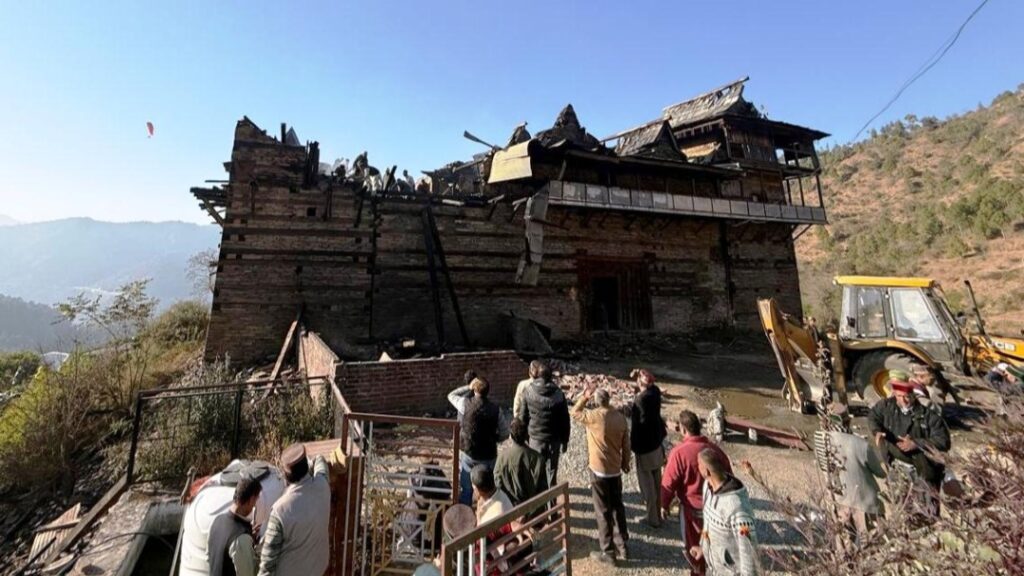
Restoration work is moving ahead at full pace to bring back the nearly 800-year-old Junga Palace, once the seat of the historic Keonthal estate, after a devastating fire damaged a significant portion of the structure earlier this year.
The fire, which broke out on January 7, caused extensive destruction, including severe damage to the intricate carvings and structures of four temples inside the palace complex, among them the revered Dev Junga temple. The incident was a major setback to the region’s rich cultural and architectural heritage.
However, what followed has been an inspiring story of community spirit and collective effort. Pankaj Sen, Chairman of the Keonthal Heritage Archaeological Culture and Temple Restoration Committee, said that people from across the region have come together to support the restoration work in a remarkable way.
He highlighted that residents of the former Keonthal State played a crucial role not only in clearing debris from the damaged site but also in carefully retrieving and safeguarding the idols of deities from the affected temples. Their voluntary efforts, along with financial contributions, have significantly aided the ongoing restoration work.
Sen also noted that people from areas associated with the 22 Tika Devthis of Dev Junga have actively contributed both labour and funds for rebuilding the temples within the palace complex. The process of clearing the debris was successfully completed during the recent Navratri period, marking an important milestone in the restoration journey.
Work is now underway to reconstruct temples dedicated to Dev Junga, Mata Tara Devi, Mahavir, and another deity within the palace premises. To ensure authenticity, skilled artisans from Mandi district, known for their expertise in traditional temple architecture, have been brought in to carry out the work in the ancient style.
The restoration of the four temples is expected to cost around ₹7–8 crore, making it a significant conservation effort aimed at preserving the region’s historical identity.
Appealing to the public, Pankaj Sen urged people to continue supporting the initiative through financial contributions, so that these ancient temples and the heritage they represent can be restored and preserved for future generations.
The ongoing efforts at Junga Palace stand as a powerful example of how community dedication and respect for heritage can help revive history even in the face of adversity.