Apple Growers Fear Price Crash as Import Duty Cut Rings Alarm Bells in Himachal : Rathore
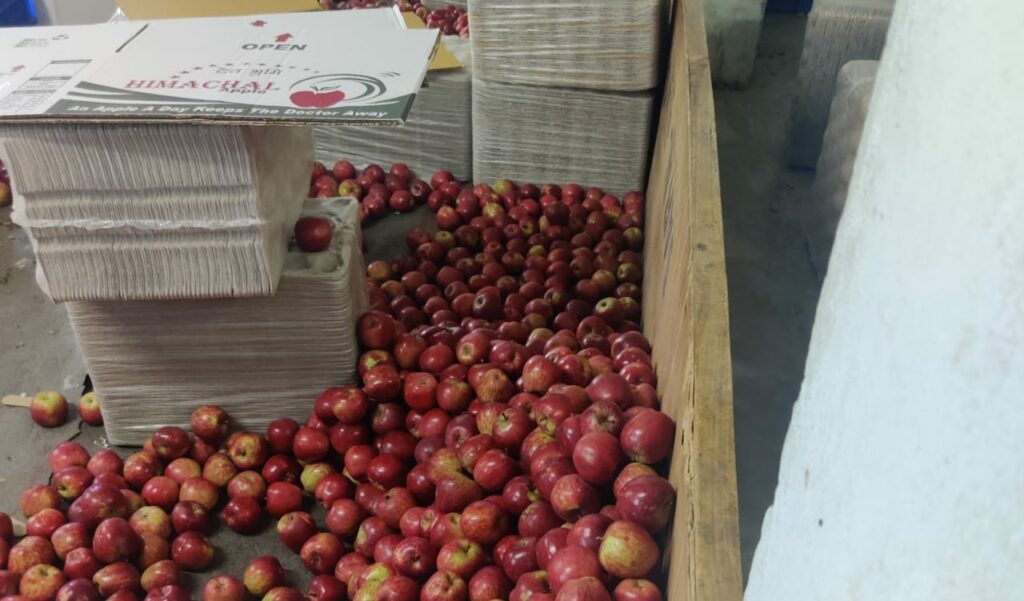
Apple growers across Himachal Pradesh are deeply worried after the recent reduction in import duty on apples under the India–New Zealand Free Trade Agreement (FTA). Farmer unions and local leaders say the decision could flood markets with cheaper imported fruit at a critical time, triggering a price crash and putting the hill economy under serious strain.
Under the agreement, India will lower the Basic Customs Duty on apples imported from New Zealand from 50 per cent to 25 per cent under a Tariff Rate Quota (TRQ). Imports will begin at 32,500 metric tonnes in the first year and gradually rise to 45,000 metric tonnes over six years. What has alarmed growers most is the import window—from April to August—which coincides with the peak marketing season for apples from Himachal Pradesh.
Growers fear that imported apples will enter markets just as stocks from Controlled Atmosphere (CA) storage are released and early-season apples start reaching mandis. This overlap, they say, will sharply increase supply and drive prices down when farmers rely on good returns to recover their yearly investment.
Theog MLA Kuldeep Singh Rathore warned that the move could have serious consequences if safeguards are not strictly enforced. “Farmers are already struggling with rising input costs and unpredictable weather. Allowing imports during the main selling season will directly hit prices. The government must closely monitor imports and ensure growers’ interests are protected,” he said.
On the ground, farmers say the competition is uneven. Farmers pointed out that New Zealand’s apple industry operates at a much higher level of efficiency. “Their orchards produce 50 to 70 tonnes per hectare, while we manage just 7 or 8 tonnes. Without strong institutional support, we simply cannot compete with such productivity,” he said.
Others worry that even a limited quantity of imports could disturb the fragile market balance. “When imported apples arrive during our peak season, oversupply is inevitable,” said a farmer. “Prices could fall sharply, and small and marginal farmers will be hit the hardest.”
The impact, farmers say, won’t stop at orchard gates. Another grower, highlighted the wider ripple effect. “Apple farming supports thousands of families—labourers, transporters, traders and packaging workers. A price crash will affect the entire rural economy,” he said.
Lack of infrastructure is another major concern. Exposing farmers to global competition without upgrading facilities is unfair. “We still don’t have adequate grading, sorting or storage infrastructure. Without fixing these gaps, how can local growers compete with imported produce?” he asked.
Farmers are already under pressure due to rising costs and climate-related challenges such as hailstorms and erratic weather. “If prices fall further, many growers may be forced to abandon their orchards,” he warned.
Apple farming forms the backbone of Himachal Pradesh’s hill economy, supporting nearly 2.5 lakh families and contributing close to 80 per cent of the state’s horticultural income. With production already fluctuating in recent years, growers say the new trade arrangement has added another layer of uncertainty.
Farmers and local leaders are now demanding strict enforcement of the Minimum Import Price (MIP), close monitoring of import quotas and seasonal safeguards to prevent market disruption. They have also renewed calls for urgent investment in cold storage, grading facilities, better transport and access to modern technology.
As the apple season approaches, growers insist that trade policies must strike a careful balance—ensuring international agreements do not come at the cost of the livelihoods that sustain Himachal’s rural economy.