Himachal’s Rural Workforce Faces Uncertainty as New Scheme Replaces MGNREGA
The proposed rollout of the VB-GRAMG scheme, set to replace MGNREGA, has sparked serious concern in Himachal Pradesh, where nearly 12 lakh rural workers depend on guaranteed employment for their livelihood. The Central Government has already begun pushing states to adopt the new framework, making it clear that budget allocations will only be released to those that notify the scheme by 30 June.
However, the Himachal Pradesh government is not fully convinced. Officials believe that several provisions of the new scheme, in its current form, may not suit the state’s unique needs or adequately protect its workers.
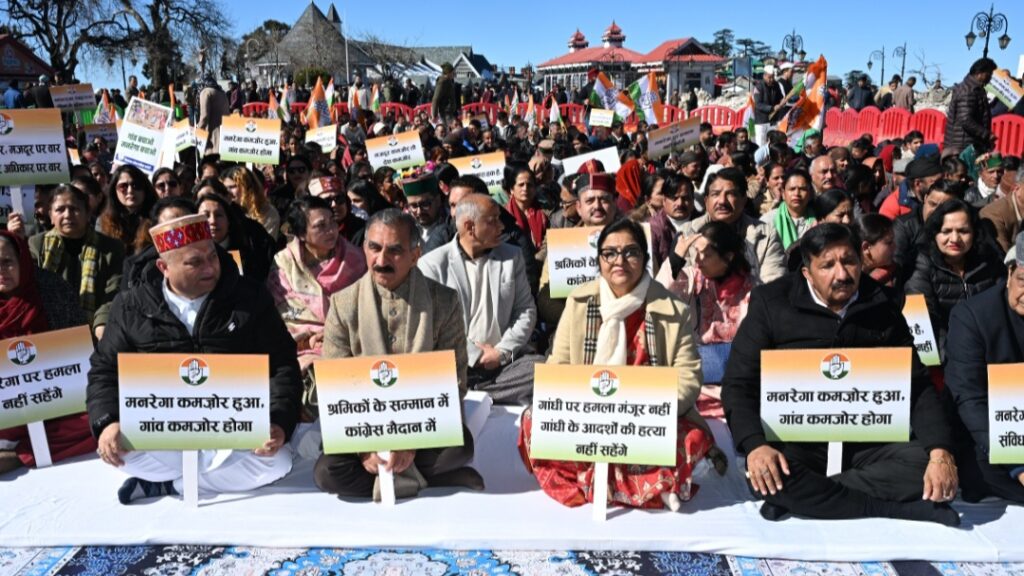
Chief Minister Thakur Sukhvinder Singh Sukhu has taken a firm stand on the issue. He has directed the state administration to strongly convey Himachal’s concerns to the Centre, making it clear that the government will not compromise on matters affecting the livelihood of lakhs of rural families.
One of the major sticking points is the wage structure. Currently, workers receive ₹247 per day in non-tribal regions and ₹309 in tribal areas. The state government argues that these rates do not reflect the realities of Himachal’s terrain, rising inflation, and higher cost of living. The Chief Minister has instructed officials to push for a meaningful wage revision that better supports workers.
Another concern is the nature of employment under the new scheme. Under MGNREGA, work is demand-driven—meaning rural households can seek employment as needed. Sukhu emphasized that this flexibility must be preserved, warning against any system that limits job availability through fixed targets or caps.
The numbers further highlight the potential impact. During 2024–25, around 395 lakh man-days of work were generated under MGNREGA in the state. In contrast, the Centre has set a much lower target of 250 lakh man-days for 2025–26. With the introduction of VB-GRAMG, there are fears that this number could shrink even further, directly affecting employment opportunities and incomes across rural Himachal.
Adding to the uncertainty are the workers employed under the scheme itself. Around 1,194 employees currently serve in various roles under MGNREGA through contractual or outsourced arrangements. The transition to a new system raises questions about their job security and timely payment of salaries.
The funding mechanism under VB-GRAMG is also a concern. Unlike the existing system where funds flow through the state treasury, the new scheme proposes routing funds via the SNA-SPARSH mode, with limited allocations. The state fears this could delay payments, especially for scheme staff.
To address this, the Himachal government plans to request advance funding from the Centre to ensure salaries remain uninterrupted. It has also emphasized that clear service conditions must be defined for employees under the new scheme.
In a proactive move, the Chief Minister has ordered the formation of a high-level committee to closely study every aspect of the proposed scheme. The committee, chaired by Rural Development and Panchayati Raj Minister Anirudh Singh, includes senior officials such as Panchayati Raj Secretary C. Palrasu and Director Raghav Sharma.
This panel will submit its recommendations by 29 June, after which the state government will decide its final course of action regarding the implementation of VB-GRAMG in Himachal Pradesh.
For now, the focus remains on safeguarding the interests of rural workers—ensuring that any transition does not come at the cost of livelihoods that depend heavily on these employment guarantees.