Workshop on Preserving Ancient Himalayan Scripts Wraps Up Successfully at IIAS Shimla
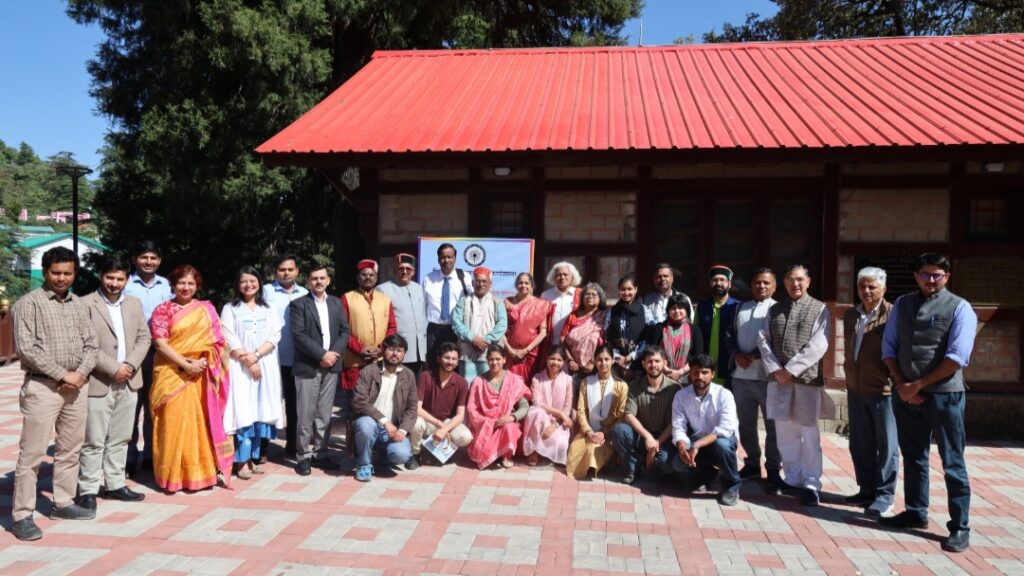
A two-day academic workshop focusing on the preservation of ancient writing traditions in the Western Himalaya concluded on a successful note at the Indian Institute of Advanced Study (IIAS), Rashtrapati Nivas, Shimla.
Held on April 21 and 22, the workshop brought together scholars, researchers, and experts to discuss the conservation of ancient scripts and manuscripts from Himachal Pradesh. The discussions covered a wide range of topics, including preservation techniques, reading traditions, digitization, documentation, and the cultural and historical importance of these invaluable records.
The workshop primarily aimed to encourage the study and safeguarding of manuscript traditions unique to the Western Himalayan region. Special attention was given to scripts such as Pabuchi, Tankri, Pandavani, and Chandvani, which have evolved from the ancient Sharada script. Experts shared insights into the evolution of these scripts, methods of interpreting old manuscripts, and the challenges involved in preserving them.
One of the highlights of the event was a manuscript exhibition inaugurated during the opening session. It offered participants a rare opportunity to witness historical documents and gain a deeper appreciation of the region’s rich literary heritage. Scholars also emphasized the urgent need to protect these fading traditions.
The concluding session was presided over by Prof. Uma C. Vaidya, Tagore Fellow at the Institute, while Prof. Kavar Singh Sharma attended as the Chief Guest. Presenting a detailed summary of the workshop, coordinator Prof. Om Prakash Sharma highlighted key discussions, research findings, and the overall outcomes of the two-day event. He stressed the importance of systematic conservation, cataloguing, digitization, and proper documentation to support future research.
Addressing the gathering, Prof. Kavar Singh Sharma described ancient manuscripts and scripts as the backbone of India’s knowledge tradition and called for stronger efforts at both institutional and individual levels to preserve them.
In her remarks, Prof. Uma C. Vaidya focused on the practical and technical aspects of manuscript conservation and emphasized the need for ongoing research and training in this specialized field. She termed the workshop a meaningful step toward enhancing awareness and academic dialogue on the subject.
The event concluded with a vote of thanks by Prof. Om Prakash Sharma, who acknowledged the contributions of all dignitaries, speakers, and participants. The session was smoothly conducted by Dr. Akhilesh Pathak, Public Relations Officer of the Institute.
Overall, the workshop served as a valuable platform for academic exchange and collaboration, paving the way for future initiatives in the preservation and study of ancient scripts and manuscripts.