Sukhu Calls for Scientific Study of Cloudbursts, Boosts Disaster Research Capacity in Himachal
All State-level disaster research to be undertaken through HPU Centre
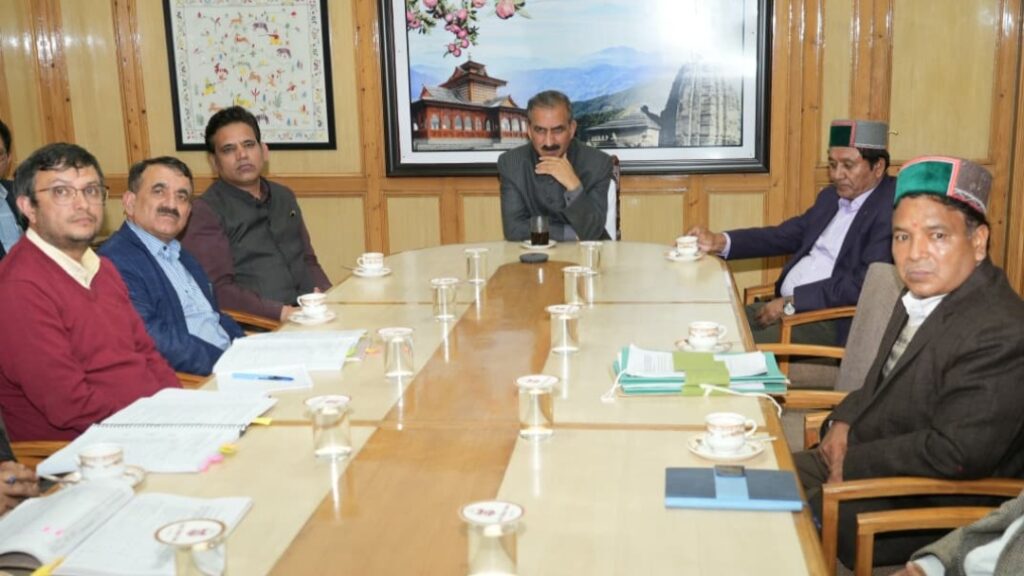
Chief Minister Thakur Sukhvinder Singh Sukhu on Friday evening chaired a high-level meeting to review disaster risk reduction efforts, resilience planning and ongoing research initiatives in Himachal Pradesh. The discussion focused on the work being carried out by the Himalayan Centre for Disaster Risk Reduction and Resilience at Himachal Pradesh University (HPU).
Highlighting the growing threat posed by extreme weather events, the Chief Minister directed the Centre to conduct in-depth scientific studies on the increasing incidents of cloudbursts in the state. He called for a detailed analysis of factors such as the impact of dams, temperature changes, terrain conditions and aerial-distance patterns linked to frequent cloudbursts in the Himalayan region. He also decided that all state-level research and development work related to disaster studies, hazard assessment and technical evaluations will now be routed through this Centre.
Stressing the urgency of the issue, Sh. Sukhu said cloudbursts have become alarmingly frequent in Himachal Pradesh, leading to significant loss of life and property. He underlined the need to scientifically understand changing weather patterns so that effective mitigation and preparedness strategies can be developed.
To strengthen the Centre’s capabilities, the Chief Minister directed the Himachal Pradesh State Disaster Management Authority (HPSDMA) to allocate ₹6 crore for capacity building through specialised training programmes. He also approved an additional ₹10 crore for institutional strengthening and overall capacity enhancement. Further, recognizing the risks from glacier-related disasters, he sanctioned ₹1 crore to initiate scientific studies on Glacial Lake Outburst Floods (GLOFs) and asked HPSDMA to provide financial support for comprehensive GLOF research through the Centre.
The Chief Minister also emphasized the need to recruit additional professionals and domain experts to enhance the Centre’s technical, scientific and research strength. Praising the Centre’s contribution so far, he said similar scientific research initiatives should be expanded to other vulnerable regions of the state to improve disaster preparedness and resilience. He added that the Centre would play a key role in supporting the government with Post Disaster Needs Assessment (PDNA) studies.
Revenue Minister Jagat Singh Negi echoed these views, stressing the importance of building strong in-house technical and scientific capacity in disaster risk reduction and resilience, rather than relying on external agencies for landslide and GLOF-related studies. He appreciated the Centre’s efforts in preparing detailed project reports (DPRs) and strengthening technical expertise within the state.
During the meeting, officials showcased a hydrodynamic model developed by the Centre for the Thunag region of Mandi district. The model is designed to scientifically assess flash flood impacts, guide disaster-risk-informed planning and support the development of early warning systems. The Centre’s wider contribution to disaster research, hazard assessment, mitigation planning, climate risk studies and technical support was also highlighted.
Chairman of HPTDC R.S. Singh Bali, Vice-Chancellor of Himachal Pradesh University Prof. Mahavir Singh, Director of the Centre Prof. N.S. Negi, Deputy Director Dr. Mahesh Sharma and other senior officers were present during the meeting.