After the Losses, a Familiar Question: Sukhu Reignites the EVM Debate
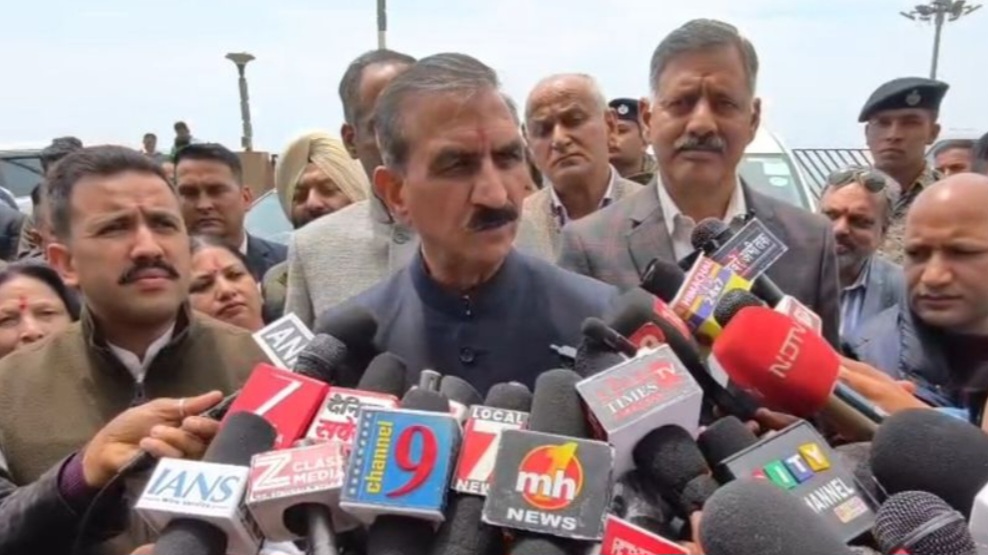
In the wake of disappointing assembly election results for the Congress across several states, Himachal Pradesh Chief Minister Sukhvinder Singh Sukhu has once again brought Electronic Voting Machines (EVMs) into the political spotlight. Speaking on Monday at the Secretariat complex in Shimla, Sukhu claimed that EVMs could be “hacked by anyone from anywhere,” setting off a fresh round of political debate.
Recalling the 2014 Lok Sabha elections, Sukhu said doubts about the voting system had existed for years. He pointed to Congress’s unexpectedly low vote share of around 20 percent in Himachal Pradesh at the time, suggesting that such outcomes raised questions about how EVMs function. According to him, concerns over their credibility are neither sudden nor unfounded.
The Chief Minister also used the occasion to mount a strong attack on the BJP, accusing it of misusing central investigative agencies such as the Enforcement Directorate (ED) and the Central Bureau of Investigation (CBI). Sukhu alleged that these institutions were being deployed “like party cadres” to shape political outcomes, arguing that the nature of India’s democracy has changed since 2014.
He went on to claim that elections held under BJP rule often involve a mix of persuasion and pressure—tactics he insisted the Congress has never resorted to. Referring to West Bengal, Sukhu said the Congress contested all seats independently there for the first time in two decades. He added that he personally sensed public anger against the ruling All India Trinamool Congress (TMC). Despite Congress’s poor performance in the state, he expressed confidence that the party would, over time, emerge as a credible alternative.
Sukhu’s remarks, however, come as the Congress continues to struggle electorally. In Assam, the party fell below the 20-seat mark with under 30 percent of the vote. In West Bengal, it led in just 2 of 294 seats, securing a little over 3 percent of the vote—one of its weakest showings in the state. Kerala provided some consolation, where Congress managed to hold on to 63 seats in the 126-member assembly with around a 28 percent vote share in a crowded, multi-cornered contest.
Political observers note that questions around EVMs tend to resurface after electoral setbacks, a pattern seen repeatedly over the years.
The BJP was quick to push back, accusing Congress leaders of trying to divert attention from the party’s shrinking influence. BJP spokespersons argued that repeated allegations against EVMs stem from an unwillingness to accept electoral verdicts rather than from any proven shortcomings in the system.
While the controversy surrounding EVMs is hardly new, its re-emergence amid Congress’s declining fortunes has given it renewed political sharpness. As the party looks to regroup and rebuild, the debate underscores a larger dilemma—whether it will focus inward on introspection and reform, or continue to frame its setbacks as a failure of the electoral mechanism itself.