Displaced, Denied, and Defiant: The Human Story Behind the Renuka Dam
For over sixty years, the mighty rivers of Himachal Pradesh have powered the nation—but for thousands of families, that current of “progress” has swept away everything they ever called home. It began in 1962 with the colossal Bhakra Dam, and the ripples of that upheaval have now reached the banks of the Giri River, where the Renuka Dam threatens to wash away yet another generation’s legacy. Over these six decades, the state has proudly written countless new chapters of development, but behind every concrete wall and turbine lies a heartbreaking trail of uprooted lives—ancestral lands turned to dust, homes reduced to memories, forests that once echoed with laughter now silenced, and cultural identities erased in the blink of an official stamp.
At the start of every project, government promises shine bright—assurances of plush rehabilitation, secure jobs, and dignified resettlement roll off the tongues of ministers. Yet, the bitter reality tells a different story. Even today, the ghosts of the Bhakra and Pong dams linger in the corridors of courts and government offices, where displaced families still wait—decades later—for a sliver of the justice they were promised. Perhaps the most painful irony is this: many of the very leaders who once led these struggles now sit comfortably in the halls of power, having traded their fiery voices for the quiet oath of cabinet secrecy. Their protests, once so thunderous, have faded into the humdrum of political priorities. And so, as the shadow of Renuka looms, the affected families are left clutching a single, haunting question: Is history destined to repeat its cruelest chapter?
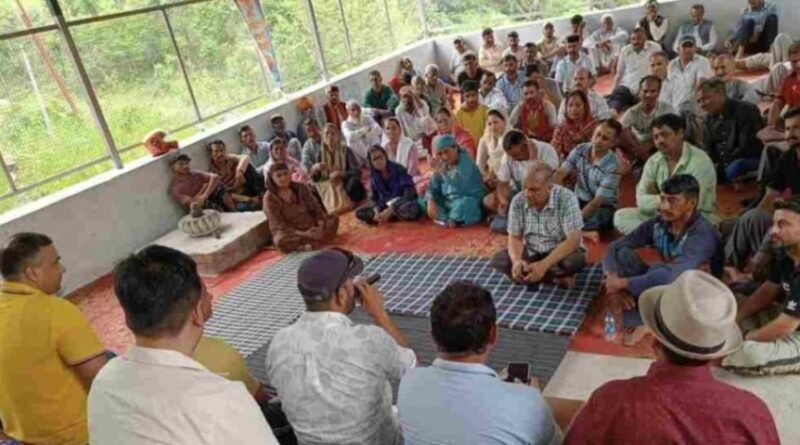
It is this deep-seated fear that brought the Renuka Dam Displaced Struggle Committee to a press conference in Nahan recently. But they were not there to chant slogans against development. Their grievance runs far deeper. As they stood before the microphones, their words cut through the silence—their fight, they insisted, is against the suffocating veil of opacity, the blatant disregard for environmental laws, and the casual dismissal of their basic human rights.
Secretary Yogi Thakur, speaking for the anguished community, voiced a suspicion that is keeping the villagers awake at night. He revealed that trees which were already meticulously counted and recorded in official files are now being subjected to a mysterious re-enumeration. “Who ordered this recount, and why?” he demanded, his voice trembling with frustration. “If the first survey and the Forest Department’s records were accurate, why are we going back to the drawing board? And if there were mistakes, then who takes the blame for that incompetence?” To the families watching closely, this feels less like due process and more like a deliberate sleight-of-hand—an attempt to twist the facts and shortchange them of their rightful compensation.
But the committee’s anguish doesn’t stop at paperwork. In a revelation that sent chills through the room, Thakur alleged that the debris from the project’s tunnels and mountain cutting—massive chunks of earth and rock—is being callously dumped straight into the lifeline of the region: the Giri River. “Instead of scientifically disposing of this waste at designated sites, they are choking our river,” he said. “This isn’t just a violation of environmental rules; this is a death sentence for the river’s purity, its aquatic life, and the very ecosystem that sustains us.” The committee has now demanded a thorough, independent technical investigation, and they want the culprits brought to book.
Adding fuel to the fire, the committee also accused authorities of felling trees across the project area even before the mandatory environmental studies and legal clearances were fully secured. They argue that by bulldozing through these protective laws in the name of “development,” the administration is planting the seeds of a massive ecological disaster. “You cannot build a future on a broken environment,” Thakur warned, pointing out that the forests are not just trees to them—they are their heritage, their shield against calamities.
Perhaps the most poignant blow was struck when Thakur turned his gaze toward the Forest Department itself. “The very department sworn to protect our woods and ecological balance is now at the center of this suspicion,” he lamented. “If everything is above board, why the secrecy? Why not open the records to public scrutiny? Why not welcome an independent audit?” His challenge hung heavy in the air: Development runs on the trust of the people—not on hidden files and whispered decisions.
The committee’s demands are clear and heartfelt. They are not asking for the moon—they want independent monitoring of every single stage of this project, from tree felling to debris disposal to actual rehabilitation. They want every record laid bare for the public to see. And above all, they want each affected family to receive fair compensation, respectful resettlement, and the legal rights that have been promised to them on paper for decades.
As the press conference drew to a close, the committee issued a resolute warning that echoed with the pain of sixty years. They vowed that Renuka will not be allowed to become yet another grim footnote in history—another Bhakra, another Pong—where the displaced are left waiting for a justice that never comes. “If this government continues to trample environmental laws and ignore our rights,” Thakur declared, his voice now firm with defiance, “then this struggle will no longer be just about money. It will transform into a vast, unstoppable movement—a fight to redefine what development truly means. We will settle for nothing less than justice, transparency, and a genuine seat at the table where our future is being decided.”


