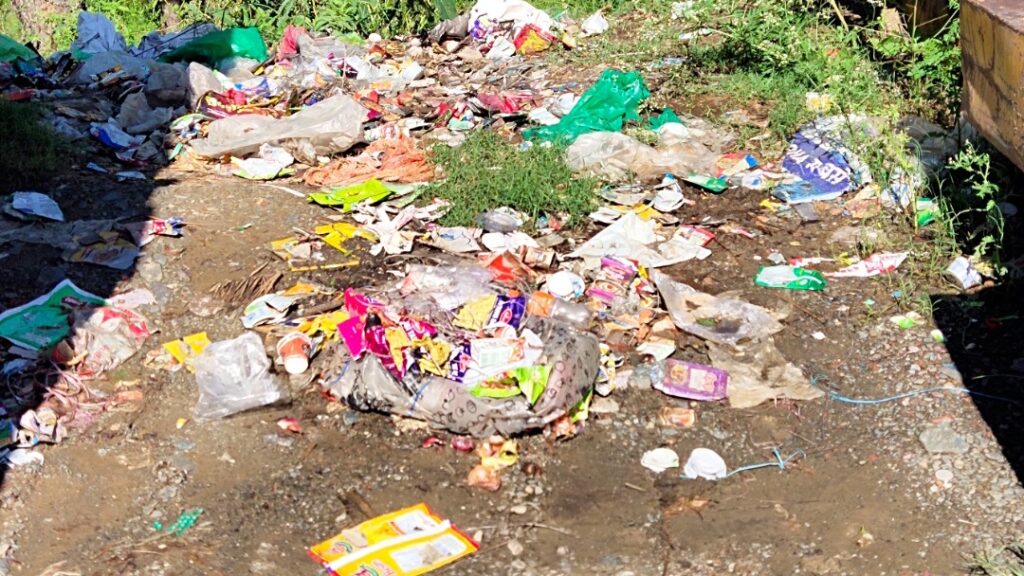
Shimla Struggles as Sanitation Workers’ Strike Leaves City Piled with Trash
Shimla woke up to another day of mounting garbage on Monday, as the ongoing strike by sanitation workers entered its third day, throwing the city’s waste management system into disarray. With no door-to-door collection taking place, garbage continued to pile up across neighbourhoods, markets, and busy roadside corners, leaving residents increasingly worried.
Early in the day, protesting workers gathered at CTO Chowk, raising slogans against the administration and demanding that their long-pending concerns be addressed. At the heart of their agitation is the restoration of the annual 10 percent salary increment along with other pay-related benefits, which they say are critical for their financial stability.
More than 800 workers from the SEHB Society, responsible for keeping Shimla clean, are part of the strike. Their absence has had an immediate and visible impact on the city, especially at a time when tourist footfall is high and waste generation is rising rapidly. The situation has sparked concerns over hygiene and the possibility of a larger public health issue.
Union leaders have made it clear that the strike will continue until their demands are met. They claim that despite repeated meetings with the Municipal Corporation, there has been little progress or concrete assurance on their salary concerns. The conflict escalated after the administration reportedly decided to discontinue the annual increment, a move that workers argue cannot be compensated by an increase in dearness allowance.
Even the invocation of the Essential Services Maintenance Act (ESMA) has failed to bring workers back on duty. Authorities have warned that the continued disruption of sanitation services could pose serious risks to both public health and the environment, but this has not deterred the striking employees.
In an attempt to manage the crisis, the Municipal Corporation has set up temporary arrangements across the city’s 34 wards. Residents have been asked to dispose of their waste at designated collection points, with over 200 such spots created for now. Municipal vehicles are also making rounds during the morning to pick up garbage, though the system is far from seamless.
Shimla’s mayor, Surender Chauhan, was seen stepping in on the ground, even taking part in garbage collection alongside hired workers. He assured residents that additional manpower and vehicles would be deployed to prevent the situation from worsening. At the same time, he appealed to the striking workers to return, promising that their concerns would be taken up during the upcoming AGM on June 4.
The crisis has once again exposed the fragile state of Shimla’s waste management system. With growing tourist numbers, limited dumping facilities, and the challenges of navigating narrow, hilly terrain, the city has long struggled to keep up with its sanitation needs. The current deadlock has only highlighted how heavily the system depends on a single workforce.
As garbage remains uncollected for days, the stench is growing stronger and concerns among residents are deepening. Many fear that if the situation drags on, Shimla could soon be facing a full-blown sanitation emergency. More importantly, the episode has renewed calls for a sustainable, long-term solution to the city’s recurring garbage woes.