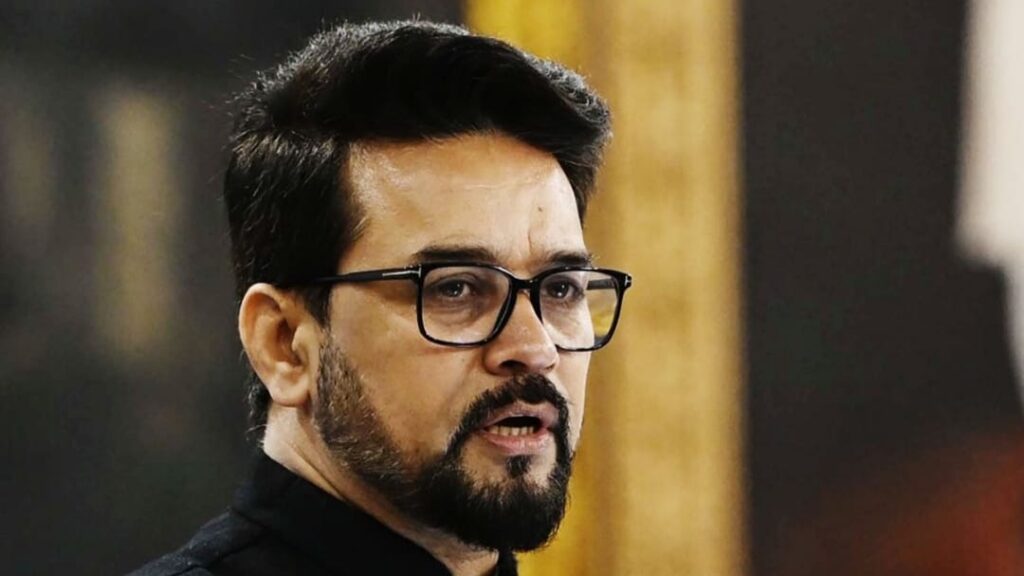
Lottery Comeback Faces Resistance: Anurag Thakur Urges Himachal Government to Reconsider Move
A fresh political debate has emerged in Himachal Pradesh after the state government initiated steps to revive the lottery system, a practice that has remained banned for nearly two decades. Former Union Minister and Hamirpur MP Anurag Singh Thakur has strongly opposed the move, urging Chief Minister Sukhvinder Singh Sukhu to immediately withdraw the tender issued for restarting state-run lotteries.
In a letter addressed to the Chief Minister, Thakur expressed concern over the Finance Department’s recent e-tender seeking a sole selling agent to operate both online and offline lottery systems in the state. He argued that bringing lotteries back could have far-reaching social and economic consequences, particularly for vulnerable sections of society.
A Ban Rooted in Public Concern
Thakur pointed out that opposition to lotteries in Himachal Pradesh has historically cut across political lines. He recalled that the late 1990s saw widespread concerns over the impact of lottery gambling on government employees, pensioners, labourers and young people, prompting the then Dhumal-led government to impose a ban in 1999.
According to him, when lotteries resurfaced years later, the Virbhadra Singh government once again decided to prohibit them in 2007. He noted that successive governments, irrespective of political affiliation, chose to continue the ban despite facing financial challenges, reflecting a shared belief that the social costs outweighed potential revenue gains.
For Thakur, this long-standing consensus was not merely a political decision but the result of lessons learned from the experiences of families affected by lottery addiction and financial losses.
Fears Over Online Lottery Expansion
One of the biggest concerns highlighted by the BJP leader is the proposed online lottery model. Referring to details in the tender document, he noted that the system could include up to 12 lottery draws every day, in addition to three annual bumper draws.
Thakur warned that digital access could make gambling far more pervasive than before. With lotteries potentially available through smartphones and online platforms, he argued that participation could become easier for lower- and middle-income households, increasing the risk of financial hardship.
He said many families had suffered in the past after losing salaries, savings and even pension funds through lottery gambling, and cautioned against repeating the same experience.
Revenue vs Social Responsibility
While acknowledging the state’s financial pressures, Thakur questioned whether lotteries would offer any meaningful solution to Himachal Pradesh’s fiscal challenges.
He pointed out that the state’s debt has crossed ₹1.10 lakh crore and argued that the expected annual revenue of around ₹100 crore from lotteries would be relatively small in comparison. Drawing parallels with states such as Kerala, he noted that large lottery sales often do not translate into equally significant government earnings once expenses such as prize money, commissions, advertising and operational costs are deducted.
Invoking Articles 38 and 47 of the Constitution, Thakur asserted that governments have a responsibility not only to raise revenue but also to protect public welfare and prevent practices that may cause social harm.
Alternative Ways to Strengthen State Finances
Rather than relying on lotteries, Thakur urged the government to focus on structural fiscal reforms and better revenue collection mechanisms.
He specifically highlighted the need to improve GST compliance and enhance digital integration in tax administration. Citing independent estimates, he claimed that such measures could potentially generate an additional ₹250-350 crore annually, substantially more than the revenue expected from the proposed lottery system.
According to him, these reforms would strengthen the state’s finances without creating social risks or encouraging gambling among citizens.
Call to Preserve a Long-Standing Consensus
Concluding his appeal, Thakur urged the state government to scrap the lottery tender and continue the policy that has been maintained by successive administrations over the past two decades.
He argued that Himachal Pradesh’s consistent stand against lotteries has reflected a broader commitment to public welfare and responsible governance. As the debate gathers momentum, the issue is likely to remain a key political and social talking point, with supporters and opponents weighing the balance between revenue generation and social responsibility.
The final decision, however, will rest with the state government as it considers whether to proceed with the proposed revival of lotteries or maintain the long-standing ban.