International Seminar on Sardar Patel’s Vision: Integration, Unityand Federalism and Exhibition
A Journey’ to be Organized at the Indian Institute of Advanced Study
Hon’ble Vice President of India, Shri C. P. Radhakrishnan, to Inaugurate ‘Vande Mataram: A Journey’ Exhibition and Three-Day International Seminar
The Indian Institute of Advanced Study (IIAS), Rashtrapati NiwaA Journey’ to be Organized at the Indian Institute of Advanced Studys, Shimla—one of the country’s premier institutions of higher research in the fields of humanities, social sciences, and literature—will organize a three-day international seminar on the theme ‘Sardar Patel’s Vision: Integration, Unity and Federalism’ from July 10 to 12, 2026. The seminar will be inaugurated by the Hon’ble Vice President of India, Shri C. P. Radhakrishnan. On this occasion, he will also inaugurate a special exhibition titled ‘Vande Mataram: A Journey’.
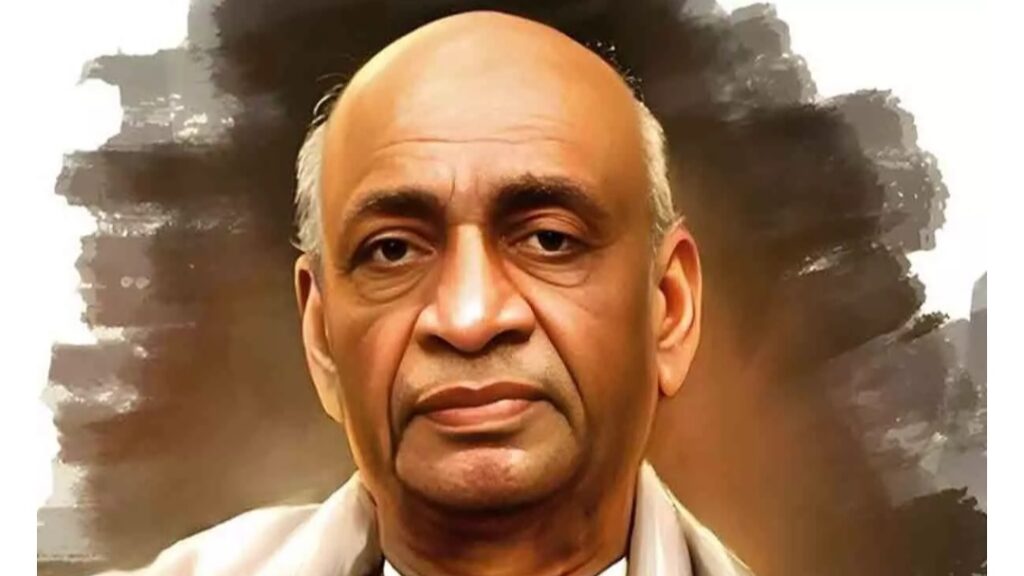
This seminar represents a significant endeavour to re-examine the extraordinary contributions of Sardar Vallabhbhai Patel, the principal architect of India’s political integration. Through his unique leadership, foresight, and unwavering political will, he peacefully integrated over 560 princely states, laying the foundation of modern democratic India. Although his contribution to national integration is widely acknowledged, the seminar aims to undertake a deep academic analysis of his constitutional vision, administrative philosophy, concept of cooperative federalism, and their relevance in the context of contemporary national and global challenges.
At a time when many nations across the world are grappling with complex challenges such as national unity, regional aspirations, constitutional federalism, good governance, internal security, identity-based politics, and geopolitical uncertainties, this seminar will engage in serious deliberation on whether Sardar Patel’s ideas continue to provide meaningful guidance for strengthening democratic institutions, constitutional governance, and national unity. The seminar will seek to understand Sardar Patel not merely as a historical figure but as a living intellectual tradition and a source of inspiration for contemporary public policy and nation-building.
This academic discourse holds particular significance for India as it advances towards realizing the vision of a ‘Viksit Bharat’ (Developed India). Questions relating to centre-state relations, balanced regional development, administrative efficiency, internal security, cooperative federalism, and constitutional governance remain central to the evolution of Indian democracy. A reassessment of Sardar Patel’s political thought in the present context can provide new direction to these national discourses.
The seminar has been conceived as a multidisciplinary platform where historians, political scientists, constitutional experts, sociologists, scholars of public administration, legal experts, strategic affairs specialists, journalists, and researchers will engage in deliberations. Participants will study Sardar Patel’s contributions not merely in the context of India’s political integration but within the broader framework of the Indian federal system, administrative institutions, all-India services, national security architecture, and the evolution of constitutional democracy.
The concept note of the seminar emphasizes that Sardar Patel advocated a robust federal framework that maintained a balance of cooperation, consultation, and mutual trust between the Centre and the states. For him, federalism was not merely a concept confined to constitutional provisions but the foundation of democratic legitimacy, national accountability, and consensus-based governance. This perspective remains highly relevant in contemporary discourses on good governance, decentralization, and cooperative federalism.
The seminar will feature detailed discussions on topics including Sardar Patel’s philosophy of national integration, the merger of princely states, centre-state relations, contemporary Indian federalism, administrative machinery, bureaucracy, national security, diplomatic leadership, regional inequalities, constitutional development, and the continuing relevance of his ideas in strengthening unity in diversity. Comparative studies of global experiences in federalism and nation-building will also constitute an important part of the discourse.
A distinctive feature of this seminar will be the participation of numerous eminent scholars, historians, constitutional experts, and public intellectuals from India and abroad. Among the keynote speakers, Prof. Geeta Dharmapal, former Professor at the South Asia Institute, Heidelberg University, Germany, and currently Honorary Research Dean at the Gandhi Research Foundation, Jalgaon, will deliver an online lecture on ‘Integration as Dharma: Sardar Patel’s Gandhian Statecraft and the Making of India’. In terms of international participation, Prof. Lavanya Vemmasani, a distinguished scholar of Indian history and religion at Shawnee State University, Ohio (USA), will present her views on Sardar Patel’s role in the integration of Hyderabad State. Additionally, Prof. Kundan Singh from Sofia University will deliver an online lecture on ‘Sri Aurobindo and Sardar Patel’.
Other major highlights of the seminar include special sessions on the integration of Hyderabad, Kashmir, the hill princely states of Punjab, and the princely states of Odisha; Sardar Patel’s role in the creation of the Indian Civil Service; national security and administrative reforms; his intellectual connections with Mahatma Gandhi and Sri Aurobindo; the reconstruction of the Somnath Temple; fiscal federalism; constitutional development; archival heritage; nation-building; and challenges confronting contemporary federal democracies. These sessions will feature scholars from Jawaharlal Nehru University, University of Delhi, Sikkim University, Heidelberg University, Shawnee State University (USA), Sofia University, and numerous other prestigious universities and research institutions from India and abroad.
On the occasion of the inaugural ceremony, several important academic publications of the Institute will also be released. These include a coffee table book based on ‘Vande Mataram: A Journey’, the seminar proceedings titled ‘Eternal Radhakrishnan: Darshana, Temporality, and the Man’, and a multilingual poetry anthology dedicated to Dr. Sarvepalli Radhakrishnan. The ‘Vande Mataram: A Journey’ exhibition, to be inaugurated on this occasion, will highlight the historical evolution of India’s national song, its role in the freedom movement, and its contribution to the formation of national consciousness. The exhibition has been conceived and curated by the distinguished researcher and author Shri Akhilesh Jha, with Smt. Rashmita Jha as co-curator. Kumari Shreyasi Jha has also made significant contributions to enriching the creative and research-oriented character of the exhibition, with her creative work lending an engaging and impactful character to its historical narrative.
The Indian Institute of Advanced Study has consistently served as an important platform for national-level intellectual dialogue on themes relating to civilizational discourse, constitutional values, and public policy. By bringing together eminent scholars, policymakers, thinkers, and researchers on this subject of national importance, the Institute aims to foster meaningful public discourse grounded in rigorous academic research.
This seminar will encourage new research on Sardar Patel’s intellectual legacy, promote interdisciplinary studies, strengthen evidence-based discourse on federal governance, and contribute to developing a broader public understanding of India’s constitutional evolution. Its findings will prove equally valuable for students, research scholars, civil servants, policymakers, legal experts, the media, and citizens interested in national integration, good governance, and democratic institutions.
Beyond its academic significance, this seminar holds great relevance from a broader societal perspective. At a time when public discourse is often influenced by misinformation, social polarization, and divisive ideologies, revisiting the ideas of a leadership that established national consensus and unity amidst diversity assumes particular importance. Sardar Patel’s emphasis on dialogue, constitutionalism, institutional robustness, administrative integrity, and national unity continues to offer highly valuable guidance for democratic societies today.
This seminar will endeavour to reaffirm the idea that national integration is not merely an achievement of history but an ongoing democratic process rooted in constitutional commitment, enlightened citizenship, strong institutions, and cooperative governance. Through scholarly dialogue and serious deliberation, this event will seek to develop a deeper understanding of India’s nation-building journey and underscore the continuing relevance of Sardar Patel’s visionary perspective in the twenty-first century.