Cold Desert, Hot Day: Tabo’s Surprising 31.9°C Raises Questions About Himalayan Weather
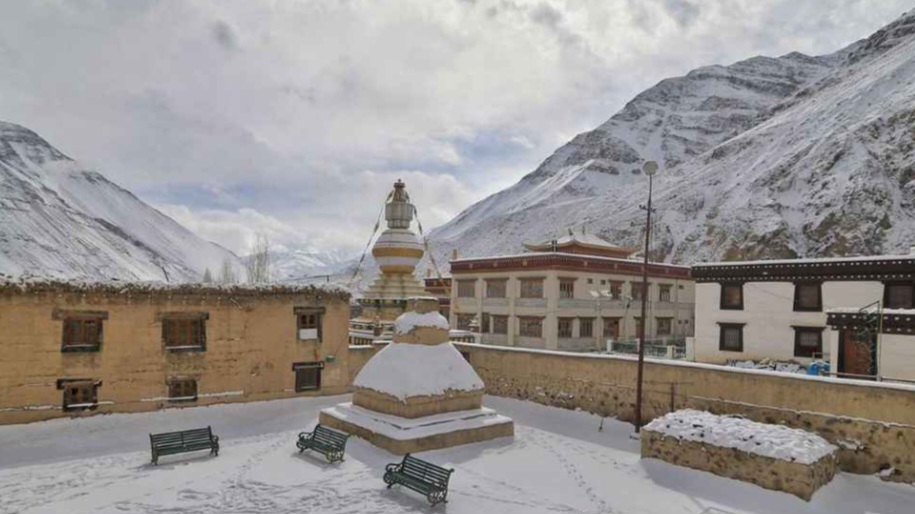
For most people, Tabo is synonymous with icy winds, harsh winters, and the rugged beauty of Spiti Valley’s cold desert landscape. Nestled amid towering barren mountains at an altitude of over 3,200 metres, the village is known more for freezing temperatures than summer heat. Yet on Sunday, Tabo witnessed an unusually warm day, with the mercury soaring to 31.9°C, a temperature more commonly associated with Himachal Pradesh’s lower and warmer districts.
What made the reading remarkable was not just the number itself, but how closely it matched temperatures in some of the state’s hottest regions. Una, the warmest station in Himachal that day, recorded 34.6°C, while Bilaspur touched 33.5°C, Neri 33.2°C, Mandi 32.8°C, Kangra 32.1°C, and Hamirpur 32°C. Tabo was only a few degrees behind, despite being located high in the Himalayan cold desert.
Another high-altitude destination, Keylong in Lahaul-Spiti, also recorded a relatively high maximum temperature of 26.1°C. By comparison, popular hill stations like Shimla and Manali remained cooler at 24.1°C and 24.2°C, respectively.
Why Can a Cold Desert Get So Hot?
At first glance, the temperature in Tabo may seem puzzling. However, weather experts explain that a “cold desert” does not necessarily mean cool conditions throughout the year. The term refers more to the region’s dry climate and extremely low rainfall than to its daytime temperatures.
Spiti lies in the rain-shadow region of the Himalayas and receives very little precipitation. During summer, clear skies and intense solar radiation can rapidly heat the land surface, causing temperatures to rise dramatically during the day. The dry atmosphere allows sunlight to warm the valley efficiently, often resulting in surprisingly warm afternoons.
At the same time, temperatures can drop sharply after sunset. This large difference between day and night temperatures is one of the defining features of high-altitude desert regions like Spiti.
More Than Just a Hot Afternoon?
While Tabo’s 31.9°C reading grabbed attention, experts caution against linking a single weather event directly to climate change. Weather fluctuates daily due to local atmospheric conditions, cloud cover, wind patterns, and sunshine levels. One unusually warm day alone does not establish a long-term climate trend.
However, scientists have increasingly pointed to changing weather patterns across the Himalayan region. In recent years, Himachal Pradesh has experienced more frequent temperature extremes, erratic weather events, and warmer-than-normal conditions even in traditionally cool locations.
Why Rising Temperatures Matter in Spiti
For fragile mountain ecosystems such as Lahaul-Spiti, even small changes in temperature can have far-reaching consequences. Snowfall, glacier health, snowmelt timing, stream flow, and water availability for farming are all closely linked to temperature patterns.
Local communities depend heavily on these natural systems. Changes in snow accumulation or the timing of snowmelt can affect agriculture, water resources, and the overall ecological balance of the region. Scientists therefore continue to monitor temperature trends closely in the Himalayas.
A Reminder of a Changing Mountain Climate
Tabo’s unusually warm day does not mean the cold desert has suddenly become a hot destination. The region still experiences long, severe winters and remains one of India’s most distinctive high-altitude landscapes. But the reading serves as a reminder that mountain weather can be far more complex than the common assumption that higher altitude always means colder temperatures.
As thermometers in traditionally cold Himalayan regions occasionally begin touching unexpected highs, such observations are drawing greater attention. One hot afternoon may not prove climate change, but if such events become more frequent over time, they could offer valuable clues about how the Himalayan environment is evolving in a warming world.