A Chain of Flames: A Himalayan Community’s Fight Against Fire
Another village in the serene Seraj valley of Banjar has been scarred by fire, raising urgent questions. Why is the Nohanda area witnessing such devastation? In just six weeks, flames have ravaged four villages here stated Guman Singh, Coordinator,Himalaya Niti Abhiyan.
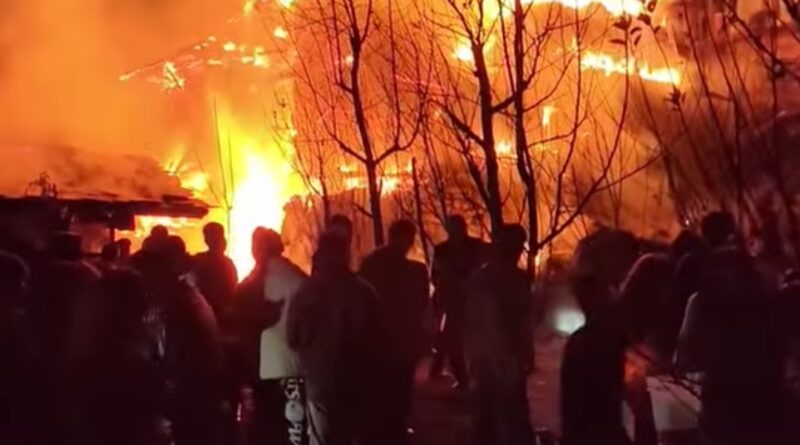
It began in Jhaneyar village, where a daytime inferno reduced 16 homes to ashes, leaving families reliant on government relief of seven to eight lakh rupees per house. Days later, a home in nearby Shahi village was lost. Last month, during the local Budi Diwali festival, a house in Nahin village burned. And now, on the evening of December 19th, 2025, the close-knit community of Pekhri village watched in horror as three precious hay storage barns (Khalh) were consumed by flames. Only the swift, collective action of villagers—many gathered for a community event—saved the entire settlement of 70-80 homes. The suspected cause? A simple, tragic human mistake near the dry hay.
This is not an isolated tragedy. Last year, the entire Tandi village in Banjar was lost. Memories of Kotla, Mohani, and Keuli villages burning in previous years are still fresh. A pattern of fear is settling over these high-altitude communities in Mandi, Kullu, and Shimla districts.
Why Do the Flames Keep Coming?
The roots of this vulnerability are woven into the fabric of life here. In these snowy reaches, winters demand storing vast amounts of hay for livestock in wooden barns (Khalh) attached or close to homes. The traditional Kath-Kuni houses, built tall from resin-rich deodar and kail wood for warmth, become tinderboxes in the dry cold. Clustered homes, once a defence against the chill, now allow fire to race from roof to roof.
While climate change has reduced snowfall, old habits and new pressures persist. Hay is still stored near animals for convenience. A dropped match, a stray firecracker, an electrical fault—often compounded by carelessness—can spell disaster in an instant.
A Village Blueprint for Safety
The solution must come from within, supported from outside. Here is what communities and authorities can do together:
- Create Safe Zones: Move hay storage away from residences. Clear dry grass and waste, especially from houses bordering forests.
- Build with Breath: Enforce planned village layouts with mandatory firebreaks between homes. New construction must consider slope, water flow, and geology.
- Empower Every Home: Make fire extinguishers mandatory and ensure every villager knows how to use them.
- Harvest Every Drop: Revive and build water storage—ponds, wells, overhead tanks—strategically placed above villages for gravity-fed crisis response.
- Bridge the Gap: Improve road access so fire tenders can reach these remote hamlets in time.
- Knowledge is Armor: Launch continuous community training on fire prevention and emergency response.
- Let Communities Lead: The local Gram Sabha and Panchayat must be at the forefront. With government support, they should develop and enforce location-specific building codes that consider fire, floods, and landslides. Consensus is key, but safety cannot be compromised.
This is more than a policy brief; it is a plea from the Himalayas. It is a story of resilience—of villagers fighting flames with bare hands—but also a call for change. To preserve these ancient communities, we must build a new tradition of safety.