Himalayan Mega Projects Spark Fresh Concerns After Nepal Flood Disaster
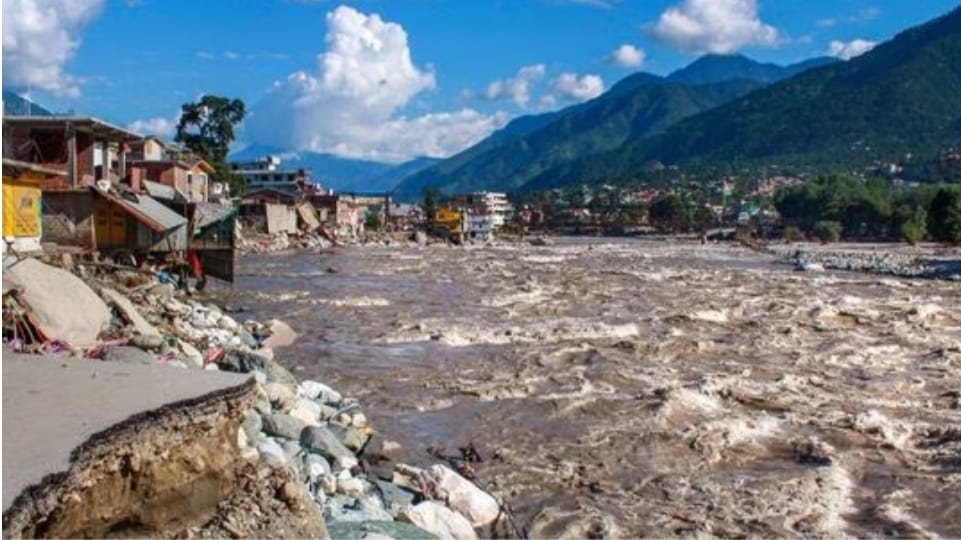
The recent flood disaster in Nepal has reignited a debate across Himachal Pradesh’s fragile mountain regions, with local residents, environmentalists and public representatives questioning whether the Himalayas can safely absorb a series of large infrastructure projects planned for the coming years.
From the proposed Chenab-Beas River Link Project to a massive 20,000 MW solar power transmission corridor and the strategically important Bhanupalli-Bilaspur-Manali-Leh railway line, concerns are growing that development ambitions may be outpacing environmental safeguards in one of the world’s most sensitive mountain ecosystems.
Many residents in Lahaul, Kullu-Manali and Mandi fear that recent disasters across the Himalayan region serve as a warning that ecological vulnerabilities cannot be ignored.
Chenab-Beas Link Project Under Scrutiny
At the centre of the debate is the ₹2,356 crore Chenab-Beas River Link Project, which proposes diverting water from the Chandra River to the Beas through an 8.7-kilometre tunnel beneath the Pir Panjal range in Lahaul and Spiti.
The project has gained renewed attention following the suspension of the Indus Waters Treaty after the Pahalgam terror attack. However, local communities are concerned that altering the natural flow of rivers could have unintended consequences for downstream regions.
Public representatives argue that increasing water flows into the Beas basin could potentially raise flood risks in areas that have already witnessed repeated devastation during heavy monsoon seasons. They are urging governments to conduct fresh environmental, geological and safety assessments before the project moves forward.
Fragile Mountains, Growing Risks
Residents point out that the Himalayan landscape is already under pressure from climate change, erratic rainfall, flash floods, landslides and glacial activity. Adding major construction activity, tunnelling and blasting operations could further destabilise mountain slopes, they argue.
Another concern relates to the disposal of excavation debris generated during construction. Locals fear that improper dumping of material could block river channels, increase sediment loads and create unstable debris dams that may collapse during extreme weather events.
Experts note that such risks become particularly significant in mountain regions where cloudbursts and glacial lake outburst floods can rapidly transform minor obstructions into major disasters.
Concerns Over Atal Tunnel Proximity
The proposed diversion barrage is expected to be built near Koksar village in Lahaul Valley, not far from the strategically important Atal Tunnel.
This proximity has become another source of anxiety for residents. Some fear that extensive tunnelling and blasting activity associated with the project could affect the long-term stability of infrastructure in the region, although technical assessments would ultimately determine such risks.
The project’s first phase involves constructing a 19-metre-high barrage on the Chandra River, while a second phase could include power-generation infrastructure linked to the diverted water flow.
Solar Transmission Project Also Raises Questions
Beyond the river-link proposal, concerns are also being raised about the planned ₹21,000 crore solar power transmission project, designed to evacuate nearly 20,000 MW of solar energy from the high-altitude deserts of Pang and Nyoma in Ladakh to Kaithal in Haryana, roughly 1,000 kilometres away.
The project will require the installation of large transmission towers across difficult mountain terrain and substantial land acquisition in environmentally sensitive areas.
Residents are asking for detailed studies examining the long-term ecological impact before any large-scale construction begins.
Railway Project Faces Environmental Questions
The proposed Bhanupalli-Bilaspur-Manali-Leh broad gauge railway line, estimated to cost more than ₹1.31 lakh crore, has also attracted attention.
One of India’s most ambitious infrastructure plans, the line is considered strategically significant. However, the project will involve acquiring approximately 2,200 hectares of land, constructing extensive bridges and tunnels and undertaking large-scale excavation work.
Around 55 per cent of the route is expected to pass through tunnels, making it one of the most challenging railway projects ever attempted in the country.
While supporters highlight its strategic and connectivity benefits, some residents worry about the cumulative environmental impact of multiple mega-projects being developed simultaneously across the Himalayan belt.
Call for a Holistic Review
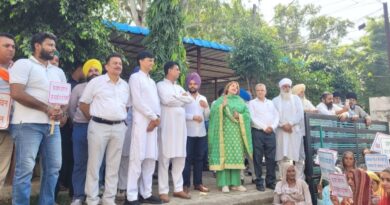
Kargil War hero Brigadier Khushal Thakur (Retd.) has been among those urging a broader review of all major projects planned for the region.
Speaking on the issue, he emphasised that the debate is not about opposing development but about ensuring public safety. According to him, the Chenab-Beas Link Project, the solar transmission corridor and the proposed railway line must all be evaluated together rather than in isolation.
He noted that the Beas River has repeatedly caused destruction during periods of intense rainfall, damaging homes, businesses, roads, farms and orchards across Kullu-Manali and Mandi districts.
Guman Singh, environmental activist and coordinator of the Himalaya Niti Abhiyan, said, “We oppose these proposed mega projects as they could severely damage the fragile Himalayan ecosystem and adversely impact the region’s tourism sector
Local residents share similar concerns, arguing that assurances alone may not be enough in a region where climate-related disasters are becoming increasingly frequent and unpredictable.
Balancing Development and Ecology
The growing debate highlights a difficult challenge facing policymakers. Infrastructure projects can bring strategic advantages, improved connectivity and increased energy generation. At the same time, the Himalayas are highly sensitive to environmental disturbances, and even small changes can have far-reaching consequences.
For many residents, the question is not whether development should happen, but how it can proceed without compromising safety, livelihoods and the long-term health of the mountain ecosystem.
As surveys and planning work continue, communities across Himachal Pradesh are calling for comprehensive environmental reviews, transparent consultations and rigorous safety assessments to ensure that future development strengthens the region rather than making it more vulnerable to disaster.