Nauni University Sets Roadmap for Advancing Himalayan Farming and Forestry
Dr YS Parmar University of Horticulture and Forestry, Nauni, has outlined a comprehensive roadmap to strengthen its research and extension activities, with emphasis on climate-resilient horticulture, farmer-centric technologies, crop diversification, industry-academia collaboration, digital extension, innovation, patents and enhanced national and international research visibility.
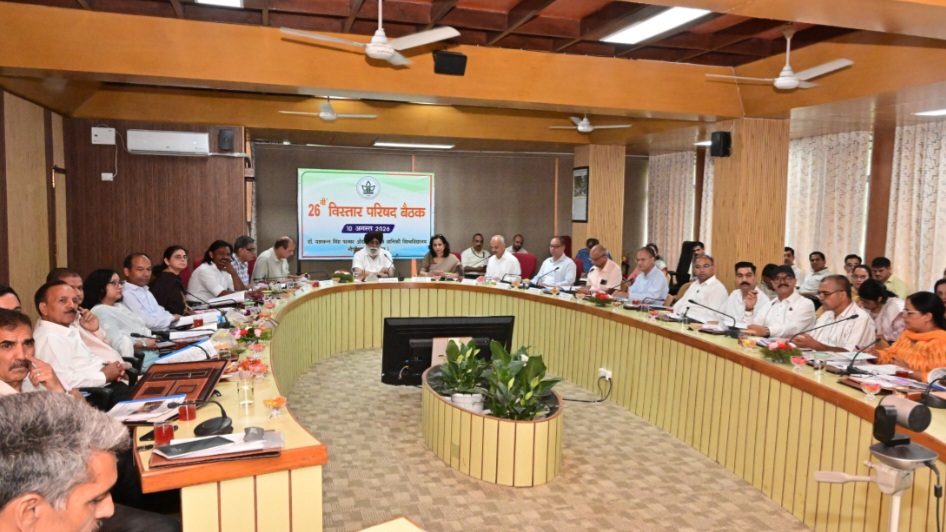
The roadmap was discussed during the 28th Research Council and 26th Extension Council meetings chaired by Vice Chancellor Prof. Harminder Singh Baweja. The meetings brought together senior officials from the Agriculture, Horticulture and Forest Departments, progressive farmers, university scientists, Heads of Departments, research stations, Krishi Vigyan Kendras and other stakeholders.
The Councils reviewed the University’s activities during the past year and deliberated on priorities for the coming years, focusing on emerging challenges in Himachal Pradesh’s agriculture, horticulture, forestry and allied sectors. Members also discussed strengthening dissemination of various schemes and programmes of the State and Union Governments through the University’s extension network. The potential of garlic cultivation, processing and export, waste to wealth initiatives was also deliberated upon, with emphasis on research and value addition.
Director Extension Dr DP Sharma informed the Council that the University had reached more than 33,000 farmers during the past 10 months through on- and off-campus training programmes, diagnostic visits, demonstrations and other extension activities. The University’s digital extension initiatives have further expanded its outreach, with technical videos on crops, scientific production practices and emerging agricultural issues being regularly viewed by lakhs of people across social media platforms.
Director Research Dr Devina Vaidya presented the University’s research achievements during the past year and outlined future research priorities. Inputs from progressive farmers and departmental officials were incorporated into the deliberations. She informed the Council that the University had secured 29 research projects worth ₹11.58 crore during the past 10 months and highlighted the University’s growing collaborations, with several MoUs signed with leading institutions to strengthen academic and research partnerships.
Chairing the Councils, Vice Chancellor Prof. Harminder Singh Baweja said the University’s future research and extension system must be farmer-centric, industry-relevant, digitally connected, climate-resilient and innovation-driven, with research translated into technologies and solutions benefiting farmers and society. “Our objective is to build an ecosystem where a farmer’s problem becomes a research priority, research generates an innovation, innovation leads to intellectual property and the resulting technology reaches the farmer and society,” Prof. Baweja said.
He added that Climate-resilient horticulture will remain a key research focus, particularly on changing climatic conditions, emerging pests and diseases, resilient varieties and rootstocks, water-efficient production systems and scientific evaluation of emerging crops such as avocado, kiwi, berries, nuts and dragon fruit. Digital tools, including technical videos, mobile advisories and emerging AI-enabled diagnostic systems, will be increasingly integrated into extension for timely dissemination of reliable scientific information.
Emphasis was also laid on high-quality publications, citations, patents, externally funded research, technology transfer and international collaborations to strengthen its national and global research standing. Research on cleaner, cheaper and sustainable alternatives to agricultural inputs was identified as another priority, including bio-inputs, efficient nutrient and water management, waste-derived products and other affordable technologies.
During the discussions members stressed the need to accelerate crop diversification, evaluate newer varieties and strengthen research on technologies suited to changing climatic conditions and emerging farmer requirements. The Research Council emphasised demand-driven and multidisciplinary research, with stronger linkages between farmer problems, scientific research and industry requirements. The Extension Council also emphasised greater focus on post-harvest management, food processing, value addition, water conservation and forest-based enterprises. Existing initiatives such as biochar and pine briquetting will be further linked with research and extension on waste-to-wealth technologies.
The Research Council was attended by progressive farmers Surender Singh Mehta, Manoj Negi, Pramod Singh Pathania, Dr Suman Rattan and Shri Bhura Singh, while Shri Lachiya Ram and Shri Rajesh Kumar participated in the Extension Council meeting. Officials and experts participating in the deliberations included Dr BN Sinha and Dr ND Negi of CSK HPKV Palampur, Dr Neeti Soni, Additional Director Agriculture, Shri NP Barot, Conservator of Forests, Solan, Dr Shiwali Thakur, Deputy Director Horticulture, Solan, Dr Devender Attri, SMS, and Shri Pradeep Kumar Chauhan, DFO, Solan, among others.