From Looms to Connectivity: How Himachal’s Weavers Will Find New Direction Through the Him MSME Fest
When thousands of handwoven shawls adorned Shimla’s historic Ridge ground, it was more than just a grand exhibition—it was a glimpse into the future of Himachal’s weaving community. The successful organization of the Him MSME Fest 2026 left behind a powerful question: can this celebration truly change the lives of weavers in the years ahead? The answer is yes. This event promises transformation on multiple levels.
For decades, weavers remained on the margins of policy and markets. Their artistry was admired in exhibitions but rarely integrated into mainstream economic planning. The Him MSME Fest reversed this trend. Here, products were not just displayed—they told stories. Buyers and investors witnessed firsthand who spins the wool, who designs the patterns, and which mountain villages still wake to the sound of looms at dawn.
Changing Conditions: Income, Identity, and Respect
The most immediate impact will be on earnings. Weavers gained direct access to wholesalers, fashion houses, and exporters, reducing dependence on middlemen. With rising global demand for “handmade” and “slow fashion,” shawls are no longer seen merely as winter wear but as premium products commanding better prices.
Changing Direction: From Folk Art to Brand
The festival taught weavers that art survives only when it becomes a brand. District identities—Kullu, Kinnaur, Mandi, Kangra—will now grow stronger, with emphasis on packaging, tagging, and storytelling. GI tags and authenticity marks are being embraced, shifting weavers from artisans to entrepreneurs. Women, long active in weaving but under-recognized, will organize through self-help groups, while youth will find new economic reasons to connect with looms.
Tradition Meets Technology
The Fest also proved that technology is not the enemy of tradition. Digital marketing, e-commerce platforms, online orders, and custom designs showed weavers that while looms may remain in villages, their markets can span the globe.
Administrative Support: From Festival to Policy
Perhaps the greatest achievement was that the event did not end as a one-time celebration. The Industries Department, MSME framework, and District Industry Centers assured weavers of ongoing training, design upgrades, financial support, and market linkages—beyond the festival itself.
Voices from the Fest
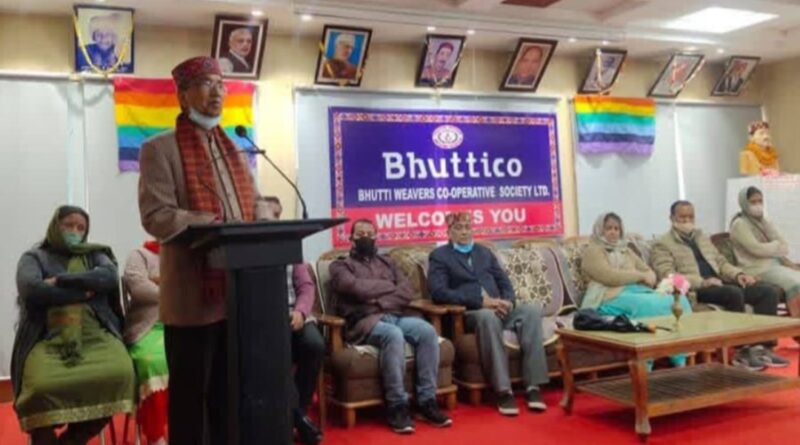
“In the coming years, Himachal Pradesh can emerge as a hub for handloom tourism, slow fashion, and heritage textiles. This change won’t happen overnight, but the direction is set. The festival reminded weavers that their art is not just a legacy of the past, but a promise for the future.”
— Satyaprakash Thakur, Bhuttico Weavers, Kullu
“When the sound of looms reaches policy-making, then both conditions and direction will change. The echo that rose from Shimla’s Ridge must reach every village in the state—that will be the true success of this festival.”
— Om Prakash Malhotra, Founder, Krishna Wool, Mandi
Him MSME Fest 2016: When District Shawls Became Identity Through Collective Leadership
At the Fest, colorful shawls caught the audience’s eye, but behind them lay stories of district-level effort, planning, and administrative dedication. Each district’s shawl became a symbol of collective leadership, where local experience and cultural understanding gave Himachal its identity on stage. General Managers played a decisive role—connecting artisans and proudly presenting their heritage.
- Shimla: GM Sanjay Kanwar emphasized shawls as symbols of mountain dignity, showcased with simplicity and grace.
- Kangra: GM Om Prakash Jaryal highlighted shawls infused with the soul of local painting traditions.
- Kullu: GM Rajesh Sharma called Kullu shawls the state’s global identity, presented with pride and respect.
- Bilaspur & Mandi: GM G.R. Abhilashi underscored handlooms as the backbone of rural economy, managing dual responsibility with vision.
- Solan: GM Surendra Kumar balanced tradition with innovation, adapting shawls to modern market needs.
- Sirmaur: GM Vineet Sharma showcased shawls rooted in durability and simplicity.
- Kinnaur: GM G.L. Negi described shawls as stories of altitude, climate, and lifestyle—reflecting both toughness and beauty.
- Coordination: Manager Vikas Govardhan Das unified district efforts into a shared vision of Himachal.
Behind the Scenes: The “Back-End Heroes” of Peterhof
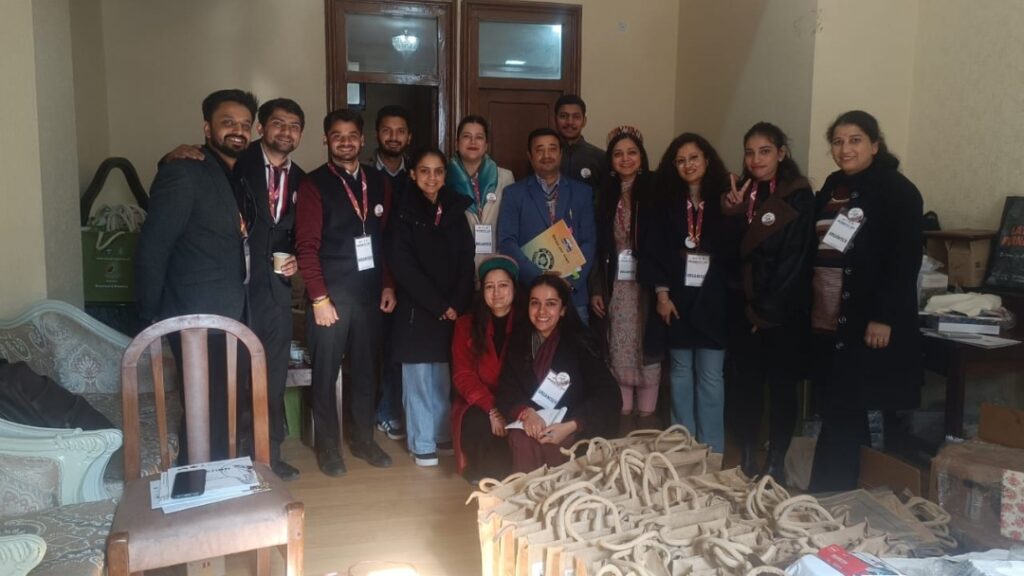
While guests, applause, and cameras filled the grand halls of Peterhof during the Fest, a dedicated team worked tirelessly behind the scenes. Led by Virendra Sharma, this team ensured that every detail—from guest honors to shawls, caps, and protocol—was handled with dignity and warmth.
Their efforts turned formal welcomes into heartfelt Himachali hospitality. From time management to logistics, from stage décor to guest coordination, each member played a vital role:
- Pauranik, Sahil, Sarvesh – Stage décor and guest coordination
- Natasha Katoch, Divya Sharma, Sunidhi Verma – Welcome and presentation
- Jaivanti, Sheeran Rathore – Time management and protocol precision
- Vinay Dutt, Gunjan Khimta – Logistics and backstage support
- Kritika Sharma, Jyoti Bakshi, Akanksha Sharma – Coordination and service with a smile
Their teamwork proved that event management is not entertainment but an art of discipline and dedication. The walls of Peterhof witnessed their commitment, reminding us that the soul of any event often resides behind the stage.