Strengthening Nutrition Through Collaboration: A United Push for Healthier Himachal
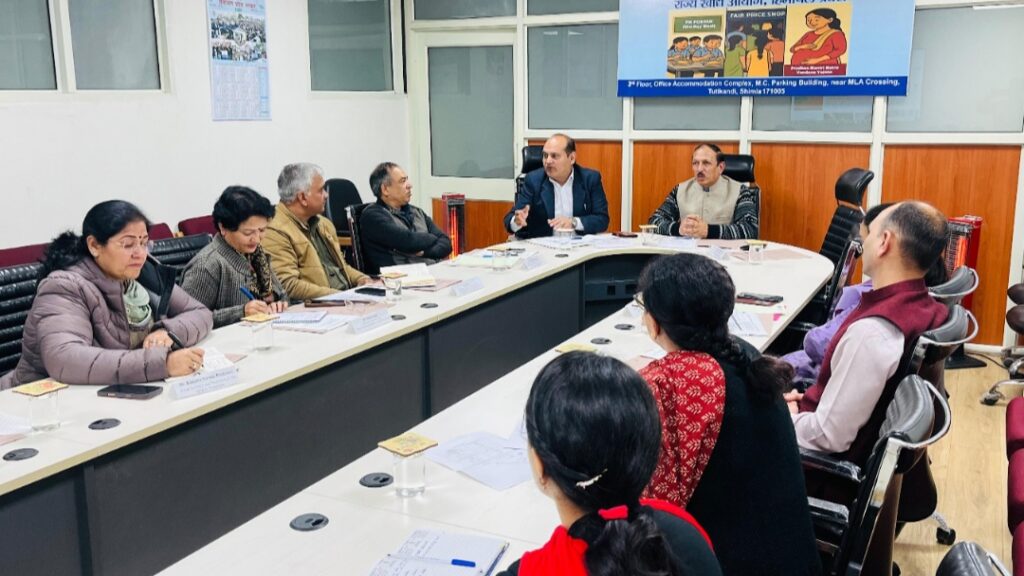
Chairing the meeting, Dr. S. P. Katyal set the tone by underlining a simple but powerful idea: better nutritional outcomes can only be achieved when departments work together seamlessly. He emphasized that stronger inter-departmental convergence is essential to enhance the impact of the State’s ongoing food and nutrition programmes.
The discussions that followed focused on deepening collaboration among key stakeholder departments and Chaudhary Sarwan Kumar Himachal Pradesh Krishi Vishvavidyalaya (CSK HPKV), Palampur. Participants explored practical ways to improve coordination, share resources, and draw on technical expertise to strengthen nutrition-related interventions. A major highlight was the need to design structured training and capacity-building programmes for Mid-Day Meal workers, Anganwadi workers, and school staff across the State.
Special attention was given to everyday yet critical aspects such as preparing nutritious recipes, thoughtful menu planning, and maintaining strict standards of hygiene and food safety. The meeting also recognized Nutri-Gardens as a game-changer at the grassroots level. Promoting and strengthening these gardens through Krishi Vigyan Kendras (KVKs) was identified as a key strategy to ensure access to fresh, locally grown, and nutritious food for children and communities.
To streamline coordination, it was decided that nodal officers would be designated from the Departments of Women & Child Development and School Education. These officers will act as the bridge between their respective departments and CSK HPKV, Palampur, ensuring smooth communication and aligned action. The University expressed its readiness to provide technical support, including developing comprehensive training modules tailored for both departments. These modules will cover improved kitchen practices, Nutri-Garden development, and other nutrition-focused initiatives.
CSK HPKV also offered to conduct master training programmes for selected personnel, who will then take this knowledge to the field and train others. This cascading approach aims to ensure that best practices reach the grassroots and are implemented effectively.
Further discussions focused on creating need-based training content, developing standardized menus using locally available nutritious foods, and ensuring strict compliance with food safety norms. The importance of continuous technical guidance and field-level support from academic and extension institutions was strongly emphasized.
The meeting concluded with a consensus on preparing a coordinated action plan clearly defining roles, timelines, and responsibilities. Participants also stressed the need for strong monitoring systems, regular reviews, and sustained capacity-building to maintain momentum.
Wrapping up the deliberations, Dr. S. P. Katyal reiterated the importance of time-bound implementation, clear accountability at every level, and measurable outcomes. Above all, he stressed that the true success of these efforts would be reflected in improved dietary diversity, better hygiene practices, and active community participation—ensuring lasting, positive change on the ground.