Relief for Hospital Commuters, But Sanjauli Residents Seek Walkable Streets
For thousands of people travelling daily between Shimla, Sanjauli and the Super Speciality Hospital at Chamiyana, a significant change could soon ease commuting woes. The Himachal Pradesh High Court has directed authorities to open the Sanjauli Chowk–Dhali-Chamiyana road for light vehicles on a trial basis during peak morning hours, offering much-needed relief to patients, doctors and healthcare workers who have been struggling with traffic restrictions.
A Division Bench comprising Chief Justice Gurmeet Singh Sandhawalia and Justice Bipin Chandra Negi ordered that small private vehicles be allowed to use the route from 8:30 am to 9:30 am starting September 1. If the experiment proves successful, the road may also be opened during the busy evening period from 4:45 pm to 6:30 pm. However, the relaxation will apply only to smaller vehicles, while buses and heavy vehicles will continue to be restricted.
The issue had gained urgency after several departments of IGMC were shifted to Chamiyana Hospital. Patients, attendants, doctors and paramedical staff often found themselves taking a longer route via the Sanjauli bypass during restricted hours, adding both time and inconvenience to already stressful hospital visits. The matter reached the High Court through a public interest litigation filed by the Chamiyana Doctor Faculty Association, which argued that easier access to the hospital was essential, particularly in emergency situations.
During the hearing, concerns were also raised about healthcare facilities. The court was informed that an echocardiography machine had recently been shifted from IGMC to Chamiyana, forcing some cancer patients to travel between hospitals for diagnostic tests. Suggestions were made to ensure Echo testing facilities remain available at both locations to reduce hardship for patients.
Sanjauli’s Residents Demand Traffic-Free Hours and revival of “No Entry”
While few commuters welcomed the court’s intervention, the issue has also sparked a broader conversation about the future of road usage in Sanjauli itself.
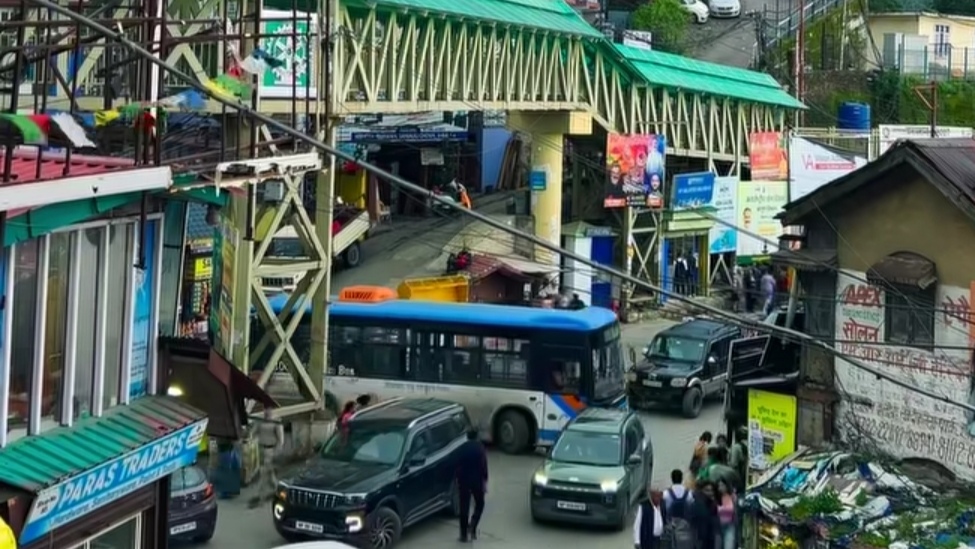
As evening approaches, Sanjauli’s bustling market road transforms into a sea of pedestrians. Students head home from coaching classes, families complete their daily errands, and senior citizens step out for walks. Yet residents say the increasing volume of traffic has made the road less safe and far less enjoyable.
Many locals believe the flat stretch of road, a rare feature in Shimla’s hilly landscape, should serve people before vehicles during certain hours. Students complain about navigating through traffic jams, while elderly residents say routine evening walks have become increasingly difficult amid constant honking and congestion. Parents, too, worry about children crossing the busy market road during peak hours.
Sanjauli residents, students, the Senior Citizens Association, Beopar Mandal, various RWAs, local organizations and civil society are have urged High Court to review its decision and consider introducing traffic-free hours in the Sanjauli main market during peak pedestrian times. Sanjauli residents argue that Sanjauli Dhali bypass was constructed with the intention of reducing traffic and why common pedestrian are being denied their rights. They believe that setting aside even a brief period each day for pedestrians would enhance safety, ease congestion-related stress, and help create a more people-friendly public space.
For many, the demand goes beyond traffic management. It is about reclaiming a sense of community. They envision a market where people can walk comfortably, meet neighbours, and enjoy the town’s social atmosphere without competing with endless lines of vehicles.
As the High Court’s road-opening trial begins next month, authorities will face the challenge of balancing two equally important needs: ensuring smoother access to critical healthcare services while preserving safe and pedestrian-friendly spaces for local residents. The court is scheduled to review the progress of the trial and related concerns on September 29, a date that could shape the future of traffic management in the area.