Learning, Rising, Remembering – A Day to Remember in Shoghi
Sometimes, a small gathering can hold big dreams. That’s exactly how it felt at the recent conference of the Himachal Gyan Vigyan Samiti’s Tutu unit, held in the quiet hills of Shoghi. It wasn’t just a meeting of agendas—it was a heartfelt reunion of people who believe in the power of knowledge, equality, and community.
The day began with a warm yet solemn note. The gathering paused to remember the late Chandu Devi, the first neo-literate woman of Himachal. She wasn’t a politician or a celebrity—just a determined soul who lit the torch of literacy for countless women in the state. The conference also bowed its head in memory of Bal Krishan Shastri, Mansa Ram Sharma, and Chandra Devi—ordinary people who did extraordinary things to build this organization from the ground up.
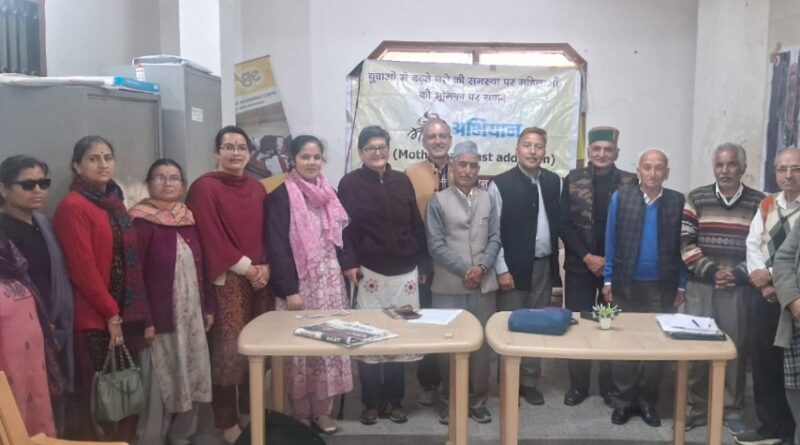
Then came the business of the day—but not the cold, corporate kind. A new 15-member team was formed, not just to hold titles, but to carry forward a mission. Hiranand Shandil was chosen as the President, Devkinand Sharma as Vice President, Pooja as Secretary, Leela Sharma as Treasurer, and Santosh as Joint Secretary. Along with them, Satya Sharma, Hemavati, Abhishek, Rajni, Anju, Manjusha, Jiyanand Sharma, Meena, and Meera stepped up as members. These aren’t just names on a list—they’re neighbors, teachers, and quiet activists from your own community.
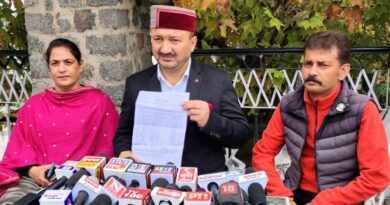
State Secretary Satyavan Pundir opened the conference with a voice that carried both hope and frustration. He spoke with pride about the last two years—the health camps, the anti-drug drives, the environmental awareness sessions, and the relentless push for women’s equality. But his voice cracked a little when he talked about the youth. “Our main fight,” he said, “has been against the rising drug crisis. We started the ‘Save Youth Campaign’ because we cannot afford to lose another child to addiction.”
He then took everyone back in time—to March 1, 1992. Right there in Shoghi, the Samiti had launched a literacy campaign across 15 panchayats of Mashobra block. Ordinary villagers picked up chalk and slate, neighbors taught neighbors. That small spark later became a model for the National Literacy Mission and the Himachal government. But today? “The state is now called fully literate,” Pundir said, shaking his head. “But the government has forgotten the thousands of volunteers and newly literate people who made it happen.” You could feel the weight of that silence.
Sumitra Chandel, National Convenor of the Equality Sub-Committee, kept the focus on the road ahead. “Let’s build from the ground up,” she urged. “Strengthen panchayat-level committees. That’s where real change lives.”
Hiranand Shandil then presented a report that was less about numbers and more about people. “Our Tutu unit is only two years old,” he said, “but in that time, we’ve brought nearly 200 members into the fold. We’ve fought against drugs, spread legal literacy, and promoted a scientific way of thinking. And we’re just getting started.”
By the end of the day, 27 participants had gathered—not a huge crowd, but a determined one. They took a simple, powerful pledge: to make the organization stronger. And before leaving, they chose all committee members as representatives for the upcoming district conference.
No grand stage. No media frenzy. Just ordinary people, meeting in a historic little town, quietly deciding to change the world—one literate woman, one drug-free youth, one scientific thought at a time.