Himachal Workers Observe Black Day, Demand Scrapping of 4 Anti-Labour Codes
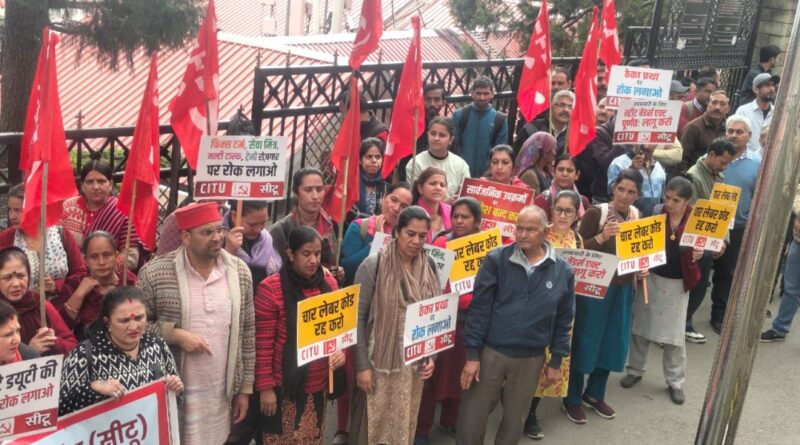
On a call given by a joint platform of central trade unions and national federations, workers across Himachal Pradesh, led by CITU, observed a statewide Black Day. They weren’t just protesting—they were fighting back against what they called four anti-worker labour codes.
From workplaces to block and district headquarters, workers gathered in large numbers. They submitted memoranda to Prime Minister Narendra Modi through local officials, with one clear demand: scrap these labour codes.
In Shimla, at the DC office, the protest saw CITU state president Vijender Mehra, secretary Balak Ram, and other leaders like Ramakant Mishra, Vivek Kashyap, and several women workers including Vidya, Nisha, Uma, Champa, and Surendra standing shoulder to shoulder.
Addressing the crowd, speakers didn’t hold back. “Once these codes come into effect,” one leader said, “70% of industries and 74% of workers will fall outside the protection of labour laws.” Another added, “If workers go on strike, they’ll face harsh punishments and heavy fines. Instead of permanent jobs, contract and fixed-term work will be pushed. And working hours? Raised from eight to twelve a day—that’s nothing short of bonded labour.”
They called the four codes a brutal assault on the rights India’s workers have won through decades of struggle. “Job security, fair wages, social security, trade union rights—all of it is under attack,” they warned.
Their demands were loud and clear: withdraw all four codes immediately. Strengthen existing labour laws—don’t weaken or kill them. Ensure a national minimum wage that actually allows a dignified life. Curb contract labour, promote permanent jobs. Guarantee social security—EPF, ESI, pension, gratuity—for every worker, no matter their sector or employment type. Protect trade union rights, including the constitutional right to organize and protest. And rethink privatization and disinvestment policies that are shrinking jobs and increasing exploitation.
For these workers, this wasn’t just another protest. It was a fight for survival.