From Soil to Success: A Farmer’s Journey Back to Nature
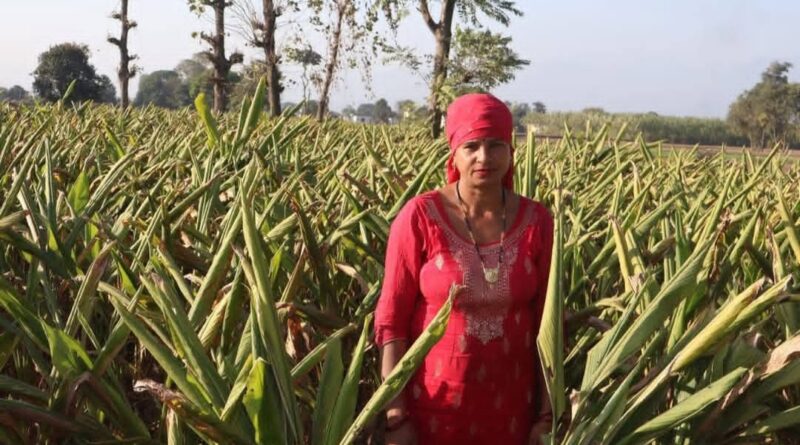
For Tarawati of Kedarpur village, the true meaning of a “happy farmer” has been rediscovered not in a bag of chemical fertilizer, but in the rich, dark earth of her own land, tended the way her ancestors might have done.
Her story is becoming a familiar one in Himachal Pradesh, where the state’s Natural Farming Happy Farmers Plan is shifting the focus from costly chemicals to sustainable, life-giving practices. The goal is simple yet profound: to empower farmers with low-cost, chemical-free methods that heal both the land and their livelihoods.
“I farmed for years the other way,” Tarawati shares, reflecting on the time when pesticides and chemical fertilizers were the norm. “But I watched my soil grow tired and sick. My health suffered, and my yields kept dropping. It felt like a losing battle.”
The change began when the state government, under Chief Minister Thakur Sukhvindra Singh Sukhu, introduced a scheme that promised more than just aid—it promised a new beginning. The plan guarantees a Minimum Support Price for natural produce, such as ₹90 per kg for raw turmeric, giving farmers like Tarawati the confidence to transition.
With guidance, she learned to make her own organic fertilizers and pesticides using native cow dung, urine, and local herbs. The results were startling.
“Last year, I planted just 45 kilograms of turmeric seeds using natural methods,” she explains, her voice bright with pride. “From that, I harvested about seven quintals. The government bought my entire crop for around ₹38,000.” She notes that the turmeric was not only more vibrant and aromatic but also cost far less to produce.
This year, emboldened by success, she has planted nearly two quintals of seeds and expects a yield of around 22 quintals. “The math is simple now,” she says. “My expenses have fallen, my income has risen, and my land is alive again.”
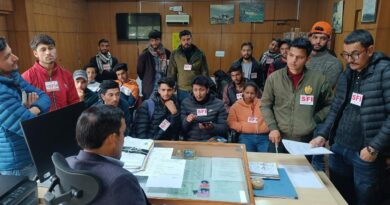
Her success has rippled through Kedarpur. Neighbors who once watched with skepticism now visit her fields, asking questions and hoping to learn. Tarawati’s thriving plot has become a classroom without walls.
“The state government has truly listened to us,” she says gratefully. “This scheme has given us more than a fair price—it has given us back our dignity, our health, and the future of our soil. For that, I thank them from the bottom of my heart.”
Tarawati’s story is a quiet testament to a larger movement: that the most powerful form of farming doesn’t come from a factory, but from a renewed respect for nature’s own balance.