From Policy to Plate: A Deputy Commissioner’s Garden Shows the Way
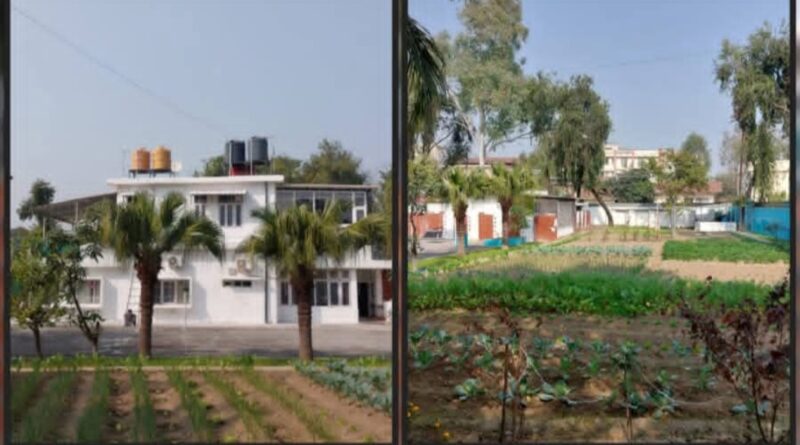
In the quiet garden of Deputy Commissioner Jatin Lal’s official residence, rows of beetroot, tomatoes, and garlic are doing more than just growing. They’re telling a story — one that begins with a personal choice and blooms into public inspiration.
“Change doesn’t always start from a conference room,” Lal reflects, kneeling beside a bed of fresh coriander. “Sometimes, it starts right here, from the soil of your own home.”
What began as an experiment in natural farming has now become a living example for the district. Every vegetable — from potatoes to turnips — is grown without chemicals, fed only by cow-based preparations and care. The air here smells of damp earth and growth, a quiet contrast to the usual formalities of a DC’s residence.
For Lal, the motivation is both personal and public. “A healthy life begins on the plate. And what’s on our plate should be free of poison,” he says, plucking a ripe tomato. “The taste alone convinces you — this is how food is meant to be.”
His garden is more than a hobby. It’s a statement: that policies written in files must find roots in the ground, and that those in leadership can lead not just by words, but by action.
A Movement Taking Root Across Himachal
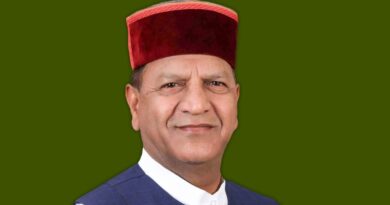
Lal’s small patch is part of a much larger shift across Himachal Pradesh. Under Chief Minister Sukhvinder Singh Sukhu’s push for chemical-free farming, thousands of farmers are turning back to nature.
In Una alone, over 14,240 farmers have been trained in natural farming, cultivating nearly 2,000 hectares without chemicals. Pyaro Devi, who heads the district’s agriculture technology wing, shares the human side of the numbers.
“We see pride returning to farmers’ faces,” she says. “They’re saving money on chemicals, getting better prices for their produce, and knowing they’re feeding families something safe.”
The government isn’t just preaching — it’s supporting. Subsidies are helping farmers build cow sheds, buy drums for natural pesticides, and even transport indigenous cows. For many, it’s the first time farming feels sustainable in both sense of the word — economically and ecologically.
Real Price for Real Produce
Perhaps the most reassuring change for farmers is the promise of a fair price. The state now guarantees ₹60 per kg for natural wheat and ₹40 for natural maize — along with a little extra for transport. Turmeric farmers, hearing of their neighbours’ success, now have an MSP of ₹90 per kg for their natural harvest, soon to be sold as “Himachal Haldi.”
“It’s not just about income,” explains Pyaro Devi. “It’s about dignity. When a farmer knows his natural maize flour is sold under the ‘Him Bhog’ brand in government shops, he feels recognized.”
Growing a Future, One Garden at a Time
Back in his garden, DC Jatin Lal sees this as only the beginning. “Natural farming isn’t just a technique — it’s a lifestyle. And if my garden can inspire even one family to grow their own food naturally, then we’ve already begun the change.”
He looks over the green rows, where the boundaries between a personal belief and a public mission seem to blur. Here, in this small patch of earth, a quiet revolution is growing — not with loud declarations, but with silent, stubborn roots.