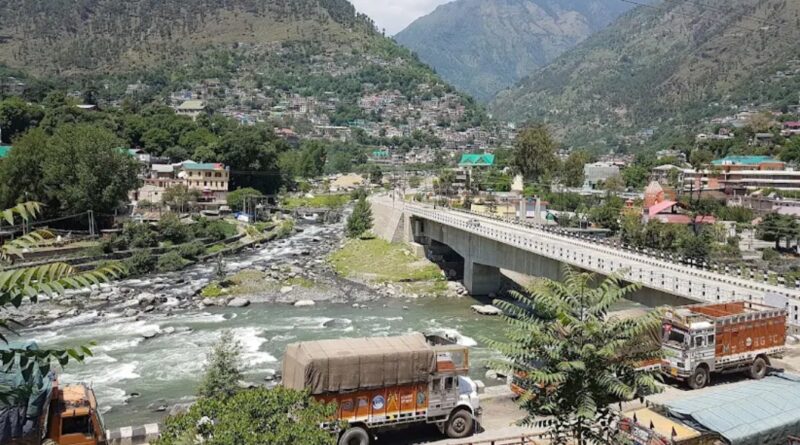
Bhoothnath Bridge Collapse: ₹14.75 Crore Lost, CAG Highlights Serious Lapses
A recent report by the Comptroller and Auditor General (CAG) has laid bare shocking lapses in the construction and approval process of the Bhoothnath Bridge in Kullu, exposing wasteful expenditure of nearly ₹15 crore. What was meant to ease traffic on the busy Kullu–Manali route ended up as a costly failure, operating for just five years before being shut down due to structural damage.
Built over the Beas River at a cost of ₹10.60 crore, the PSC box-girder bridge opened in October 2013. By January 2019, cracks and damage forced its closure, leaving commuters stranded and raising serious questions about quality control. The project, initially sanctioned for ₹5.51 crore in 2007, saw multiple revisions and was eventually executed on the contractor’s own design—without fresh administrative approval for the extra ₹2.02 crore spent.
The CAG report highlights a chain of failures: defective design, substandard construction, and missing inspection records. A magisterial inquiry had recommended a technical committee to investigate, but no such committee was ever formed. Even the Chief Engineer of Mandi confirmed that the contractor violated contract conditions.
Despite these findings, as of March 2023, no action has been taken against either the contractor or the officials involved. To manage traffic after the bridge’s closure, a temporary one-way valley bridge was built at an additional cost of ₹2 crore—adding to the financial burden on the state.
The audit warns that the failure to review designs, enforce quality checks, and rehabilitate the damaged structure has defeated the very purpose of the project: easing congestion and supporting local transport. Submitted to the government in April 2023, the report has reignited public concern over transparency and accountability in infrastructure projects.
The Bhoothnath Bridge stands today not as a symbol of progress, but as a reminder of how negligence and poor oversight can cost taxpayers dearly.