Keonthal Keeps Centuries-Old Diwali Traditions Alive with Dawalatha Ritual
The villages of Keonthal valley came alive with the traditional chant, “Ar Jamuna Paar Palita, Diwali Ra Dawalatha Hame Bhi Dita,” as residents celebrated Diwali by following customs that have been passed down through generations.
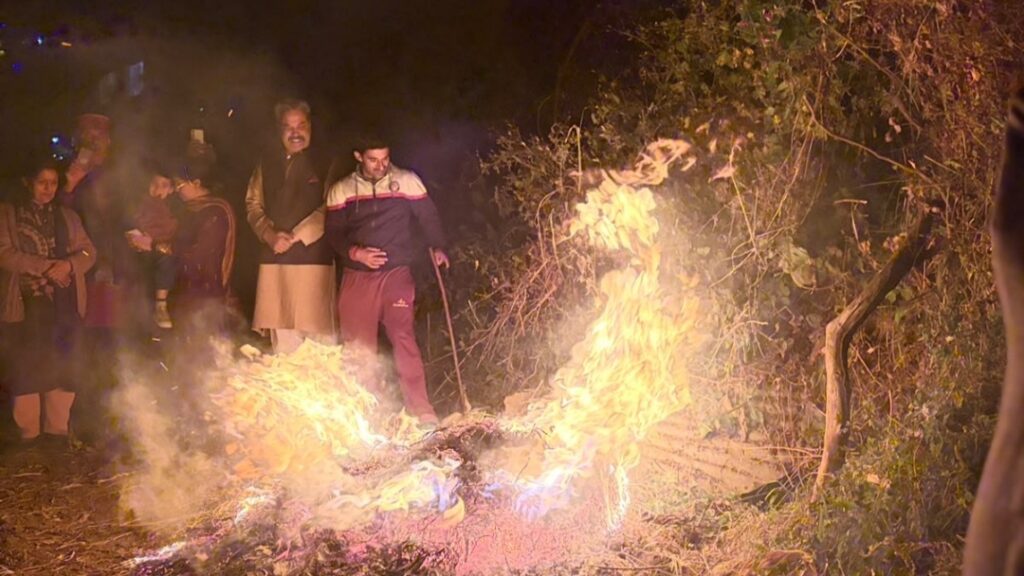
In the erstwhile Keonthal State, Diwali has long been associated with the ritual of lighting corn stalks and offering Dawalatha at village temples. After decorating their homes with rows of lamps, villagers gather at the local temple, where corn stalks are lit to create the ceremonial Dawalatha. Rice and walnuts are then offered to the sacred fire.
In Kajewada village near Junga, the celebrations continue the following morning on Padwa, when khichdi and curd are offered on the extinguished Dawalatha fire.
Local residents Daulat Ram Mehta, former village head Dayaram Verma and Durga Singh Thakur said that after the Dawalatha is lit, villagers hold an overnight vigil in honour of the presiding deity, Dev Junga. A large bonfire made from thick wooden logs, locally known as Ghaina, keeps burning through the night as devotees gather around it.
Mehta said a traditional vigil and bhajan-kirtan are organised every year at the temple of deity Junga in Devthi, drawing hundreds of devotees from surrounding villages. The following day, people seek blessings from the deity’s guru for peace and prosperity in the region.
The Keonthal region has 22 Tikas, or temples, dedicated to deity Junga, where traditional rituals are observed from Diwali until Bhai Dooj. In several villages, Kariyala, the region’s traditional folk theatre, is also performed as part of the festivities.
Villagers spend much of the night sitting around the Ghaina, combining devotion with conversation, laughter and community bonding. The centuries-old custom has helped make Diwali not only a religious festival but also a celebration of social unity and brotherhood.
Homes and temples across the region are decorated with lamps, while families prepare traditional hill delicacies. On Dhanteras, local households traditionally prepare mudi, while askalis are made on Chhoti Diwali and served with ghee, sugar and honey. On the main Diwali day, patanda and kheer are among the special dishes prepared.
Senior citizens say Diwali has traditionally been observed as a five-day festival in Keonthal. The celebrations begin with distinctive food traditions on Dhanteras and continue through Bhai Dooj, with each day carrying its own customs and rituals.
The festival also follows some unusual traditions linked to the region’s Dev culture. During Diwali, sleeping on wooden beds is considered taboo in several villages, with people instead sleeping on the floor. Women also traditionally refrain from washing their hair during the festive period.
Together, these customs continue to give Diwali in Keonthal a distinctly local character, keeping alive traditions that connect today’s celebrations with the region’s cultural heritage.