Tiny Scorpion, Big Discovery: New Species Unearthed in Jammu & Kashmir’s Shivalik Hills
In a remarkable discovery that underscores how much of the Himalayas still remains unexplored, scientists have identified a new species of scorpion in the Shivalik Hills of Jammu and Kashmir’s Reasi district. Found beneath rocks and even around human settlements, the small arachnid has now earned its place in scientific records as a species entirely new to science.
The newly discovered scorpion, named Liocheles gracilipalpus, was identified by researchers Virender K. Bhardwaj, Sunil Katal, H.T. Lalremsanga and Zeeshan A. Mirza during an ongoing study of the Western Himalayas’ arachnid diversity. Their findings were published in the August 2026 edition of Euscorpius, a leading international journal dedicated to scorpion research.
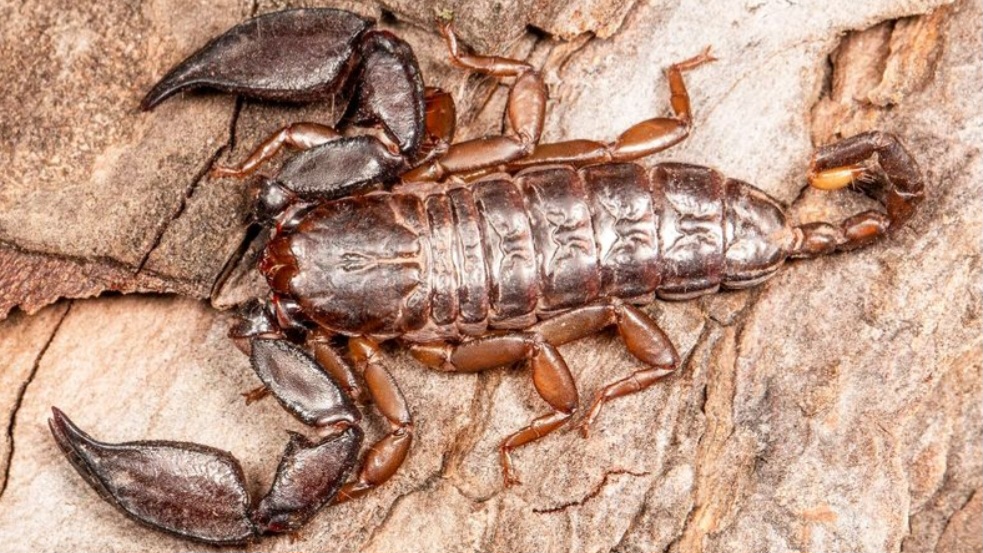
The discovery was made near Judda in Reasi district at an altitude of about 1,655 metres. While surveying the region, researchers initially encountered a population belonging to the Liocheles genus. However, closer examination revealed something unusual. The scorpions possessed exceptionally long and slender pedipalps, the pincer-like appendages that are one of their most distinctive features.
Further analysis confirmed that these were not just variations of a known species. Genetic testing showed that the Jammu population formed a unique evolutionary lineage, clearly distinct from other members of the Liocheles genus found in India and elsewhere.
The species was given the name gracilipalpus, derived from the Latin words for “slender” and “pedipalp”, a direct reference to its most striking physical characteristic. Male specimens, in particular, displayed unusually elongated pedipalps that set them apart from their closest relatives.
Although small in size, measuring between 34.8 and 43.2 millimetres in length, the newly identified scorpion is relatively large for its genus. Its body ranges from greyish-brown to dark brown, while its legs and tail are noticeably lighter. Researchers also observed clear differences between males and females, a phenomenon known as sexual dimorphism.
To confirm the discovery, scientists combined traditional anatomical studies with modern genetic techniques. By analysing a segment of mitochondrial DNA, they found that the Reasi specimens differed by 12 to 15 per cent from all other sampled Liocheles species, providing strong evidence that they represented a separate species.
Interestingly, the scorpion appears to be highly adaptable. While several specimens were found under flat rocks in natural habitats, researchers also recorded individuals living close to people, including inside wood-storage sheds. This suggests the species is capable of surviving in landscapes influenced by human activity, although much remains unknown about its ecology and population size.
Beyond the excitement of finding a new species, the discovery also highlights the enormous biodiversity potential of the Western Himalayas. Scientists note that the region has not been extensively surveyed, especially when it comes to smaller creatures such as insects, spiders and scorpions. Recent years have already seen the discovery of several new reptile species, and experts believe many more unknown species could still be waiting to be found.
The habitat where Liocheles gracilipalpus was discovered stretches well beyond Reasi, extending across parts of Himachal Pradesh, Jammu and Kashmir, and even into neighbouring Pakistan. Researchers believe future surveys could reveal a much wider distribution for the species.
The official reference specimens of the new scorpion have been preserved at the Departmental Museum of Zoology, Mizoram University, where they will serve as a valuable resource for future scientific research.
For researchers, the discovery is a reminder that even today, nature continues to hold surprises. A small scorpion hiding beneath rocks in the Shivalik landscape has expanded India’s biodiversity records and opened the door to further exploration of one of the country’s least-studied ecosystems. As scientists continue to probe the Western Himalayas, they believe many more hidden species could soon come to light.