Thousands of Expanding Glacial Lakes Put Northern India at Risk
High in the icy reaches of the Himalayas, a slow but potentially dangerous transformation is underway. As rising temperatures continue to melt glaciers across the Trans-Himalayan region, thousands of glacial lakes are growing larger each year, quietly storing enormous volumes of water behind fragile natural barriers. Scientists now fear that a single trigger, such as an earthquake, avalanche, landslide or dam failure, could unleash devastating floods across parts of Himachal Pradesh and beyond.
A recent study by the Himachal Pradesh Council for Science, Technology and Environment (HIMCOSTE) has identified an astonishing 2,292 glacial lakes in the Sutlej basin alone. While not every lake poses an immediate threat, experts warn that the rapid expansion of several high-altitude lakes is creating a new and complex disaster risk for communities downstream.
What makes the situation especially worrying is that more than half of these lakes, 1,335 in total, lie in Tibet under Chinese control. Any significant breach in these lakes could send massive surges of water through the Sutlej River into Himachal Pradesh before moving further downstream into Punjab. Since direct monitoring of these lakes is extremely difficult, Indian authorities must largely rely on satellite technology to track their behaviour.
Closer to home, the concerns are equally significant. The study found 470 glacial lakes in Spiti and another 487 downstream of Khab in Kinnaur. Many of these lakes hold millions of cubic metres of water in some of the world’s most fragile mountain landscapes.
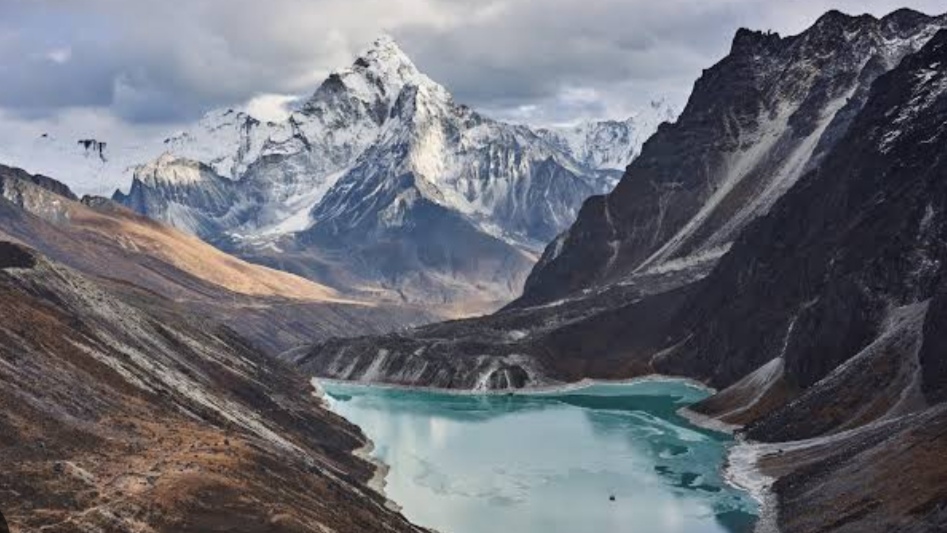
Among them, Gipan-Gath Lake near Sissu stands out as one of the clearest signs of change. In 1975, the lake covered about 27 hectares. Today, it spans nearly 110 hectares, making it the largest lake in Himachal Pradesh by surface area. Scientists attribute this dramatic growth to accelerated glacial melting driven by climate change.
While its size is remarkable, it is also the source of growing concern. A landslide, avalanche, earthquake or weakening natural dam could trigger a sudden release of water, sending destructive floods downstream through parts of Lahaul and potentially towards Jammu and Kashmir.
Experts caution that the threat is compounded by the region’s seismic vulnerability. Earthquakes can destabilise already fragile mountain slopes, triggering avalanches and landslides that may in turn breach glacial lakes. In such situations, disasters can unfold with frightening speed, leaving communities little time to respond.
According to disaster management specialists, the challenge extends far beyond simply identifying lakes. The key is understanding which ones are growing rapidly, which are held back by unstable natural dams and which lie in areas prone to seismic activity.
Hydro-engineer R.L. Justa points out another critical concern. Nearly three-fourths of the Sutlej basin lies in Tibet, while only a quarter falls within Himachal Pradesh. This means that a disaster originating hundreds of kilometres away could still devastate settlements, infrastructure and hydropower projects in India.
The anxiety is already being felt in local communities. Residents of Sangla Valley have voiced concerns over the expanding Yarpabang Lake near Debar Kande. Fears are growing that a sudden breach could send floodwaters through the Baspa and Sutlej river systems, threatening villages located downstream.
Recognising the seriousness of the issue, the National Disaster Management Authority (NDMA) has already flagged four glacial lakes in Himachal Pradesh as highly vulnerable. These include Gipang Lake in Lahaul-Spiti, Vasuki Lake in Kullu, Baspa Lake in Kinnaur and Kalka Lake in the Kashang Gad area. Early warning systems are being installed, but experts stress that monitoring alone is not enough. Authorities must also map flood routes, prepare evacuation plans and ensure communities are trained to respond during an emergency.
The concern is not based on theory alone. Himachal Pradesh has witnessed the destructive power of sudden floods before. In 2000, flash floods in the Sutlej basin claimed 135 lives and caused widespread destruction to roads, bridges and public infrastructure. Five years later, the breach of Parchu Lake in Tibet triggered another major flood, once again highlighting how events across the border can have severe consequences in Himachal Pradesh.
As glaciers continue to retreat and glacial lakes expand, experts say the question is no longer whether the risk exists. The real challenge is whether enough is being done to anticipate the next disaster before it strikes.
Scientists are calling for continuous satellite monitoring, stronger early warning systems, detailed flood hazard mapping and regular disaster drills in vulnerable districts such as Kinnaur, Lahaul-Spiti and Kullu. Better communication networks and improved coordination across agencies are also seen as critical.
The Himalayas are changing faster than ever before. New lakes are forming, older ones are growing and the forces that can trigger catastrophic floods remain ever-present. For the thousands of people living in mountain valleys and river basins, these expanding glacial lakes are more than scientific data points. They are a reminder that nature’s warning signs are becoming harder to ignore.
The water is already there. The lakes are growing. The only uncertainty is what event might set the next disaster in motion.