When the Gods Gather: The Timeless Magic of Kullu Dussehra
As autumn settles over the Kullu Valley, the historic Dhalpur Maidan prepares to host one of India’s most unique and spiritually significant festivals. Unlike most parts of the country, where Dussehra concludes with the burning of Ravana’s effigies, Kullu’s celebrations begin on Vijayadashami. For seven days, the valley transforms into a grand meeting ground of faith, culture, music and tradition, drawing thousands of devotees, tourists and village communities together in a celebration unlike any other.
From October 21 to 27, the International Kullu Dussehra 2026 will once again bring the spotlight to Himachal Pradesh’s rich Dev Sanskriti, or deity culture. The festival begins with the majestic Rath Yatra of Lord Raghunath, the presiding deity of the valley, and continues with religious ceremonies, folk performances, cultural exchanges and community gatherings that have been preserved for centuries.
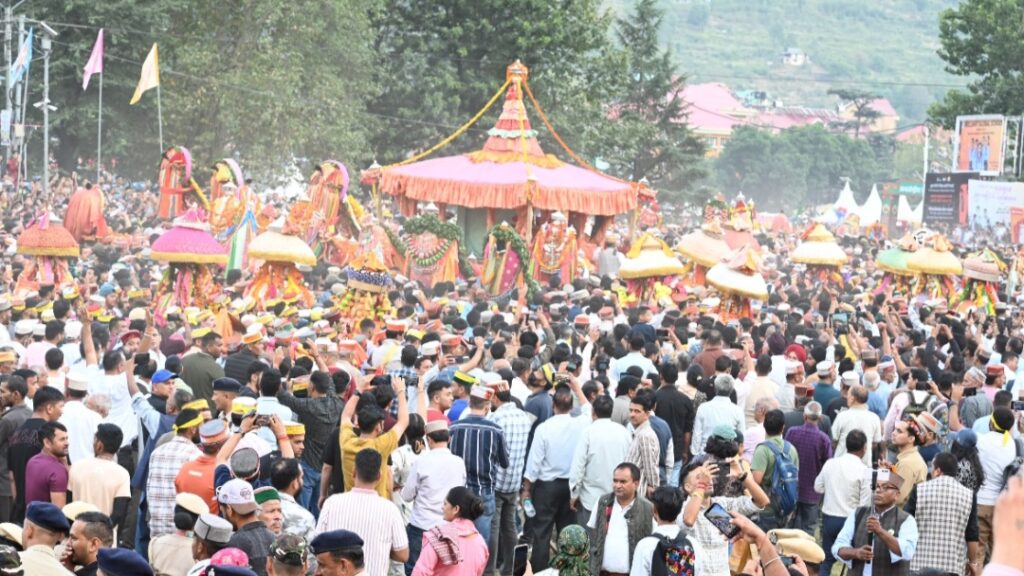
What makes Kullu Dussehra truly special is the living tradition at its heart. In this Himalayan valley, deities are not distant symbols confined to temple walls. They are an active part of community life. Every year, hundreds of village gods and goddesses travel from remote hamlets, accompanied by devotees, musicians and traditional custodians, to assemble at Dhalpur. Their arrival turns the festival grounds into a remarkable gathering where faith, folklore and local identity come together.
This tradition has deep historical roots. The origins of Kullu Dussehra date back to the 17th century when Raja Jagat Singh brought an idol of Lord Raghunath from Ayodhya and established Him as the chief deity of the valley. Over time, the annual gathering of local deities to pay homage to Lord Raghunath evolved into a grand festival that remains central to Kullu’s spiritual and cultural life.
At the centre of the celebrations is the iconic Rath Yatra. As Lord Raghunath’s beautifully decorated wooden chariot moves through Dhalpur amid the sounds of traditional instruments and chants of devotees, it creates a scene that is both visually stunning and deeply moving. The arrival of Goddess Hadimba from Manali adds further significance to the ceremonies, reflecting the enduring traditions associated with the former royal family and the region’s religious heritage.
For local residents, these rituals are much more than ceremonial events. They are expressions of faith, belonging and continuity. For visitors, they offer a rare glimpse into a centuries-old culture that remains vibrant and relevant in modern times.
The gathering of village deities remains the most distinctive feature of Kullu Dussehra. Each deity arrives with its own customs, ceremonial practices and dedicated followers, representing communities from Manali, Banjar, Sainj, Anni, Nirmand and other parts of the district. Together, they create a shared sacred space that showcases the diversity of Kullu’s spiritual traditions while reinforcing the bonds that connect communities across the valley.
Beyond its religious significance, Kullu Dussehra is also a vibrant cultural celebration. Folk music echoes across Dhalpur, while the graceful movements of Nati dancers bring the spirit of the hills to life. Traditional performances, regional songs and cultural programmes not only entertain visitors but also provide local communities an opportunity to celebrate and preserve their unique identity.
As the festival has grown in stature, it has evolved into an internationally recognised event. Artists, performers and visitors from across India and abroad now participate, creating a rich cultural exchange while maintaining the festival’s traditional essence. Yet, despite its growing popularity, Kullu Dussehra’s greatest strength lies in its authenticity. The rituals, processions and customs remain deeply rooted in the lives of the people who practise them.
The festival also serves as an important economic driver for the region. Thousands of visitors boost local businesses, hotels, transport operators, artisans and traders. The bustling fairground becomes a marketplace filled with handicrafts, local products, traditional foods and cultural exhibits, creating valuable opportunities for livelihoods and tourism.
Organising an event of this scale requires extensive planning. Managing traffic, accommodating hundreds of deities and their followers, ensuring sanitation and maintaining public safety have become increasingly complex tasks. As the festival expands, organisers face the challenge of balancing modern infrastructure and visitor expectations with the preservation of traditions that define Kullu Dussehra’s identity.
Perhaps the festival’s greatest achievement is its role in preserving cultural heritage for future generations. In a rapidly changing world, Kullu Dussehra continues to connect young people with their roots, offering a living lesson in history, faith and community values. It reminds the valley that heritage is not merely something inherited from the past but something that must be actively protected and passed on.
As Lord Raghunath’s chariot rolls into Dhalpur and hundreds of deities take their places in the sacred gathering, Kullu Dussehra once again tells a timeless story. It is a story of devotion, community and cultural continuity. More than a festival, it is a living tradition that reflects the enduring spiritual heart of the Himalayas and the collective identity of the people who call this valley home.