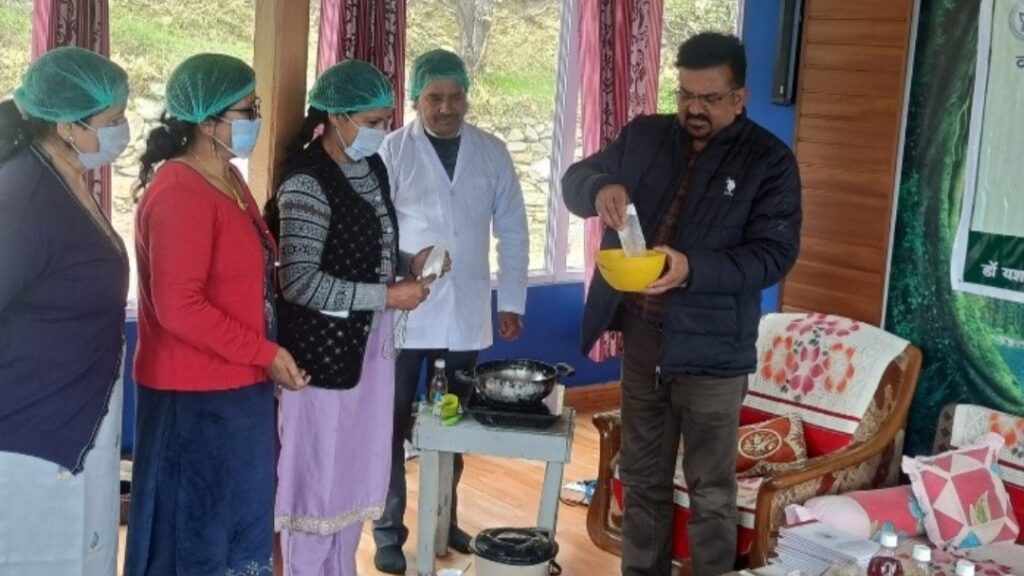
Empowering Rural Women Through Food Processing Skills
The Department of Food Science and Technology at Dr YS Parmar University of Horticulture and Forestry, Nauni, has taken a meaningful step toward strengthening rural livelihoods by conducting seven off-campus training programmes on food processing across different panchayats in Himachal Pradesh. The initiative reached 210 participants, most of them women, with about 30 participants from each panchayat, reflecting strong grassroots involvement.
The training programmes were organized under the RKVY project “Utilization of Natural Produce for Sustainable Livelihood through Technological Interventions.” Sessions were held in Thana Kalan and Bahal panchayats of Una district, Rohin in Hamirpur district, Chanju-Chopal and Poliya in Shimla district, and Kothi-Kashmir and Kalpa in Kinnaur district.
The primary aim of the initiative was to open up sustainable livelihood opportunities by equipping participants with modern food processing and value-addition skills using locally available agricultural produce. The programme focused on enhancing technical skills, promoting small-scale entrepreneurship, building practical knowledge and enabling Self Help Groups (SHGs) to start or strengthen income-generating activities.
During the sessions, participants were sensitized to the importance of millets and indigenous produce, their nutritional value and their potential for creating market-friendly products. Dr Anil Kumar Verma, Principal Investigator of the project, highlighted how scientific food processing techniques can significantly improve shelf life, quality and market value, thereby creating better income and employment prospects.
Hands-on demonstrations formed a key part of the training, with participants learning to prepare value-added products such as muffins, jams, squash, pasta and natural bio-enzymes. These practical sessions helped participants gain confidence in applying the techniques in real-life settings.
The programmes also addressed essential aspects of entrepreneurship development, including cost calculation, marketing strategies and the importance of packaging and labelling. Information on FSSAI licensing and registration was shared to guide aspiring entrepreneurs in setting up small-scale food enterprises.
Special emphasis was placed on food safety and hygiene, with discussions on food spoilage caused by microorganisms and the need for cleanliness in food production. Participants were also introduced to eco-friendly practices, such as utilizing waste to create by-products and using bio-enzymes.
Women participants showed enthusiastic participation, with many already linked to SHGs. They were encouraged to strengthen their ventures through better branding, packaging and market outreach.
Each training programme concluded with the distribution of certificates, marking the participants’ newly acquired skills. Expressing satisfaction with the initiative, many participants shared their eagerness to adopt the technologies learned and use them to enhance their income and improve their livelihoods.