How Himachal Is Gearing Up for Disasters – A Meeting That Promises Action
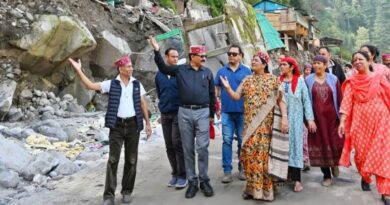
In a significant move to strengthen disaster preparedness, Himachal Pradesh Chief Minister Thakur Sukhvinder Singh Sukhu recently chaired a high-level meeting focused on reducing disaster risks and building resilience across the state. The spotlight was on the work being done by the Himalayan Centre for Disaster Risk Reduction and Resilience (HIM-DR³) at Himachal Pradesh University, Shimla.
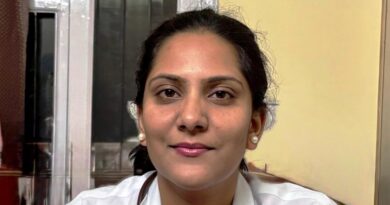
Dr. Mahesh Sharma, the centre’s Deputy Director, walked everyone through what’s been achieved so far – and what’s next. He highlighted a practical example: a hydrodynamic model developed for the Thunag region in Mandi district. This model helps assess flash flood impacts scientifically, plan better, and set up early warning systems.
The Chief Minister was impressed. He congratulated the university’s Vice-Chancellor, Prof. Mahavir Singh, and gave clear instructions: expand this kind of research to other vulnerable areas across the state. He also made sure the centre’s efforts didn’t go unnoticed – especially in hazard assessment, climate risk studies, and mitigation planning.
But words weren’t the only support. The CM announced an additional ₹10 crore grant to boost the centre’s capacity and strengthen its institutional setup. He also directed the Himachal Pradesh State Disaster Management Authority (HPSDMA) to allocate ₹6 crore for specialised training programmes at the centre.
Going a step further, he said that from now on, all state-level disaster research, hazard assessment, and technical evaluation work will be carried out through HIM-DR³. To make that happen, he suggested hiring professionals on a contract basis to bring in more scientific and technical expertise.
Another key directive: the centre must dive deep into the recurring cloudburst incidents in Himachal. This includes studying the role of dams, temperature changes, terrain, and even aerial distance in triggering these events.
On the Glacial Lake Outburst Flood (GLOF) front, the CM asked HPSDMA to fund related studies through the centre, with an initial ₹1 crore set aside for the purpose.
Revenue and Horticulture Minister Jagat Singh Negi, who was present at the meeting, praised the university’s work and stressed the need to build in-house scientific capacity. “Instead of relying on outside agencies for landslide and GLOF studies, we should strengthen our own teams,” he said, appreciating how HIM-DR³ is already contributing to DPR preparation and technical skill development.
Vice-Chancellor Prof. Mahavir Singh updated the CM on the university’s newer academic and interdisciplinary research programmes. Also in attendance were HPTDC Chairman R.S. Singh Bali, Prof. N.S. Negi (Director of HIM-DR³), and officials from HPSDMA.