We Can’t Breathe: Thousand plus Villagers Take to Streets Over Pollution From Pharma Plant in Himachal
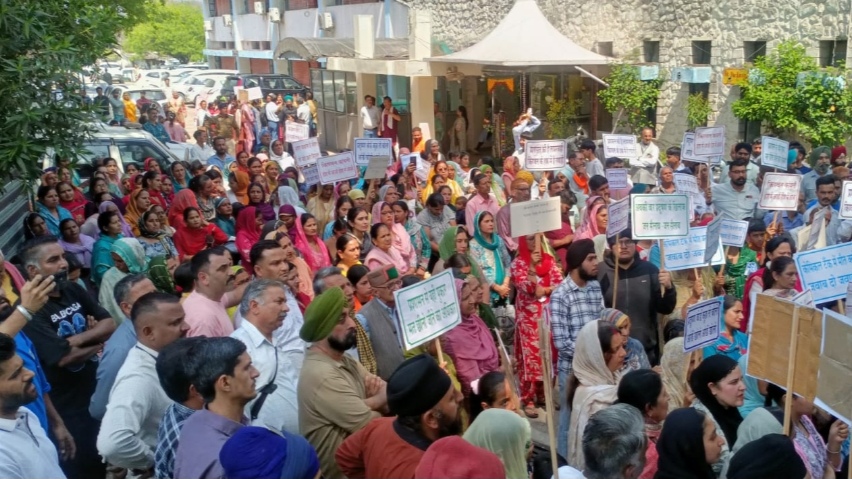
For the people of Nalagarh in Himachal Pradesh, life near the new pharmaceutical plant has become a daily struggle. On March 23, 2026, around 1,000 plus of them—mostly women from 10 to 15 nearby villages—gathered to say enough is enough.
They accuse Kinvan Pvt Ltd, a pharmaceutical company operating in the area, of poisoning the air they breathe, the water they drink, and the silence they once took for granted.
“The smell spreads for four to five kilometres. We can’t even breathe properly,” said Naresh Ghai, secretary of the Kenwan Sangharsh Samiti, one of the local groups behind the rally. “We’re forced to keep our doors and windows shut just to get through the day.”
The factory at the centre of the protest is an Active Pharmaceutical Ingredients (API) unit in Plasda village, inaugurated in 2024 by Prime Minister Narendra Modi as a first-of-its-kind facility in India. But what was celebrated as a milestone is now being called a health hazard by those living in its shadow.
Residents say wastewater from the plant has seeped into the groundwater. They point to a previous incident where a company tanker allegedly carrying untreated waste was seized, resulting in a Rs 22 lakh fine and a police case. In recent weeks, they add, dead fish have been spotted floating in a nearby river—something locals say they had never seen before.
A Fight for Water, Too
Beyond the stench and the fears about air quality, the protest is also about water—and whether there will be enough of it for the people who have lived here for generations.
The factory sits close to a river system that feeds at least 16 government drinking water and irrigation schemes, serving Nalagarh town and surrounding villages like Radiali, Rakh Ram Singh, New Nalagarh, Kirpalpur, Nikkuwal and Rajpura.
According to the company’s permits, it is allowed to use around 6.71 kilolitres of water per day. But locals suspect the actual consumption is far higher, pointing to falling groundwater levels and handpumps that are now running dry.
In a memorandum submitted to the state’s Deputy Chief Minister, protesters demanded an immediate audit of the company’s water usage and a broader review of water management in the region by the Jal Shakti Department.
A Warning to Authorities
Speaking at the rally, Guman Singh, convener of the Himalayan Policy Campaign, struck a sharper note. He alleged that the central government had helped set up the plant while rolling back environmental protections—and that local communities were now “paying a heavy price” for it.
Protesters have made their demands clear: shut down the unit, enforce environmental norms, and conduct a full investigation into water extraction and contamination. If authorities fail to act, local groups warn they are prepared to escalate.
For now, the people of Nalagarh are watching, waiting—and hoping they won’t have to shut their windows forever.