From Barren to Bountiful: How One Farmer’s Determination, Backed by Govt Support, Turned His Land into Gold
For years, Chajju Ram Verma would look out at his 25 acres of land in Kamaksha village, Karsog, and feel a quiet ache. The fields that should have been his family’s pride lay dry and unyielding, yielding just enough through traditional, rain-dependent farming to keep them alive—but little more.
“We survived, but we never lived,” he says, reflecting on those difficult years. Water was the enemy—or rather, the lack of it. Without irrigation, his crops were at the mercy of the skies. Income was meager, dreams were shelved, and the future felt like a closed door.
But Chajju Ram is not a man who gives up easily. When he learned about a state government scheme offering financial support for solar power plants, he saw a glimmer of possibility. It was a gamble, but one he decided to take.
The 4 kW solar power plant he installed cost ₹2,70,000 in total. Under the government’s aid scheme, 90 percent of that amount—an overwhelming majority—was borne by the state. Chajju Ram paid just 10 percent from his own pocket. For a farmer counting every rupee, that support was nothing short of life-changing.
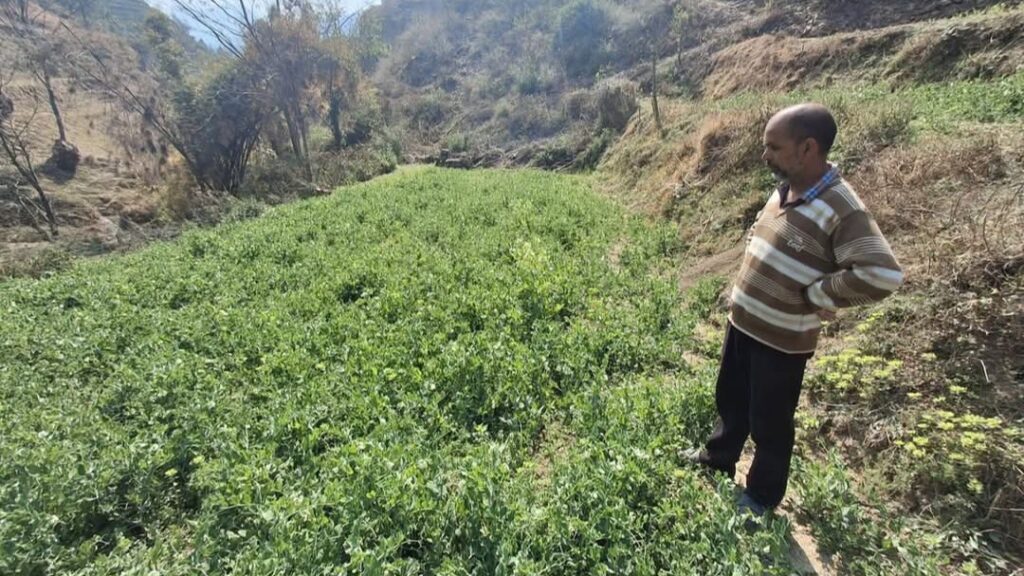
With the solar energy now powering a motor in his fields, water flowed where once there was only dust. The transformation was almost immediate—and nothing short of miraculous.
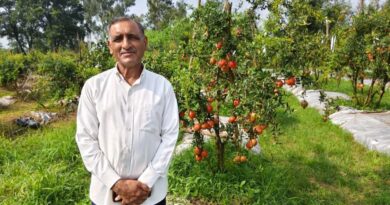
Where barren earth once stretched under the sun, lush green crops now sway in the breeze. Chajju Ram began cultivating seasonal vegetables—peas, tomatoes, Shimla peppers, and green chilies—turning his land into a thriving patchwork of produce. He also planted a plum orchard, adding another layer to his income. With proper irrigation and scientific farming methods, the land that had once barely sustained his family now rewards his efforts abundantly.
Today, his annual income stands at an impressive ₹3 to 4 lakh—many times what he earned in the past. That financial shift has changed everything. His family’s standard of living has improved. There is stability where uncertainty once lived. And now, Chajju Ram can plan for his children’s education, something that once felt like an impossible dream.
“It wasn’t just my hard work,” he says, his voice filled with gratitude. “The government stood with me. If more farmers get access to schemes like this—irrigation support, solar energy—our villages will never be the same. Solar power is a blessing. It cuts electricity costs and frees us from dependence on rain. We can finally take control of our own land.”
Chajju Ram’s journey is more than a personal success story. It is a quiet revolution playing out on a single farm—proof that with the right combination of determination, technology, and timely government support, even the most unforgiving land can be coaxed into abundance.
For thousands of farmers across the region who have watched their fields dry up and their hopes fade, his story offers a powerful message: farming need not be a struggle to survive. It can be a thriving, dignified, and profitable way of life. Sometimes, all it takes is a spark of sunlight—and a helping hand.