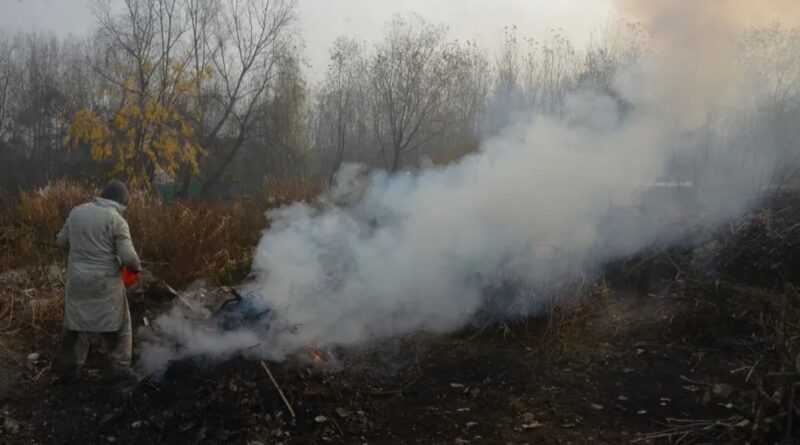
Smoke in the Apple Belt: Twig Burning Turns Himachal’s Orchards into Pollution Hotspots
Himachal Pradesh’s famous apple belt, once known for its crisp mountain air, is now struggling to breathe. Each winter, after pruning season, apple growers burn heaps of dry twigs, leaves, and branches in their orchards. What was once seen as a quick way to clear waste has now become a seasonal menace, filling valleys with smoke and turning orchard towns into pollution hotspots.
From Chopal’s Moraog to Theog, Kotkhai, Jubbal, Rohru, Nankhari, Kotgarh, and Kumarsain, residents complain of eye irritation, coughing, breathlessness, and headaches. Children, the elderly, and those with respiratory problems suffer the most. Locals say the smoky haze now resembles the stubble-burning episodes that choke the plains each year.
Why Twig Burning Persists
Despite repeated warnings, the practice continues. Experts explain that burning orchard waste releases harmful gases and fine particles that degrade air quality in the fragile Himalayan region. The problem worsens in winter, when smoke gets trapped in valleys due to low temperatures and poor air circulation.
Growers argue that burning is the cheapest and fastest way to dispose of pruning waste. Alternatives like shredding twigs for mulch, composting, or turning them into organic manure exist, but small and marginal farmers often lack the machinery and financial support to adopt them.
Health and Environmental Risks
Studies show that biomass burning not only pollutes local air but also contributes to climate change. Long-term exposure increases risks of asthma, bronchitis, and lung damage. Soil health also suffers, as burning destroys organic matter that could otherwise enrich orchards.
Administration Steps In
Amid rising concern, authorities have begun tightening enforcement. In Theog, the Sub-Divisional Magistrate has ordered panchayats to stop twig burning and warned of legal action against violators. Panchayats have been asked to monitor orchards closely.
But residents and environmental groups remain skeptical, pointing out that enforcement has historically been weak. They argue that penalties must be backed by awareness campaigns and government support, such as subsidies for shredders and composting equipment, to give farmers practical alternatives.
A Bigger Battle Ahead
What began as a local practice has now grown into a public health and environmental crisis. With air pollution and climate change already pressing challenges, twig burning threatens the sustainability of apple cultivation itself. The action in Theog is being closely watched, with hopes that it sparks stricter enforcement and a wider policy push to end a practice that has turned Himachal’s apple belt into a seasonal pollution hazard.