Scent of Opportunity: Palampur Workshop Empowers Farmers to Tap into Himalayan Essential Oil Market
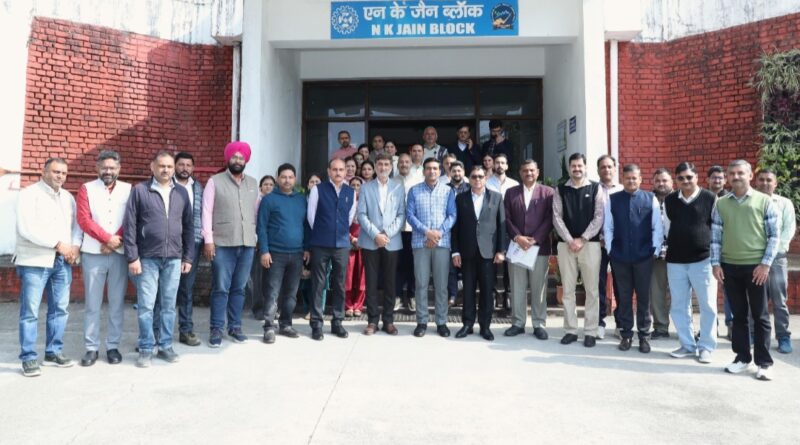
In the serene town of Palampur, nestled in the lap of the Himalayas, a powerful conversation unfolded on October 28, 2025—one that could reshape the future of farming in the region. The CSIR-Institute of Himalayan Bioresource Technology (CSIR-IHBT), in collaboration with the Himalayan Phytochemicals and Growers Association (HIMPA), hosted a one-day workshop focused on “Value Addition of Himalayan Essential Oils and Their Marketing Regulation.”
The event brought together a vibrant mix of around 50 participants, including farmers, industrialists, scientists, and HIMPA members, all united by a shared goal: to unlock the economic potential of aromatic crops and essential oils.
Dr. Sudesh Kumar Yadav, Director of CSIR-IHBT, opened the session with a message of hope and innovation. He reaffirmed the institute’s commitment to supporting farmers with scientific expertise and technical guidance to promote sustainable farming, value addition, and import substitution. He also celebrated the CSIR Aroma Mission team’s recent win—the prestigious Rashtriya Vigyan Puraskar for 2025.
Chief Scientist and Program Coordinator Dr. Rakesh Kumar took the stage to spotlight the promise of aromatic crops in the northwestern Himalayan region. “These crops thrive in rainfed conditions, resist pests, and face little competition,” he explained. From damask rose and lemongrass to tulsi, mint, and chamomile, these low-volume, high-value crops are in high demand across industries like aromatherapy, cosmetics, food, and pharmaceuticals.
Dr. Kumar encouraged farmers to make use of barren and marginal lands for cultivating these crops, noting that the global essential oil market is booming—growing at a rate of 9% annually. From $6.63 billion in 2016, the market surged to $25.86 billion in 2024 and is projected to hit $56.25 billion by 2033.
HIMPA President Mr. Surender Mohan shared insights into the current landscape and future potential of Himachal’s essential oil industry. Participants also learned about advanced processing technologies, marketing regulations, and value addition techniques for crops like cedarwood.
Adding a broader perspective, an industrialist from Jammu & Kashmir discussed the region’s unique challenges and opportunities in the essential oil sector.
The workshop wrapped up with an engaging interactive session, where farmers and entrepreneurs voiced their appreciation for the knowledge shared. Many expressed excitement about adopting new practices and contributing to a more vibrant, sustainable essential oil economy in the Himalayas.
With science, tradition, and innovation coming together, the fragrance of change is already in the air.