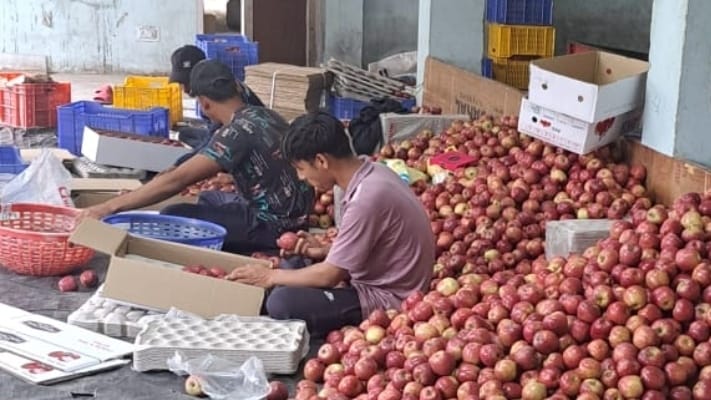
Himachal’s Apple Growers Fearful as EU Trade Deal Shakes Their World
A new trade agreement between India and the European Union is casting a long, worried shadow over the apple-laden slopes of Himachal Pradesh. The deal, which slashes the import duty on European apples from 50% to 20%, has sparked deep anxiety among the state’s orchardists, who warn it threatens the very heart of a local economy that supports over 250,000 families.
For these growers, the math is simple and frightening. Cheaper EU apples, they fear, will flood Indian markets, driving down prices and making it impossible for local produce to compete. This concern ripples beyond Himachal to the apple belts of Jammu & Kashmir and Uttarakhand.
A Direct Threat to Our Survival
The Himachal Pradesh Apple Growers Association has called the decision “deeply damaging.” Association President Rakesh Singha voiced the community’s distress: “A reduction in import duty at a time when our production costs are rising has created a crisis. Once cheaper EU apples enter our markets in bulk, our apples will not fetch fair prices.”
This sentiment is widely shared. Rohit Chauhan a Progressive Growers noted that local apples, often grown on challenging terrain, cannot match the cost advantage of subsidized, high-yield foreign produce. “This will push local apples out of major markets,” he said.
The Stark Numbers Behind the Fear
The scale of the potential change is significant. The agreement allows for an initial import of 50,000 tonnes of EU apples, a figure set to rise to 1 lakh tonnes annually within a decade. While a minimum import price of ₹80/kg is set, growers point out that their own break-even point ranges from ₹50-100/kg. With production costs in Himachal around ₹27/kg, any major price suppression could be devastating.
Currently, the EU already supplies over 11% of India’s apple imports. Growers are convinced this share will grow sharply once the lower duty takes effect in 2027.
A Sense of Broken Promises
The trade deal has also ignited political and emotional unrest. Congress MLA Kuldeep Singh Rathore accused the central government of weakening protections for hill farmers, recalling a stark contrast to past promises. Many orchardists remember Prime Minister Narendra Modi’s 2014 election pledge in Himachal’s Sujanpur to raise apple import duty to 100%.
“Instead of increasing the duty, it has been steadily reduced,” they lament, feeling a profound sense of abandonment.
An Uneven Playing Field
The growers’ fear is rooted in a stark global imbalance. Himachal produces 7-8 tonnes of apples per hectare—a fraction of the 40-70 tonnes achieved in countries like New Zealand, the US, or Iran due to advanced technology and favourable geography. “With such vast productivity gaps, competition is inherently unequal. Without adequate protection, Indian growers cannot survive,” growers’ bodies assert.
A Growing Chill in the Orchards
This fear is no longer just talk. Protests have already begun, with growers demonstrating outside the state secretariat. There is a broader dread that the EU and New Zealand deals will set a precedent, prompting other nations to demand similar concessions and further opening the gates to cheap imports.
What is celebrated in national capitals as a trade achievement feels like a looming disaster in the hills. For the families whose lives and identities are intertwined with the apple harvest, the deal risks becoming the “mother of all problems,” threatening a way of life unless urgent protective measures are taken.