Cross-Sectoral Action Key to Climate, CBRN Risk Reduction: Experts
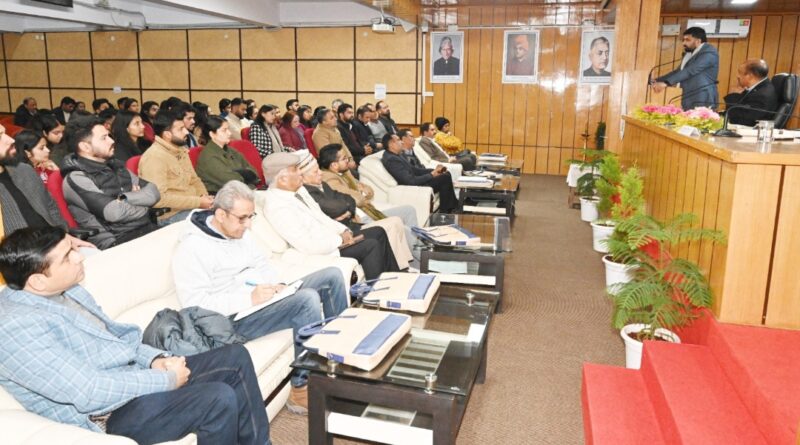
A two-day workshop on Operationalizing Climate Change and CBRN Risk Reduction through Cross-Sectoral Action in Himachal Pradesh commenced today at Dr YS Parmar University of Horticulture & Forestry, Nauni (Solan). The workshop is being organized by the Department of Environmental Science of the University in collaboration with District Disaster Management Authority (DDMA), Solan.
The objective of the workshop is to strengthen institutional preparedness and enhance inter-sectoral coordination to effectively address climate change–induced disasters and emerging Chemical, Biological, Radiological, and Nuclear (CBRN) risks. The programme has brought together policymakers, administrators, subject experts, health professionals, academicians, and representatives from various line departments on a common platform to deliberate on climate change–related disasters and CBRN challenges.
Addressing the inaugural session, Rahul Jain, Additional Deputy Commissioner-cum-CEO, DDMA Solan, said that the workshop aims to identify existing gaps in climate change and CBRN risk response mechanisms and to evolve expert-driven solutions to bridge these gaps. He noted that Solan district has faced some natural disasters in recent years and also houses a large industrial belt, making it particularly vulnerable to multiple risks. He expressed hope that the workshop would culminate in the formulation of a white paper to help devise an effective and structured response mechanism. While acknowledging that disaster preparedness has improved over the years, he emphasized that much more needs to be done to address evolving challenges. Stressing the need for behavioural change, Jain called for greater societal sensitization and urged experts to suggest practical and implementable solutions.
Dr Devina Vaidya, Director of Research, highlighted the importance of studying the carrying capacity of fragile ecosystems and emphasized the need for adopting a balanced and sustainable approach to development and disaster risk management. She said that hill districts like Solan, are increasingly vulnerable to climate-related hazards such as extreme rainfall events, landslides, flash floods, forest fires, and public health emergencies. In this context, the workshop focuses on translating scientific knowledge, policy frameworks, and disaster risk reduction strategies into actionable plans at the district and local levels.
Earlier, Dr S.K. Bhardwaj, Head, Department of Environmental Science, stated that the workshop is being organized at a critical juncture when the state has witnessed several disasters resulting in significant loss of life and property. He added that deliberations among experts from diverse sectors would focus on strengthening mitigation and preparedness measures to deal with future disasters.
The workshop is witnessing participation of experts representing institutions like the Indian Meteorological Department, State Health Department, Tata Trusts, Bhabha Atomic Research Centre (BARC), Mumbai, District Disaster Management Authority (DDMA), INMAS, New Delhi, Department of Agriculture, Himachal Pradesh University, Central University of Himachal Pradesh, CSK Himachal Pradesh Krishi Vishvavidyalaya, Palampur, Dr Y.S. Parmar University of Horticulture & Forestry, Nauni among others
The workshop will feature technical sessions, expert lectures, panel discussions, and interactive stakeholder engagements covering themes related to climate change impacts, disaster risk governance, CBRN preparedness, and community-based risk reduction. The expected outcomes include enhanced awareness, strengthened institutional capacities, and the formulation of practical recommendations to support district disaster management planning and implementation.