Kinnaur’s Raulane Festival Captivates the World in Viral Celebration of Faith and Tradition
Kinnaur, Himachal Pradesh – There’s a particular magic that happens in the Himalayas when winter wraps its coldest arms around the mountains. In the remote villages of Kinnaur, where the air is thin and the stars feel close enough to touch, an ancient tradition comes alive—and this year, the world noticed.
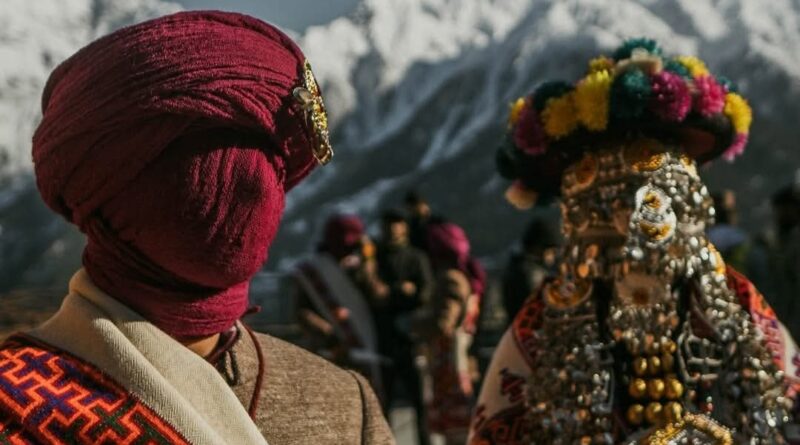
I scroll through my phone, smiling at the viral images that have been lighting up social media: masked figures in vibrant woolens dancing against a backdrop of snow-clad peaks. These aren’t costumes for a performance; they’re sacred garments for a ceremony that connects heaven and earth. The Raulane festival, once known only to the people of these mountains, has found its way into the global consciousness.
The Day the Celestials Visit
Imagine waking to the sound of bells and chanting, knowing that today, the celestial fairies—the Saunis—are believed to descend from their heavenly abodes to protect your village through the harsh winter. This is Raulane, a tradition where faith feels as tangible as the snow beneath your feet.
I spoke with Ramesh, a young man from the village who participated as a Raula last year. “When I put on the mask,” he told me, “I stopped being just myself. I became a bridge between our people and the protective spirits. The weight of the traditional woolens, the sound of the bells—everything reminds you that you’re part of something much larger.”
A Symbolic Marriage That Unites Heaven and Earth
Perhaps the most misunderstood aspect is the announcement that “two men will be married.” It’s not what social media might assume. This is a symbolic marriage representing the union of mystical spirits, a sacred bridge between the earthly and celestial realms.
The laughter during the procession isn’t just celebration—it’s believed to ensure a bountiful harvest. Every step, every dance move, every note sung carries meaning that has been passed down through generations.
The Real Magic: Unbroken Tradition
What moved me most while researching this story was discovering how unchanged Raulane remains. In a world of commercialized festivals and manufactured experiences, here in Kinnaur, there are no plastic decorations, no electric lights for spectacle, no dilution of sacred meaning.
The villagers use wool from their own sheep, masks carved by their elders, and music that has echoed through these valleys for centuries. This is sustainability in its purest form—cultural, environmental, and spiritual.
A Personal Reflection from the Chief Minister
“Seeing these viral photos filled my mind with pride,” he said. “Faith, nature and tradition—such a beautiful combination of these three is rarely seen anywhere else. Undoubtedly, Himachal is the holy land of faith, festivals, and traditions that bloom again every year with the same spirit.”
He continued with a wish that resonates deeply: “I always hope that when people visit Himachal, they feel our culture with the same sensitivity and respect as our elders have lived and experienced it. When the world appreciates our heritage, a unique joy awakens in the mind.”
Why This Matters Now
In an age where traditions are disappearing faster than mountain snow in summer, Raulane represents something precious. The Kannaura tribe, like many indigenous communities, faces the quiet threat of cultural erosion. Their language isn’t taught in schools, and younger generations are drawn to modern cities.
Yet Raulane persists. It survives not as a museum piece, but as a living, breathing tradition that continues to give meaning and connection to the people who practice it.
The Takeaway: More Than Pretty Pictures
As I look at these viral images one more time, I see beyond the colorful masks and dramatic landscapes. I see the laughter lines around the dancers’ eyes, the careful hands that crafted each piece of jewelry, the generations of knowledge that make this celebration possible.
The world may have discovered Raulane through social media, but the true gift lies in understanding what these images represent: the enduring power of community, the deep relationship between people and their environment, and the beautiful ways humans have always found to celebrate the sacred.
The mountains have shared their secret with us. The question is, will we listen with the respect and wonder it deserves?