From Barren Winters to Greener Hills: How Farmers are Healing the Land
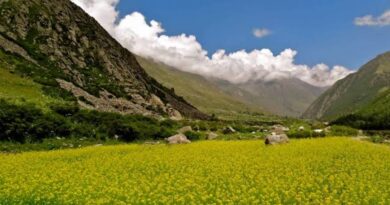
In the misty valleys of Himachal Pradesh, where terraced fields cling to the mountainsides and rivers carve silver paths below, an age-old struggle is finding a new, hopeful rhythm. For generations, farmers like Urmila Devi watched summer parch the land and winter freeze it, their hearts aching with a familiar worry: how to feed their livestock when the forests and grasslands grew thin.
“We used to rely entirely on forest and grassland fodder,” Urmila recalls from her home in Baijnath. “Some years, it just wasn’t enough, and the forests suffered too.” That cycle of scarcity—where overused hillsides became prone to erosion, wildfires, and loss—is being gently broken. Today, Urmila’s story, and many like hers, is one of transformation.
Guided by The Hans Foundation, farmers are turning their own farms into sources of abundance. Instead of depending on strained forests, they’re now growing nutritious fodder like oats and protein-rich Barseem right on their land. These dual-purpose crops are a quiet revolution: they feed the animals through the hardest months, and their seeds are saved for the next season, weaving self-reliance back into the fabric of farming.
But the change runs deeper than just planting. It’s a shift in harmony. Farmers learn the gentle art of rotational grazing, allowing the ghasnis (natural grasslands) to breathe and recover. They master silage-making, preserving green fodder for the dry spells. They plant fodder trees along the edges of their fields, holding the soil firm and offering shade and sustenance. With support from experts and local institutions, this knowledge becomes a tool for healing.
The land is telling its own story of recovery. As farmers harvest from their fields, the pressure on the forests lifts. Seed by seed, the hillsides are regenerating. The risk of devastating fires dwindles. “It’s not just farming, it’s protecting our hills,” shares Ram Swaroop from Palampur. “We feed our animals, restore our grasslands, and help prevent fires—all at the same time.”
This is a story of community strength being rediscovered. It’s about healthier livestock, more resilient farms, and the quiet pride that comes with nurturing the very landscape that sustains you. As the grasslands grow lusher and the forests stand taller, a blueprint for a thriving future emerges—one where people and nature are partners, not competitors.
The vision is simple yet profound: greener hills, healthier grasslands, and stronger farmers. In the quiet determination of people like Urmila, that future is already taking root.