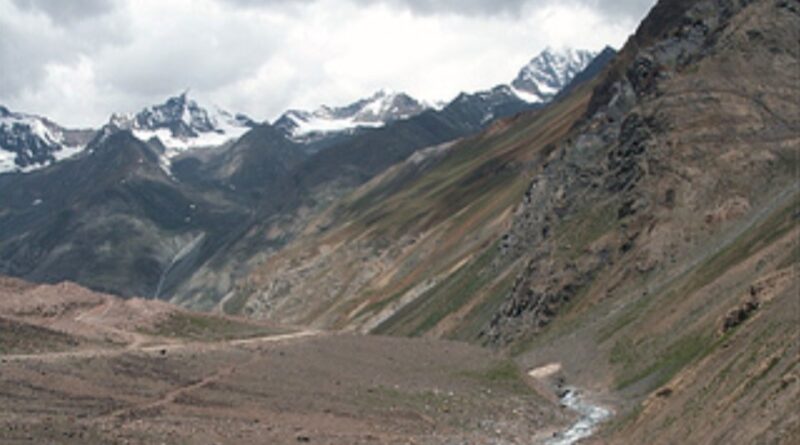
CAG Flags Serious Lapses in Compensatory Afforestation in Himachal
A recent performance audit by the Comptroller and Auditor General (CAG) of India has revealed serious shortcomings in the implementation of compensatory afforestation and forest conservation measures in Himachal Pradesh, raising concerns over environmental governance in the hill state.The audit, covering the period from 2006 to 2021, examined the execution of compensatory afforestation (CA), Catchment Area Treatment (CAT) plans and the functioning of the Forest Conservation Act (FCA), 1980. Despite Himachal Pradesh being an ecologically sensitive state and a major catchment for rivers such as the Sutlej, Beas and Ravi, the report highlights weak planning, poor monitoring and underutilisation of funds meant for restoring forest cover.
Large Fund, Low Utilisation
The CAG found that although the State Compensatory Afforestation Fund Management and Planning Authority (CAMPA) had access to substantial funds, it failed to utilise them effectively. Between 2016-17 and 2021-22, the state could not utilise around ₹169.73 crore, nearly 20 per cent of the funds approved by the National Authority.Even after the formation of the State Compensatory Afforestation Fund in 2019, user agencies continued to deposit funds into the National CAMPA account instead of the state fund, in violation of rules. As a result, ₹358.56 crore was wrongly deposited at the national level.
Delays and Pending Forest Clearances
The report also points to major delays in processing forest clearance proposals. Out of 1,018 proposals submitted for forest diversion, 766 cases were still pending approval. In many cases, delays ranged from several months to years at various administrative levels, undermining the purpose of timely environmental safeguards.Incorrect and incomplete data uploaded on official portals further hampered decision-making at both the state and central levels.
Afforestation Targets Missed
Audit findings reveal that compensatory afforestation was often delayed or not carried out as prescribed. Against a stipulated target of 5,213 hectares, afforestation was completed on only 4,284 hectares. Delays resulted in cost escalation, additional financial liabilities and failure to compensate for environmental loss in time.Alarmingly, 83 per cent of compensatory afforestation was carried out outside designated degraded forest areas, with a significant portion done in moderately dense or very dense forests, raising doubts over the legitimacy of such plantations.
Encroachments and Poor Monitoring
Geospatial studies conducted on selected afforestation sites revealed instances of encroachments, construction activities and even agricultural practices on land earmarked for compensatory afforestation. The report also flagged the absence of a scientific mechanism for identifying suitable land banks for future afforestation.
Catchment Area Treatment Plans Neglected
The audit further noted poor implementation of Catchment Area Treatment plans linked to hydroelectric projects. In several cases, revised project capacities were not monitored, resulting in non-recovery of nearly ₹198.73 crore from project developers. Important works such as soil conservation, plantation and infrastructure development under CAT plans remained incomplete.
CAG’s Recommendations
The CAG has urged the state government to:
- Ensure regular meetings of CAMPA committees
- Improve fund utilisation and financial discipline
- Speed up forest clearance processes
- Use GIS-based data for identifying degraded forest land
- Prevent encroachments through regular monitoring
- Fix accountability for violations and unauthorised changes
The report serves as a strong reminder that effective forest conservation requires not just funds, but transparent governance, scientific planning and timely action—especially for a fragile Himalayan state like Himachal Pradesh.


