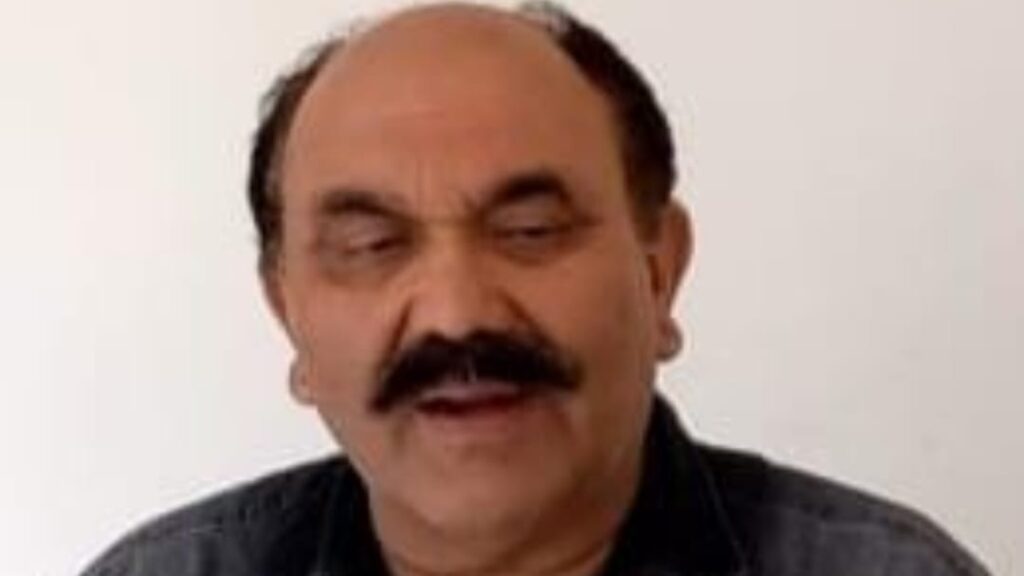
Reflections on a Purposeful Journey: Dr Kuldip Tanwar
26 October isn’t just another date on the calendar for me. It marks something deeply personal—a defining moment in a political journey that has now spanned 42 years.
Exactly 21 years ago, on 26 October 2005, I walked away from my position with the Himachal Pradesh Forest Department and stepped into a new chapter of my life as a full-time party worker.
I still had nearly 11 years of government service ahead of me. Had I stayed, I might have earned two or three more promotions before retirement. But leaving wasn’t a rash decision or something driven purely by emotion. It was a deliberate, thought-out choice about the direction I wanted my life to take.
Where It All Began: 1984
My political journey started much earlier. In 1984, I joined the CPI(M) as a candidate member. For the next 21 years, while still in government service, I worked for the party and various mass organisations at different levels—always within the boundaries set by my official responsibilities and conduct rules.
During those years, I had the opportunity to take on several roles, including serving as Chairman of the Action Committee of the Himachal Pradesh Forest Officers Association, the Himachal Pradesh Forest Federation, and the North Zone Forest Employees Federation.
Through my work in employees’ organisations, I consistently tried to strengthen democratic, progressive, and class-conscious perspectives.
In 1987, the party entrusted me with the responsibility of working in the people’s science movement (PSM). This became an important chapter in my political and social life.
Through the Himachal Gyan Vigyan Samiti, Bharat Gyan Vigyan Samiti, and AIPSN, I had the chance to work at both state and national levels—to understand society more closely and to contribute to spreading scientific and progressive consciousness.
Wherever possible, I tried to ensure that the people’s science movement didn’t remain confined to popularising science alone. I sought to use it as a means of promoting scientific temper, social awareness, progressive ideas, and organisation-building.
But government service has its own limitations. While in service, one’s political and organisational involvement can only extend so far.
26 October 2005: A New Chapter Begins
That date holds a special place in my life. From that day onwards, I was free to devote my time and energy more fully to the party, mass organisations, and people’s struggles.
This journey as a full-time political worker opened up opportunities to work in the party organisation, the Kisan Sabha, the People’s Science Movement, and various other mass organisations.
Looking back today at my 42 years of political life, I feel a deep sense of satisfaction. Instead of simply completing my government service, enjoying a secure life, and settling into retirement, I chose to remain among the people—to work closely with their concerns and struggles.
Had I continued in government service, my life might have been more comfortable and secure. But I might never have gained the experiences that came from working among the people, witnessing processes of social change up close, and learning through participation in numerous struggles.
The value of these experiences is far greater than any post, promotion, or personal achievement.
Looking Inward: Lessons and the Road Ahead
These 42 years haven’t been merely a source of satisfaction. They’ve also given me reason for serious self-reflection.
My long political experience has taught me a great deal. Yet, alongside this learning, I’ve become increasingly conscious of an important shortcoming.
We haven’t been able to contribute as much as we should have to the study and research of society, the critical analysis of the existing system, ideological debate, and the development of concrete alternative policies for social transformation.
Struggles are essential for organisation-building. But strengthening the larger project of social transformation requires equally serious engagement with the changing realities of society, a deeper understanding of emerging challenges, and the development of concrete alternative policies and ideas to address them.
Struggle and organisation must go hand in hand with study, research, ideological clarity, and the development of alternatives.
So in the coming years, my personal priority—within the limitations imposed by my health—will be to connect my experience with systematic study, research, ideological discussion, and the development of alternative policies.
I hope to combine what I’ve learnt over these decades from the people, movements, and organisations with deeper study and critical thinking, and thereby make a meaningful intellectual and ideological contribution to the process of social transformation.
I also look forward to the cooperation and support of the party and my comrades in pursuing this direction.
Making Space for the Next Generation
A second important lesson from these years concerns the development of new leadership.
The strength of any organisation depends not only on its present leadership but also on how effectively it prepares the leadership that will follow.
If leadership responsibilities continue to be determined primarily by seniority, the younger generation won’t get sufficient opportunities to develop their abilities, assume responsibilities, experiment with new ideas, and grow into leadership roles.
I firmly believe that, for the future of the party and mass organisations, conscious efforts must be made at every level to bring young comrades forward and entrust them with leadership responsibilities.
Similarly, it’s essential to increase the participation of women and, in particular, comrades from Dalit, Adivasi, and minority communities in leadership.
Merely expressing the desire to see people from these sections emerge as leaders isn’t enough. We must create the necessary space and opportunities within our organisations, assign meaningful responsibilities, and ensure their genuine participation in decision-making.
The role of senior comrades isn’t simply to continue leading. It’s also to pass on their experience to the next generation and help develop new leadership.
The experience of senior comrades and the energy, initiative, and fresh ideas of the younger generation aren’t alternatives to one another. They’re complementary strengths. The right balance between them ensures both organisational continuity and a stronger future.
My Priorities from 26 October 2026 Onwards
Drawing upon these experiences and reflections, I want to focus my personal efforts, from 26 October 2026 onwards, primarily in two directions.
First: Study, Research, and the Development of Alternative Policies
To engage more deeply in study, research, ideological discussion, and the development of alternative policies—so that I can draw upon my experience to make a concrete intellectual and ideological contribution to the process of social transformation.
Second: Developing New Leadership
To contribute to the development of new leadership, particularly by helping young people, women, and comrades from Dalit, Adivasi, and minority communities come forward, grow within the party and mass organisations, and take on leadership responsibilities.
I believe that political experience becomes truly meaningful only when it doesn’t remain confined to memories of past achievements and struggles, but helps strengthen present struggles, deepen our understanding of the future, and build a new generation of organisational leadership.
For me, therefore, 26 October isn’t merely a day to remember the past. It’s also a day to evaluate my political journey, recognise my shortcomings self-critically, carry forward unfinished tasks, and chart a direction for the years ahead.
Over these 42 years, I’ve had the privilege of learning from numerous comrades, struggling alongside them, and working among the people. I hope to continue doing so in the years to come.
My endeavour will be to ensure that the experience I’ve accumulated doesn’t remain merely a personal asset, but contributes to developing new understanding, generating fresh ideas, and nurturing the leadership of the next generation.
I look forward to the continued cooperation, suggestions, and active participation of all my comrades in this journey ahead.