Blossoms in Peril: How Changing Weather Threatens Himachal’s Apple Story
Himachal’s apple orchards, once symbols of steady harvests, are now caught in the grip of unpredictable weather. Erratic rains, hailstorms, and rising temperatures are reshaping the delicate rhythm of fruit cultivation, leaving farmers anxious about the future.
This year, an unusual rise of nearly 10°C in February and March triggered early sap flow and bud-break in apple trees. But late snowfall and rain in higher hills slowed the process, while in lower regions, flowering turned irregular — raising fears of poor fruit set.
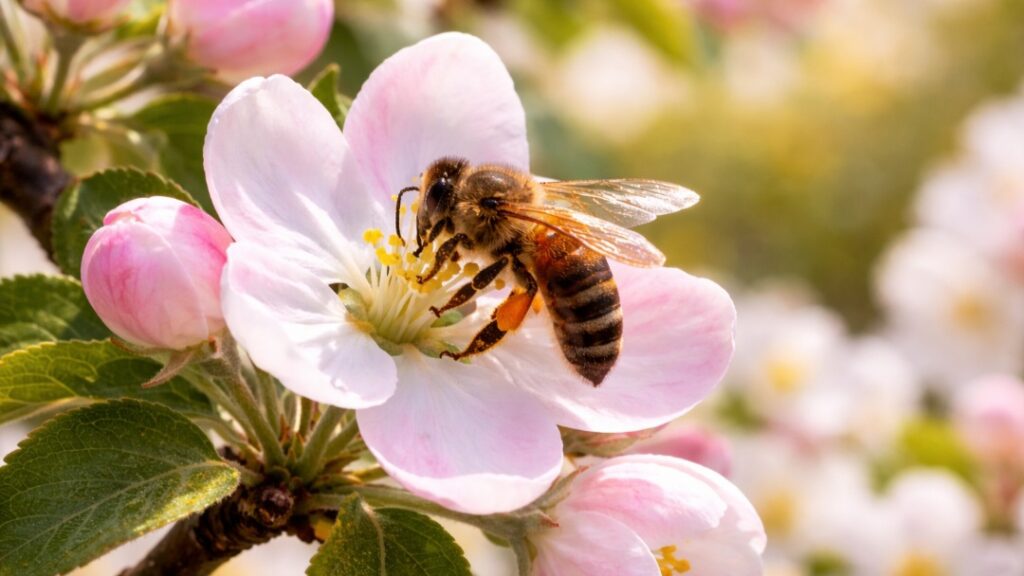
At the heart of apple productivity lies pollination. Bees, especially honeybees, play a crucial role in transferring pollen between blossoms. Yet cold snaps, wind, rain, and hailstorms disrupt their activity, threatening fruit formation. Farmers are advised to maintain bee colonies in orchards, provide clean water nearby, and balance fruit loads through thinning to ensure quality harvests.
Nutrition and pruning also matter. Nitrogen and boron sprays at the right stages can extend flower viability and improve fruit set, while careful pruning rejuvenates older fruiting spurs. Without these interventions, orchards risk reduced yields and weaker fruit quality.
For Himachal’s apple growers, the challenge is clear: adapt quickly to shifting weather patterns, strengthen pollination practices, and embrace scientific measures to protect blossoms. The future of the state’s iconic apple economy depends on it.