Himachal’s Green Leap: Powering Homes, Empowering Communities
Generates revenue of Rs. 1004 crore from renewable energy projects
For generations, Himachal Pradesh has been known as the land of mighty rivers and towering mountains—the very source of its identity as a major hydropower state. But today, this Himalayan state is writing a new, more diverse chapter in its energy story. Under the leadership of Chief Minister Thakur Sukhvinder Singh Sukhu, the government is on a mission to transform how power is generated, ensuring it’s not just clean and renewable, but that its benefits flow directly into the lives of its people and the health of its local economy.
It’s a shift that’s already showing results, with the state earning over Rs. 1,004 crore in revenue from major renewable projects—proof that going green can also boost the state’s coffers.
Bringing the Sun to the Land of the Gods
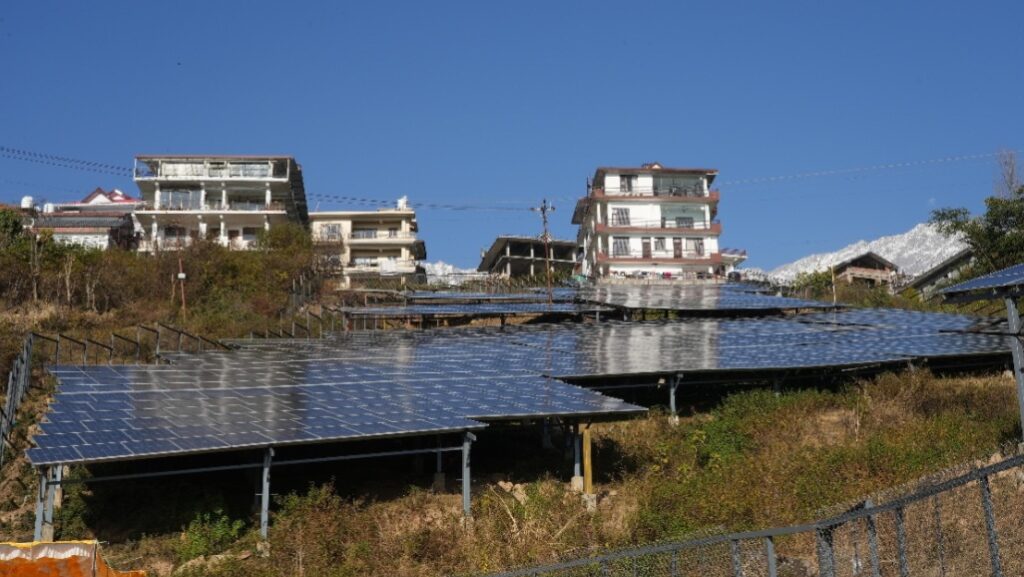
While the rivers remain vital, Himachal is now setting its sights on the sun. The government has set an ambitious target to install 500 megawatts of solar power in just two years. This isn’t just a top-down policy; it’s a plan taking root on the ground. In the districts of Una and Bilaspur, projects like Pekhubela and Bhanjal are already humming with activity, generating over 114 million units of electricity and bringing in more than Rs. 34 crore in revenue. These are more than just numbers; they represent a tangible step towards a more resilient and diversified energy future.
The Rivers That Sustain
Of course, the gushing rivers of Himachal remain the backbone of its energy identity, continuing to power the state’s economy. Flagship projects like the Sainj project in Kullu and the Sawra-Kuddu project in Shimla are a testament to this enduring strength, collectively generating a staggering 2,419 million units of power. But the government is also mindful of the communities living alongside these projects. In a significant move, financial assistance of Rs. 25.25 crore has been released to support families and areas affected by hydropower development, acknowledging that progress must go hand-in-hand with compassion.
Thinking Ahead: From Green Hydrogen to Biochar
What truly sets this journey apart is its willingness to embrace the future. In Nalagarh, a one MW Green Hydrogen plant is taking shape, a bold step into a cutting-edge technology. And in a first for the country, the state is launching a government-supported biochar programme in Hamirpur, turning biomass into a tool for climate action and healthier soil. These aren’t just pilot projects; they are signals that Himachal is thinking long-term.
A Green Pitch for Investors, A Power Promise for the People
To make this vision a reality, the state is actively inviting partners. A simple, first-come-first-served scheme has already attracted 547 investors who are setting up solar projects, adding nearly 600 MW to the state’s capacity. The promise is clear: power generated here will be purchased by the state board, creating a stable and reliable partnership.
This focus on reliability extends to the most remote corners of the state. In the high-altitude villages of Kaza and the rugged Pangi Valley, where winter can mean isolation, solar off-grid systems and battery storage are now ensuring that lights stay on and life goes on uninterrupted.
Where Power Meets Purpose: The Green Panchayat
Perhaps the most heartwarming part of this energy transition is the Green Panchayat Programme. This initiative puts rural communities at the very center of the action. Imagine a village panchayat with its own 500-kilowatt solar power plant, generating clean energy and, importantly, generating its own revenue. The plan is to roll this out across the state, with work already begun in 16 panchayats. And here’s the beautiful part: twenty percent of the earnings from these village plants will go directly to support the most vulnerable members of that community—the orphans and widows. It’s a powerful model where a solar panel doesn’t just light a home, but also uplifts a life.
With demand for power expected to surge as industries grow and electric vehicles become common, Himachal is preparing to meet over 90% of its needs from renewable sources. From a landmark legal victory that secured fairer royalties for its rivers, to policies that make it easier for small hydropower projects to thrive, the state is steadily, purposefully, positioning itself not just as a power generator, but as a pioneer in India’s clean energy future—one where progress is measured in megawatts, but felt in the well-being of its communities.


Pingback: Himachal's First Biochar Program: A Sustainable Future Ahead