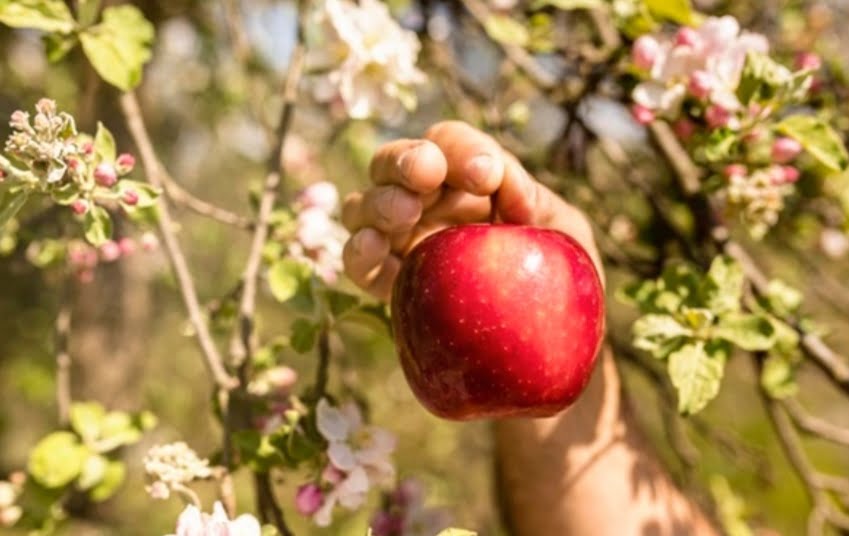
Himachal Apple Growers Fear Trade Deals Could Crush Local Economy
Apple farmers in Himachal Pradesh and Kashmir are facing mounting anxiety as India’s new free trade agreements with New Zealand, the European Union, and the United States threaten to intensify competition in an already fragile market.
Erratic weather, rising costs, and a flood of imports from Iran and Turkey have already driven down prices of locally stored apples. Now, growers worry that cheaper, high-quality apples from countries with advanced mechanization and government-backed subsidies will further erode their earnings. For instance, New Zealand produces over 50 tonnes per hectare compared to around 12 tonnes in India’s apple belts.
Despite Himachal’s reputation as the “apple bowl of India,” the state lacks a long-term horticulture policy. Small landholdings, dependence on migratory labor, and poor post-harvest infrastructure leave farmers vulnerable. Many recall the World Bank project that introduced new varieties but failed to deliver expected results due to unsuitable rootstocks and limited irrigation.
Growers argue that while FTAs may serve national interests, the government must safeguard local producers. They call for a Minimum Import Price of at least Rs 100 per kg, along with subsidies and incentives to help transition to high-density plantations and better-quality strains.
Farmers believe the challenge could be turned into an opportunity if they organize into cooperatives, invest in branding, and tap into India’s vast domestic market. For now, however, the mood in the orchards is one of deep concern, as growers brace for the impact of global competition on their livelihoods.