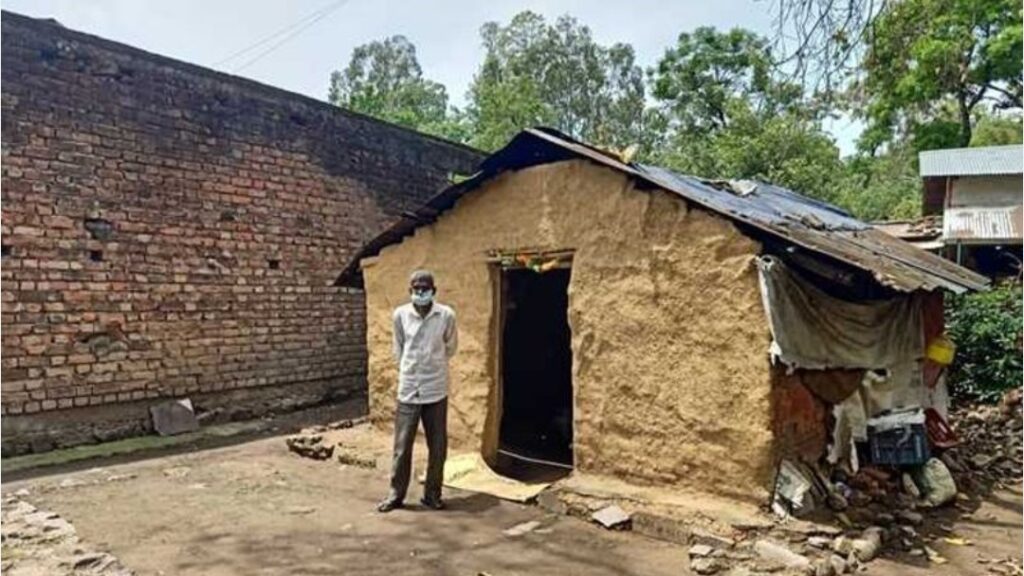
In phase two, eligible families with permanent houses will be added to the BPL list
Selecting BPL families has become a thorn in the side of the Rural Development and Panchayati Raj Department. In the first phase of the BPL survey conducted last year, most families fell outside the government-prescribed criteria. Now, a notification for the second phase of the survey was issued on January 12th, relaxing some of the rules and including families with permanent houses. Furthermore, this notification includes families with orphaned children up to 27 years of age, elderly members over 59 years of age, or families without any able-bodied adult members between the ages of 27 and 59. Similarly, families headed by women and without an able-bodied male member between the ages of 27 and 59, including widows, unmarried, divorced, or abandoned women, will be included in the BPL category.
The intelligentsia believes that the first phase of the survey was conducted fairly. Most families have permanent houses, all amenities, and two-wheelers and four-wheelers. Only a few families have kutcha houses or permanent houses built under government schemes. It should be noted that there has been considerable malpractice in BPL category selection in the past. Well-off families have claimed BPL benefits by showing their joint families as separate on ration cards. This group insists that eligible individuals should not be excluded from BPL eligibility as before, but should be selected transparently, taking into account the family’s actual domestic circumstances. It should be noted that cash crops have transformed people’s fortunes, and most families now have access to city-like amenities.
The Executive Block Development Officer, Mashobra, stated that all preparations have been made for the second phase of the survey, as per the government notification. The second phase will begin soon. He added that there were 1,648 BPL families in Mashobra block, but after the first phase of the survey, there are only 135 left. The number of BPL families is expected to increase significantly in the second phase.