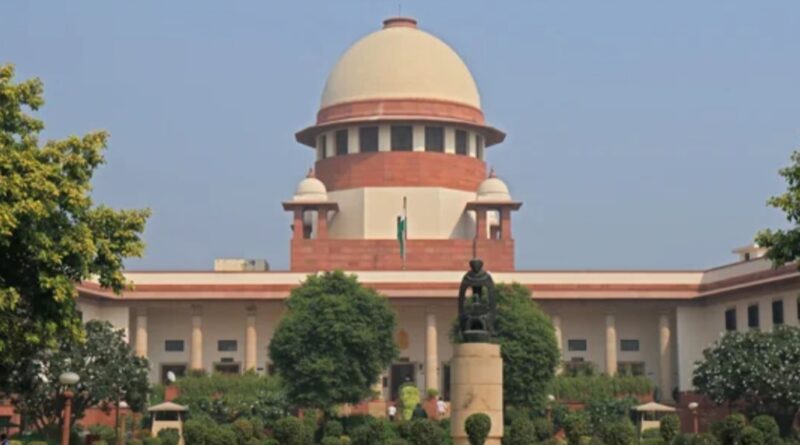
SC Steps In to Protect Apple Growers, Halts Orchard Removal Order
In a major relief to lakhs of apple growers in Himachal Pradesh, the Supreme Court on Tuesday set aside a Himachal Pradesh High Court order that had directed the removal of fruit-bearing apple orchards from encroached forest land. Acknowledging the deep social and economic impact of such a move, the top court asked the state government to come up with a welfare-oriented proposal for the Centre, especially to support marginalised and landless people.
A bench comprising Chief Justice Surya Kant and Justice Joymalya Bagchi observed that the high court’s order had far-reaching and drastic consequences, particularly for vulnerable communities dependent on apple cultivation for survival. The bench noted that such matters fall squarely within the policy domain and said the high court should not have passed an order that would inevitably lead to the large-scale cutting of fruit-bearing trees.
At the same time, the Supreme Court clarified that the state government is not barred from taking action against encroachments on forest land. However, it stressed that any such action must be balanced with the objectives of a welfare state. The court said the Himachal Pradesh government could frame a suitable proposal and place it before the Centre for necessary consideration and compliance.
The judgment came while the court was hearing a plea filed by the state government challenging the high court’s decision, along with petitions by former Shimla deputy mayor Tikender Singh Panwar and activist-lawyer Rajiv Rai. Earlier, on July 28, the Supreme Court had stayed the high court’s order after Panwar and Rai pointed out that lakhs of people—especially during the monsoon season—were likely to be adversely affected.
Panwar had argued that the high court’s July 2 order directed the forest department to uproot apple orchards and replace them with forest species, with the costs to be recovered from alleged encroachers as arrears of land revenue. He described the order as arbitrary and disproportionate, warning that it would cause irreversible ecological and socio-economic harm in the fragile hill state.
The plea highlighted that large-scale tree felling during the monsoon season significantly increases the risk of landslides and soil erosion in Himachal Pradesh, a region already prone to seismic activity. It also emphasised that apple orchards are not just a source of income but play a crucial role in soil stability, biodiversity and the state’s rural economy.
According to the petitioners, the high court’s direction to remove orchards without conducting a comprehensive environmental impact assessment (EIA) violated the precautionary principle, a key pillar of environmental law. They argued that the destruction of orchards threatened both environmental stability and the fundamental right to livelihood guaranteed under Article 21 of the Constitution.
Citing past Supreme Court rulings, including T.N. Godavarman Thirumulpad v. Union of India, the plea contended that felling trees during the monsoon worsens ecological risks and runs contrary to established judicial safeguards. The economic fallout, it said, would be devastating, as apple cultivation forms the backbone of Himachal Pradesh’s economy and sustains thousands of small and marginal farmers.
Panwar also pointed out that by July 18, more than 3,800 apple trees had already been felled in areas such as Chaithla, Kotgarh and Rohru, with plans underway to remove up to 50,000 trees across the state. The enforcement of the order, he said, led to the destruction of fully fruit-laden trees, triggering widespread public anguish and criticism.
With Tuesday’s verdict, the Supreme Court has effectively put a stop to the immediate removal of apple orchards, offering much-needed respite to farmers while nudging the government towards a more humane, balanced and policy-driven solution.